Which Pipe Welding Flux Releases Root-Pass Slag Best?
Selecting the Optimal Pipe Welding Flux for Superior Root Pass Slag Release
The integrity of a pipe weld's root pass is paramount, directly influencing the overall strength and longevity of the joint. One of the most common challenges faced by welding engineers and supervisors during root pass operations is achieving consistent slag release. Poor slag removal can lead to inclusions, defects, and significant rework, impacting project timelines and costs. Identifying the ideal
Pipe Welding Flux that facilitates excellent root pass slag release is therefore a critical aspect of modern pipe fabrication. Oldwelders understands these challenges, providing high-quality welding consumables designed for demanding industrial applications. As an ISO 9001 certified manufacturer, our commitment to quality ensures that our products meet rigorous international standards, contributing to reliable and efficient welding processes worldwide. Our advanced plant, covering an area of 1000 square meters, features six production lines capable of supplying 100 tons of flux daily, ensuring consistent availability for your projects.
Understanding the Critical Role of Welding Flux in Root Passes
In pipe welding, particularly with processes like submerged arc welding (SAW) or flux-cored arc welding (FCAW) that utilize welding fluxes, the flux serves several vital functions. Primarily, it shields the molten weld pool from atmospheric contaminants, stabilizes the arc, and introduces alloying elements to enhance weld metal properties. However, its role in forming a protective slag layer is equally crucial. This slag solidifies over the weld bead, protecting it as it cools and influencing the final bead shape and appearance. For root passes, where access is often restricted and joint geometry can be complex, the properties of this slag become even more critical.
A well-designed welding flux will produce a slag that is easily detachable, especially from the narrow confines of a root pass. Slag that is difficult to remove can become entrapped, leading to slag inclusions which are significant weld defects. These inclusions weaken the weld, making it susceptible to failure under stress or fatigue. Furthermore, inefficient slag removal directly impacts productivity, as operators spend valuable time chipping and grinding, rather than welding. The goal is a self-lifting or easily removable slag that minimizes post-weld cleaning, thereby streamlining operations and reducing the risk of defects in critical infrastructure projects. Oldwelders provides a comprehensive range of
welding materials, including various fluxes, specifically engineered to address these challenges.
Key Characteristics of Fluxes for Optimal Slag Release
The ability of a welding flux to release slag effectively is primarily governed by its chemical composition and the resulting physical properties of the slag itself, such as viscosity, melting point, and surface tension. Different flux types—acidic, neutral, and basic—exhibit distinct slag behaviors.
Flux Chemistry and Slag Properties
Oldwelders’ welding fluxes are formulated from excellent raw materials, including dolomite, bauxite, cryolite, silica, and fluorine ore. These components are carefully selected and precisely blended, then melted at an extremely high temperature of 2000 °C to achieve optimal homogeneity and performance. This meticulous process ensures that our fluxes consistently produce slag with desirable characteristics for specific welding applications.
* **Basicity Index:** Fluxes with a higher basicity index (typically basic fluxes) often produce slags that are more easily detachable. These slags tend to be less viscous and have lower surface tension, making them less likely to adhere strongly to the weld metal. They are generally preferred for critical applications requiring superior mechanical properties and minimal defects, such as those found in demanding
welding machine applications.
* **Viscosity:** A slag with optimal viscosity flows smoothly over the weld pool, providing good coverage and protection, but then solidifies into a friable, easily removable layer. If the slag is too viscous, it can be difficult to remove; if it's too fluid, it may not provide adequate protection or could lead to undesirable bead profiles.
* **Melting Point:** The melting point of the slag should be carefully matched to the welding parameters and the base material. A slag that solidifies too quickly or too slowly can impact detachability. An ideal slag freezes shortly after the weld metal, forming a distinct, separable layer.
* **Surface Tension:** Low surface tension between the slag and the weld metal promotes better separation upon cooling. This is particularly important in tight geometries like a pipe’s root pass, where capillary action can otherwise cause the slag to cling tenaciously.
The precise balance of these characteristics, achieved through careful formulation and high-temperature processing of raw materials, dictates how effectively the slag will detach from the root pass, reduce rework, and improve overall weld quality.
Comparing Flux Families for Root Pass Performance
Several families of welding fluxes are available, each offering different advantages in terms of performance, mechanical properties, and, importantly, slag release characteristics. For critical root passes in pipe welding, the choice often narrows down to formulations known for their superior detachability.
Agglomerated Fluxes
Agglomerated fluxes are produced by mixing dry ingredients with a binder, followed by baking at relatively low temperatures. This manufacturing process allows for significant flexibility in formulation, enabling producers to tailor the flux chemistry for specific applications. For root passes, agglomerated fluxes can be engineered to produce very friable slags that are highly desirable for easy removal. They often contain deoxidizers and alloying elements that further refine the weld metal. For instance, specific formulations like
submerged arc welding flux hj431 are designed for excellent performance and ease of slag removal in demanding applications. Their advantage lies in the ability to precisely control the slag's properties through careful selection and proportioning of raw materials, ensuring that the slag readily breaks away from the intricate contours of a root pass.
Fused Fluxes
Fused fluxes are manufactured by melting raw materials at high temperatures (similar to Oldwelders' 2000 °C process for its raw materials), granulating the molten mix, and then sieving it. This process results in a highly uniform, dense, and moisture-resistant flux. While fused fluxes offer excellent arc stability and consistent mechanical properties, their slag can sometimes be tougher and more adherent compared to some agglomerated types. However, specific fused flux formulations, particularly those with a higher basicity, can still provide satisfactory slag release for many root pass applications, offering a balance of robust performance and reasonable clean-up.
Bonded Fluxes
Bonded fluxes are similar to agglomerated fluxes in that they use a binder but are typically cured at even lower temperatures. They offer versatility and can be formulated for various applications. Their slag release characteristics can be quite variable, depending heavily on the specific chemical composition. For root passes, careful selection of a bonded flux with a high basicity and appropriate proportions of slag-modifying agents is essential to ensure good detachability and prevent slag entrapment. The ability to customize the composition makes them adaptable for specific pipe welding challenges, though performance can vary widely between different products.
Ultimately, for optimal root pass slag release, fluxes designed with a higher basicity index and incorporating specific slag conditioners (such as certain fluorides from cryolite or fluorine ore) tend to perform best. These formulations promote a more fluid slag during welding that solidifies into a brittle, self-detaching layer upon cooling, minimizing the need for extensive post-weld cleaning and reducing the likelihood of defects.
Practical Considerations for Selecting Pipe Welding Flux
Beyond the inherent chemical properties, several practical factors influence the choice of
Pipe Welding Flux for root pass applications. These considerations ensure that the selected flux not only performs well in terms of slag release but also meets the broader requirements of the welding procedure and project.
Welding Position and Joint Geometry
The orientation of the pipe and the specific geometry of the joint (e.g., V-groove, U-groove) significantly impact flux selection. Horizontal, vertical, or overhead positions each present unique challenges for slag management. Fluxes that produce a less fluid slag may be preferred for out-of-position welding to prevent slag run-off, though this might slightly compromise detachability. For narrow root gaps, a flux that generates a finely granulated or highly friable slag is crucial to prevent entrapment.
Base Material and Welding Process
The type of base material (carbon steel, stainless steel, alloy steel) dictates the required weld metal properties and influences flux chemistry. Compatibility between the flux and the base material is paramount to avoid metallurgical issues. Similarly, the welding process (e.g., SAW, FCAW) will narrow down the suitable flux types. For instance, while this article focuses on
pipe welding flux, Oldwelders also offers solutions for
arc welding machine applications, each requiring specific consumable considerations.
Environmental Factors
Welding in high-humidity environments or extreme temperatures can affect flux performance. Fused fluxes, with their lower hygroscopicity, are often preferred in damp conditions. However, advanced agglomerated and bonded fluxes can also be formulated with moisture-resistant properties. Storing fluxes properly is always critical to maintain their performance and prevent hydrogen embrittlement.
Testing and Qualification
Before large-scale production, it is essential to conduct thorough testing and qualification trials with the chosen
Pipe Welding Flux. This includes evaluating not only the slag release characteristics but also the mechanical properties of the weld metal, radiographic soundness, and overall weld quality. Oldwelders stands by the quality of its products, offering a 30-day period for customer satisfaction, underscoring our confidence in our welding solutions. Our minimum order quantity (MOQ) of 1 ton ensures that even smaller-scale projects can benefit from our high-performance fluxes.
Global Market Presence
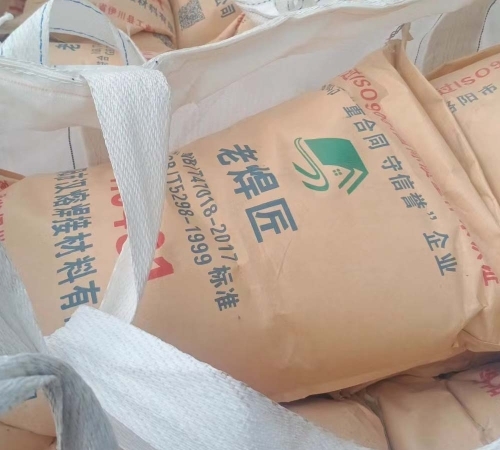
Oldwelders serves a diverse global clientele, with target markets including Brazil, Thailand, Australia, and Malaysia. Our understanding of varying regional requirements and industry standards enables us to provide tailored solutions and support to pipe fabrication projects worldwide. This global perspective, combined with our robust production capacity, means we are well-equipped to meet the demands of international clients seeking reliable and high-performance welding consumables.
Conclusion: Achieving Optimal Root Pass Quality with the Right Pipe Welding Flux
Selecting the optimal
Pipe Welding Flux for superior root pass slag release is a multifaceted decision that significantly impacts the quality, efficiency, and cost-effectiveness of pipe welding operations. By understanding the intricate relationship between flux chemistry, slag properties, and practical application factors, welding engineers can make informed choices that mitigate defects, reduce rework, and enhance overall productivity. Fluxes with a higher basicity index, those specifically engineered for friable and easily detachable slags, and those produced from high-quality raw materials processed at high temperatures, like those from Oldwelders, consistently deliver excellent root pass performance.
Oldwelders is dedicated to providing premium welding fluxes and comprehensive welding solutions that meet the stringent requirements of modern industrial applications. Our ISO 9001 certification, advanced manufacturing capabilities producing 100 tons daily, and commitment to using excellent raw materials melted at 2000 °C ensure that our products deliver consistent quality and performance. Whether your projects are in Brazil, Thailand, Australia, Malaysia, or elsewhere, you can rely on Oldwelders for expert support and welding consumables that optimize your root pass quality and operational efficiency. Partner with us to achieve flawless pipe welds and streamline your fabrication processes.
