
Pipe Welding Flux Performance When High Basicity Backfires
Understanding Pipe Welding Flux Performance When High Basicity Backfires
In the demanding world of industrial fabrication, particularly in pipe manufacturing and construction, the selection of appropriate welding consumables is paramount. Among these, welding fluxes play a critical role in determining weld quality, mechanical properties, and overall operational efficiency. While high-basicity fluxes are often lauded for their superior metallurgical benefits, such as enhanced toughness and reduced hydrogen content, their application in specific pipe welding scenarios can sometimes lead to unexpected challenges. This article delves into the nuances of flux basicity, exploring why the conventional wisdom surrounding high-basicity formulations may not always hold true for the intricate demands of pipe welding.
Oldwelders understands that technical buyers and welding engineers require precise, reliable solutions. Our commitment to quality is underscored by our ISO 9001 certification, ensuring that every product, from welding machine to specialized fluxes, meets rigorous international standards. We leverage our extensive expertise to provide knowledgeable insights into complex welding material science, helping our clients navigate the trade-offs inherent in flux selection for critical applications.
The Fundamentals of Pipe Welding Flux Basicity
The basicity of a welding flux is a metallurgical indicator derived from the ratio of basic oxides (like CaO, MgO, Na₂O, K₂O) to acidic oxides (like SiO₂, TiO₂, Al₂O₃, ZrO₂) within its chemical composition. This ratio profoundly influences the physicochemical reactions occurring in the weld pool, directly impacting slag manageability, arc stability, and the final mechanical properties of the weld metal. Generally, fluxes are categorized into acidic, neutral, and basic types, with each offering distinct advantages and disadvantages.
High-basicity fluxes, characterized by a higher concentration of basic oxides, are typically favored for applications requiring superior weld metal toughness and resistance to hydrogen-induced cracking. They achieve this by promoting the transfer of oxygen from the weld pool to the slag, thereby refining the weld metal microstructure and reducing impurity levels. Additionally, basic fluxes are effective at absorbing hydrogen, which is crucial for preventing defects in high-strength steel welding. These attributes have made them a go-to choice for many critical welding applications where weld integrity is non-negotiable.
However, the general benefits of high basicity do not universally translate to all welding scenarios, especially when considering the unique geometries and positional requirements of pipe fabrication. The intricate nature of pipe joints, often involving narrow grooves, multiple passes, and various welding positions (such as horizontal, vertical-up, or overhead), introduces complexities that can challenge the performance characteristics of even the most premium high-basicity fluxes.
Understanding Basicity Index and Its Impact
The Basicity Index (BI) is a quantitative measure used to classify welding fluxes. A higher BI indicates a more basic flux. While a higher BI generally correlates with improved toughness and lower diffusible hydrogen content in the weld metal, it also influences other critical operational characteristics. For instance, basic fluxes typically produce a thicker, more viscous slag compared to acidic or neutral fluxes. This viscosity is a direct consequence of their chemical composition and can have significant implications for welder appeal and productivity in certain joint configurations.

Why High Basicity Can Be Detrimental in Pipe Welding Applications
While the metallurgical advantages of high-basicity fluxes are well-documented, their operational characteristics can sometimes present significant drawbacks when applied to the specific demands of pipe welding. The unique geometries and often restrictive access associated with pipe joints can exacerbate these issues, leading to reduced productivity and compromised weld quality if not carefully managed.
Challenges with Slag Removal and Bead Shape
One of the primary concerns with high-basicity fluxes in pipe welding is the difficulty associated with slag removal. The slag produced by these fluxes tends to be tenacious and thick, particularly in narrow groove preparations common in pipe joints. In multi-pass welding, especially in vertical-up or overhead positions, residual slag can become trapped, leading to inclusions and necessitating extensive inter-pass cleaning. This not only increases labor costs but also introduces potential for rework, slowing down project timelines.
Furthermore, the high viscosity of basic slags can adversely affect bead shape and wetting characteristics. In tight pipe grooves, achieving a smooth, consistent bead profile can be challenging, as the molten slag may not flow easily to cover the weld pool uniformly. This can result in uneven bead contours, poor fusion at the toes, and undesirable surface irregularities, all of which can compromise the structural integrity and aesthetic quality of the pipe weld.
Impact on Arc Stability and Penetration Profiles
High-basicity fluxes also influence arc characteristics. While they generally promote a stable arc, the high viscosity of the slag can sometimes interfere with arc length control and lead to erratic arc behavior, particularly in out-of-position welding. This can make it more difficult for welders to maintain consistent heat input and penetration, potentially leading to variations in weld quality. In critical pipe root passes, inconsistent penetration can be a significant concern, requiring precise control that some high-basicity fluxes may hinder.
The chemical composition of basic fluxes can also influence the penetration profile. In certain applications, achieving deeper, more focused penetration is desirable. However, the slag system of some high-basicity fluxes might spread the arc energy more broadly, resulting in a shallower, wider penetration profile that may not be ideal for specific pipe joint designs or wall thicknesses. This requires careful consideration during flux selection and process parameter optimization.
Optimizing Flux Selection for Critical Pipe Welding Projects
Selecting the optimal flux for pipe welding involves a careful balance of metallurgical requirements, operational characteristics, and project-specific constraints. Technical buyers and welding engineers must look beyond generic recommendations and consider the unique challenges posed by pipe fabrication.
Considering Joint Design, Material, and Position
The ideal flux choice is highly dependent on several factors:
- Joint Design: Narrow grooves and tight geometries demand fluxes that produce easily removable and less voluminous slag.
- Material Type: High-strength alloys or specific stainless steels may still benefit from the low-hydrogen characteristics of basic fluxes, but alternative basicity-balanced options might be more suitable for operational efficiency.
- Welding Position: Out-of-position welding (vertical-up, overhead) requires fluxes that offer excellent slag detachability and good bead shape control, which can be challenging for some high-basicity formulations.
- Required Mechanical Properties: If extreme toughness is not the absolute priority, a flux with a more balanced basicity might offer a better compromise between metallurgical quality and welder productivity.
At Oldwelders, we understand these complexities. Our raw materials, such as excellent dolomite, bauxite, cryolite, silica, and fluorine ore, are melted at 2000 °C to produce high-quality welding materials. This stringent manufacturing process ensures that our products, including advanced pipe welding flux formulations, meet the precise demands of various industrial applications. We offer a range of solutions, from standard to highly specialized, to cater to the diverse needs of our clients.
The Role of Basicity-Balanced Fluxes
For many pipe welding applications, a basicity-balanced flux or a flux specifically engineered for pipe welding offers an optimal solution. These fluxes aim to retain the metallurgical advantages of basic formulations (such as good mechanical properties and low hydrogen content) while improving operational characteristics like slag detachability and bead appearance. They are designed to provide a more manageable slag, better wetting of the groove walls, and improved arc stability, particularly in challenging positions.
Such formulations are often developed through extensive research and testing, focusing on adjusting the ratio of basic to acidic components, incorporating specific slag modifiers, and optimizing particle size distribution. This allows for a flux that delivers consistent performance across a wide range of pipe welding parameters and conditions, minimizing defects and maximizing productivity.
Oldwelders' Approach to High-Performance Pipe Welding Fluxes
Oldwelders is dedicated to providing high-performance welding solutions that meet the evolving needs of the B2B sector. Our approach to submerged arc welding flux hj431, and indeed all our flux products, is rooted in rigorous research, quality manufacturing, and deep application knowledge. We partner with technical buyers and engineers to understand their specific project requirements, ensuring the selection of the most suitable flux for optimal results.
Commitment to Quality and Capacity
Our commitment to quality is unwavering. Every batch of flux undergoes stringent quality control processes, from raw material inspection to final product testing, all in accordance with our ISO 9001 certification. Our state-of-the-art plant covers an area of 1000 square meters and is equipped with six production lines, demonstrating our robust manufacturing capabilities. This infrastructure allows us to supply up to 100 tons of product per day, ensuring consistent availability for large-scale industrial clients worldwide. We also maintain a minimum order quantity of 1 ton, making our high-quality products accessible to a broad range of businesses.
Oldwelders proudly serves key international markets, including Brazil, Thailand, Australia, and Malaysia, understanding the unique regional demands and specifications. Our global presence ensures that our expert support and high-quality products are readily available to our diverse clientele.
Tailored Solutions for Complex Challenges
We recognize that no two pipe welding projects are identical. Therefore, we offer a comprehensive portfolio of welding fluxes, each designed with specific applications in mind. Our team of experts works closely with clients to analyze their welding procedures, material specifications, and desired mechanical properties to recommend the most effective flux solution. This collaborative approach ensures that our clients achieve the best possible weld quality, operational efficiency, and cost-effectiveness.
Whether the project demands exceptional toughness, superior slag detachability, or optimized arc stability for positional welding, Oldwelders has the expertise and product range to deliver. We continuously invest in research and development to refine our formulations, incorporating the latest advancements in metallurgical science to address the most challenging pipe welding scenarios. Our dedication extends beyond just providing products; we aim to be a trusted partner in achieving welding excellence.
Integrated Welding Solutions
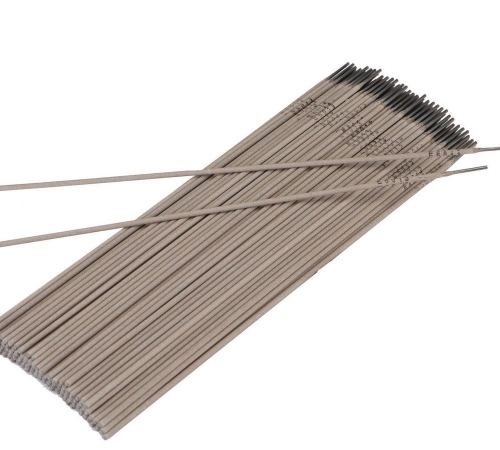
Beyond our advanced fluxes, Oldwelders offers a complete range of welding consumables and equipment, including automatic welding machine, welding wire, and welding rods. This integrated approach ensures compatibility and optimized performance across all components of your welding operation. By sourcing from a single, reliable provider, clients can streamline their procurement processes and benefit from consistent quality and technical support across their entire welding setup.
Conclusion
While high-basicity fluxes offer undeniable metallurgical advantages in terms of weld metal toughness and hydrogen control, their application in pipe welding is not without its operational complexities. Challenges related to slag removal, bead shape, and arc stability can significantly impact productivity and overall weld quality, especially in intricate pipe geometries and out-of-position welding. Technical buyers and welding engineers must critically evaluate the trade-offs and consider basicity-balanced or purpose-engineered fluxes that provide an optimal blend of metallurgical performance and operational efficiency.
Oldwelders stands as a professional and knowledgeable partner in navigating these choices. With our ISO 9001 certified manufacturing, extensive production capacity, and a deep understanding of welding material science, we are equipped to provide the precise flux solutions required for even the most demanding pipe welding projects. Our commitment to quality and customer satisfaction ensures that our clients receive not just products, but comprehensive solutions backed by expertise and reliability. Partner with Oldwelders to ensure your pipe welding projects achieve unparalleled success.