
Prevent Weld Defects by Matching Welding Flux
Prevent Weld Defects by Matching Welding Flux
Welding is a critical process in numerous industries, from heavy fabrication to delicate component assembly. The integrity of a weld directly impacts the safety, performance, and longevity of the final product. However, even experienced welders can encounter frustrating weld defects that compromise quality and lead to costly rework. While machine settings and operator technique play significant roles, the choice and condition of your welding flux are often overlooked yet crucial factors in preventing these discontinuities. For fabricators and quality assurance personnel seeking to optimize their welding processes and diagnose recurring issues, understanding how to correctly match welding flux to the application can be a game-changer.At Oldwelders, we understand the complexities of achieving flawless welds. Our commitment to quality is underscored by our ISO 9001 certification, ensuring that every product, including our comprehensive range of welding materials, meets stringent international standards. We believe that preventing weld defects starts with superior consumables and expert knowledge.
Understanding Welding Flux and Its Essential Role
Welding flux is a non-metallic material used in various welding processes, primarily to protect the molten weld pool and the surrounding heated metal from atmospheric contamination. The primary enemies of a clean weld are oxygen and nitrogen, which can lead to porosity, embrittlement, and other severe defects. Fluxes achieve this protection through several mechanisms:
- Shielding Gas Generation: Upon heating, the flux decomposes, releasing gases that form a protective shield around the arc and molten metal, displacing atmospheric air.
- Slag Formation: The molten flux forms a protective slag layer over the solidifying weld metal. This slag not only shields the weld from the atmosphere during cooling but also helps to shape the weld bead, control its solidification rate, and refine its metallurgical properties by absorbing impurities.
- Arc Stabilization: Certain components within the flux contribute to a stable arc, which is crucial for consistent heat input and penetration.
- Alloying Elements: Some fluxes contain alloying elements that can be transferred to the weld metal, enhancing its mechanical properties, such as strength, toughness, and corrosion resistance.
- Cleaning Action: Fluxes can react with impurities on the base metal surface, bringing them into the slag and away from the weld metal, resulting in a cleaner weld.
Without adequate protection from the right welding flux, even the most precise welding machine and skilled operator would struggle to produce sound, defect-free welds. The effectiveness of this protection, however, is highly dependent on the flux composition and its suitability for the specific welding process, base material, and desired weld properties.
Common Weld Defects and How Flux Influences Them
Weld defects manifest in various forms, each with distinct causes that can often be traced back to incorrect flux selection or improper flux handling. Understanding these connections is vital for effective troubleshooting.
Porosity
Porosity appears as small holes or voids within the weld metal, typically caused by trapped gases during solidification. While insufficient shielding gas from the welding machine or improper base metal preparation can contribute, flux-related causes are common:
- Moisture Contamination: Damp flux is a primary culprit. Moisture dissociates in the arc, releasing hydrogen and oxygen, which can become entrapped in the molten pool. Proper storage and re-baking of fluxes are essential to prevent this.
- Inadequate Flux Volume: If insufficient flux is used, especially in processes like Submerged Arc Welding (SAW), the molten pool may not be fully protected, allowing atmospheric gases to enter.
- Incorrect Flux Type: Some fluxes are less effective at scavenging specific impurities or generating sufficient shielding gas for certain base metals or applications, leading to porosity.
Slag Inclusions
Slag inclusions are non-metallic solids trapped within the weld metal or between weld passes. These reduce weld strength and can act as stress concentrators.
- Improper Flux Basicity: The basicity of the flux (acidic, neutral, or basic) affects slag detachability. Fluxes that produce tenacious or viscous slag are harder to remove, leading to inclusions if inter-pass cleaning is insufficient.
- Insufficient Heat Input: Low welding current or travel speed can lead to poor slag-metal separation, increasing the likelihood of inclusions. While primarily a machine setting, the flux's melting characteristics play a role here.
- Incorrect Joint Design: Narrow or deep grooves can trap slag, especially if the flux does not produce a highly fluid slag that can easily flow out.
Undercut
Undercut is a groove melted into the base metal adjacent to the weld toe, reducing the effective thickness of the base material and creating a stress point. While often attributed to excessively high welding current or travel speed, flux properties can contribute indirectly.
- Flux Viscosity and Wetting: Fluxes that produce highly fluid slag with poor wetting characteristics on the base metal might exacerbate undercut by allowing the arc to dig into the base material without adequate support for the molten metal.
- Arc Force Characteristics: Different flux compositions influence the arc’s stability and force. An overly aggressive arc, sometimes due to flux choice, can contribute to undercutting.
Cracking (Hot and Cold)
Cracking is one of the most severe weld defects, often leading to immediate failure. Both hot (solidification) and cold (hydrogen-induced) cracking can occur.
- Hot Cracking: Occurs during solidification of the weld metal. Certain flux compositions can influence the solidification behavior and the presence of low-melting point constituents, increasing susceptibility.
- Cold Cracking: Often caused by hydrogen embrittlement. As mentioned with porosity, moisture in the flux introduces hydrogen. Basic fluxes are generally preferred for preventing cold cracking due to their low hydrogen potential and ability to scavenge impurities.
Understanding these defect mechanisms and their relationship to flux properties is the first step towards prevention. The next is to actively match the right welding flux to your specific needs.
Matching Welding Flux for Optimal Performance and Defect Prevention
Selecting the appropriate welding flux involves considering several factors, including the welding process, base material, desired mechanical properties, and the specific defects you aim to prevent. Oldwelders offers a diverse range of welding fluxes designed to meet various industrial demands, from basic to rutile types, each with distinct characteristics.
Here’s a guide to matching flux types with common defect prevention strategies:
1. For Preventing Porosity and Hydrogen-Induced Cracking (Cold Cracking)
- Flux Type: Basic fluxes (e.g., agglomerated basic fluxes for SAW, basic coatings for certain welding electrodes like AWS E6013 welding electrodes).
- Characteristics: High basicity, excellent impurity scavenging, low hydrogen potential. They produce a robust, easily removable slag.
- Recommendation: Use basic fluxes when welding high-strength steels, quenched and tempered steels, or thick sections where cold cracking is a significant concern. Always ensure proper storage and re-baking to eliminate moisture. Oldwelders' manufacturing process, involving melting raw materials at 2000 °C, ensures the initial dryness and purity of our flux products.
2. For Minimizing Slag Inclusions and Enhancing Weld Bead Shape
- Flux Type: Neutral or slightly acidic fluxes (e.g., certain agglomerated fluxes for SAW, rutile-based electrodes).
- Characteristics: Produce fluid slag that is generally easier to remove, especially in multi-pass welding. They offer good bead appearance and wetting.
- Recommendation: Suitable for general fabrication, fillet welds, and situations where inter-pass cleaning is critical. For instance, our submerged arc welding flux HJ431 is designed for reliable performance. Ensure adequate heat input and proper joint geometry to allow for optimal slag flow and removal.
3. For High Deposition Rates and Productivity
- Flux Type: Fused fluxes or specific agglomerated fluxes designed for high-current applications.
- Characteristics: Can handle higher current densities, leading to increased deposition rates. They often produce stable arcs and consistent penetration.
- Recommendation: Ideal for automated welding processes and large-scale projects where efficiency is paramount. While boosting productivity, ensure the flux still provides adequate protection against defects at higher travel speeds.
It's important to differentiate between issues caused by the welding flux itself and those stemming from machine settings or operator technique. For example, excessive spatter might be linked to an unstable arc which could be from incorrect flux, but it could also be due to incorrect voltage or wire feed speed on a MIG-MAG-TIG welding machine. A thorough diagnostic process is always recommended.
Oldwelders: Your Trusted Partner for High-Quality Welding Flux
Choosing the right supplier for your welding consumables is as critical as selecting the right flux. At Oldwelders, we pride ourselves on delivering not just products, but solutions that empower our clients to achieve superior welding outcomes consistently.
Unwavering Commitment to Quality
Our dedication to quality begins at the source. We meticulously select excellent raw materials, including high-grade dolomite, bauxite, cryolite, silica, and fluorine ore. These materials undergo a rigorous melting process at 2000 °C, ensuring the purity and consistent composition of our welding fluxes. This stringent control over raw materials and manufacturing processes is a cornerstone of our ISO 9001 certified quality management system.
Advanced Production Capabilities
Our state-of-the-art manufacturing plant, spanning an impressive area of 1000 square meters, is equipped with six advanced production lines. This robust infrastructure allows us to maintain a substantial production capacity, capable of supplying up to 100 tons of welding products per day. Such capacity ensures reliable supply and timely fulfillment for our global clientele.
Flexible Supply for Global Markets
We understand the diverse needs of the global welding industry. With a minimum order quantity starting from 1 ton, we are well-positioned to serve a wide range of businesses, from large-scale industrial fabricators to specialized workshops. Our reach extends to key international markets, including Brazil, Thailand, Australia, and Malaysia, where we support businesses with our high-quality welding consumables.
A Comprehensive Range of Welding Solutions
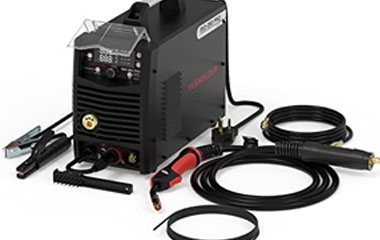
Beyond welding flux, Oldwelders offers a complete suite of welding materials, including welding wire and welding rods, alongside a wide selection of welding machines. This comprehensive product portfolio allows us to be a single-source provider for all your welding needs, ensuring compatibility and seamless integration across your welding operations.