
Sourcing Heavy Machinery SAW for Thick Steel Fabrication
How to Source Submerged Arc Welding Systems for Heavy Machinery Fabrication
In the world of heavy industrial manufacturing, the integrity of a weld is paramount. For fabricators working with thick steel plates to create robust structures, pressure vessels, and heavy machinery components, choosing the right welding process is a critical decision. Submerged Arc Welding (SAW) stands out as the premier method for these demanding applications, offering unparalleled deposition rates and weld quality. However, sourcing the right Heavy Machinery SAW solution requires a detailed understanding of your application, the technology, and your supplier's capabilities. This guide provides procurement teams and fabrication managers with a strategic framework for defining requirements and selecting the ideal welding partner.
The challenge lies not just in joining thick metals, but in doing so efficiently, reliably, and in compliance with stringent industry codes. A poorly specified system can lead to costly rework, production bottlenecks, and compromised structural integrity. Conversely, a well-chosen SAW setup, complete with the appropriate equipment and consumables, becomes a cornerstone of productivity and quality assurance.
Understanding the Fundamentals of Submerged Arc Welding (SAW)
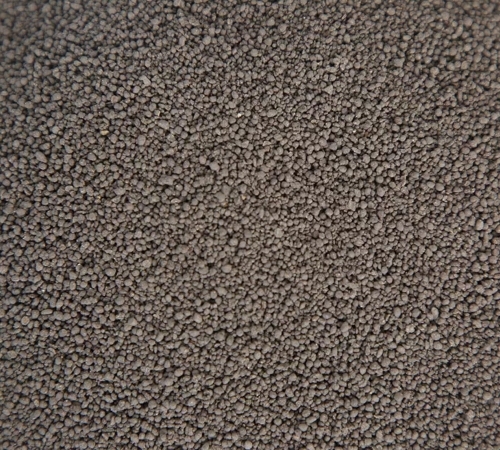
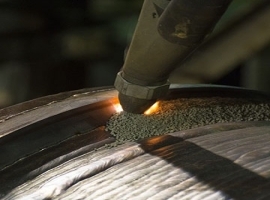
Before you can effectively source a solution, it's essential to understand what Submerged Arc Welding is and why it is the preferred choice for heavy fabrication. SAW is an arc welding process that uses a continuously fed consumable electrode (wire) to create the weld. The defining characteristic is the blanket of granular, fusible flux that covers the arc. This flux blanket shields the molten weld pool from atmospheric contamination, eliminating spatter and arc flash while producing a smooth, high-quality weld bead that requires minimal post-weld cleaning.
Why SAW is Ideal for Thick Steel and Heavy Machinery
- High Deposition Rates: SAW systems can deposit weld metal significantly faster than manual or semi-automatic processes like Shielded Metal Arc Welding (SMAW) or Gas Metal Arc Welding (GMAW), making it highly efficient for filling large weld joints in thick plates.
- Deep Weld Penetration: The high heat concentration under the flux blanket allows for deep, consistent penetration, often enabling thick sections to be welded with fewer passes.
- Exceptional Weld Quality: The flux provides excellent protection from the atmosphere, resulting in welds with very low hydrogen content and superior mechanical properties, free from common defects like porosity.
- Automation and Repeatability: The process is easily automated using tractors, manipulators, or custom fixtures. This ensures exceptional consistency and repeatability, which is crucial for meeting the quality standards required in heavy machinery manufacturing.
A complete SAW system consists of a powerful welding machine (power source), a wire feed unit, a control system, a travel mechanism (like a tractor or column-and-boom), and the all-important consumables: the welding wire and flux.
Defining Your Application Requirements for a SAW System
The most critical step in the sourcing process is translating your production needs into a detailed technical specification. A clear set of requirements enables potential suppliers to propose the most effective and economical solution. Vague requests lead to inaccurate quotes and unsuitable equipment. Consider the following key areas:
Material Specifications
Document the exact materials you will be welding. This includes not only the base metal type (e.g., A36 carbon steel, high-strength low-alloy steel, stainless steel) but also the full range of thicknesses. A system configured for 25 mm plate may not be suitable for 100 mm plate without significant changes. This information is fundamental to selecting the correct power source amperage and consumables.
Weld Joint Design and Production Volume
Detail the types of welds your facility performs. Are they primarily long, straight butt joints in large plates, or circumferential welds on cylindrical vessels? The geometry of the parts and the design of the weld joints will dictate the type of automation and fixturing required. Furthermore, quantify your production needs. How many meters of weld are required per shift? This throughput data will determine whether a simple tractor-based system is sufficient or if a more sophisticated column-and-boom manipulator is necessary for your Heavy Machinery SAW setup.
Quality Standards and Code Compliance
Specify any welding codes or standards your products must adhere to, such as AWS D1.1, ASME Section IX, or specific ISO standards. This has significant implications for process control, documentation, and consumable selection. Partnering with a supplier that operates under a robust quality management system is essential. At Oldwelders, our operations are ISO 9001 certified, ensuring that our products and processes meet internationally recognized standards for quality and consistency, giving you confidence in the materials you procure.
Evaluating SAW Consumables: The Critical Role of Wire and Flux
The equipment provides the power and control, but the welding materials—specifically the wire and flux combination—determine the metallurgical properties and final quality of the weld. This is the core of any Heavy Machinery SAW operation and should never be an afterthought.
Choosing the Right Welding Wire
The welding wire must be chemically compatible with the base material to achieve the desired mechanical properties, such as tensile strength and impact toughness. Wires are available in a range of diameters, with larger diameters typically used for higher deposition rates in flat and horizontal positions. The choice between a solid wire and a flux-cored or metal-cored wire will depend on the specific application and desired weld metal chemistry.
Selecting the Optimal Welding Flux
The flux is arguably the most complex component of the SAW process. It influences the arc stability, bead shape, slag detachability, and the final chemical composition and mechanical properties of the weld metal. Welding fluxes are broadly categorized as neutral, active, or alloy fluxes:
- Neutral Fluxes: These do not significantly alter the chemical composition of the weld metal. They are ideal for multi-pass welding on thick sections where consistent chemistry is crucial.
- Active Fluxes: These contain small amounts of deoxidizers like manganese and silicon, which help clean the weld metal and improve bead appearance on slightly rusted or scaled plate. They are typically limited to single-pass or two-pass welds.
- Alloy Fluxes: These add specific alloying elements to the weld metal to achieve special properties, such as increased hardness or corrosion resistance.
The manufacturing process of the flux (fused vs. agglomerated) also impacts its performance. A knowledgeable supplier can guide you to the right combination, such as a high-quality submerged arc welding flux hj431 for general structural steel applications. At Oldwelders, we take flux manufacturing seriously. Our 1000-square-meter plant features six production lines capable of supplying 100 tons of flux per day. We start with excellent raw materials—including dolomite, bauxite, and silica—which are melted at 2000 °C to ensure purity and create a homogenous, high-performance product for our global clients.
Choosing the Right Supplier for Your Heavy Machinery SAW Needs
Once you have defined your technical requirements, the final step is to vet potential suppliers. The right partner provides more than just a product; they offer technical expertise, reliable support, and a secure supply chain. Look for a supplier who demonstrates proficiency in the following areas.
Technical Expertise and Process Support
Can the supplier's technical team review your application and recommend a complete, optimized solution? A valuable partner will assist with developing welding procedure specifications (WPS), troubleshooting production issues, and training your operators. They should function as an extension of your engineering team, not just a vendor.
Manufacturing Capability and Quality Control
Inquire about the supplier's manufacturing facilities and quality management systems. A supplier with robust internal controls, such as an ISO 9001 certification, provides assurance that their products are manufactured to a consistent, high standard. This is non-negotiable when sourcing materials for critical applications. A reliable partner for your Heavy Machinery SAW requirements will be transparent about their production capabilities and quality checks.
Supply Chain and Logistics
Your production lines cannot afford to stop due to a lack of consumables. Evaluate a supplier's ability to manage their supply chain and deliver on time. At Oldwelders, we offer a standard lead time of 30 days with a manageable minimum order quantity of 1 ton, providing a predictable and reliable supply for your projects. Furthermore, our experience serving diverse international markets, including Brazil, Thailand, Australia, and Malaysia, demonstrates our capability to handle complex logistics and meet the needs of global manufacturers.
By systematically working through these stages—understanding the technology, defining your specific needs, scrutinizing consumables, and vetting suppliers—you can confidently source a solution that enhances your fabrication capabilities. Investing in a Heavy Machinery SAW solution is a significant decision, and partnering with an experienced and capable supplier is the key to maximizing your return on that investment through improved productivity, consistent quality, and long-term reliability.