
Estimating Delivered Project Costs for Tank Fabrication
Estimating Delivered Project Costs for Tank Fabrication
For project owners and purchasing managers, accurately budgeting a custom tank fabrication project requires a comprehensive understanding of all potential cost drivers. Beyond the initial material and labor expenses, various factors can significantly influence the final delivered price of an industrial tank. This guide aims to demystify these components, helping you structure requests for quotation (RFQs) that allow for clear, apples-to-apples comparisons of scope and value, not just unit price. By anticipating these costs, you can ensure your project remains on budget and on schedule, regardless of its complexity or global destination.
Oldwelders specializes in providing robust solutions for diverse industrial needs, offering high-quality welding machine, welding materials, and welding fluxes essential for demanding applications like tank fabrication. Our commitment to quality is reinforced by our ISO 9001 certification, ensuring consistent standards across all our products and processes. With a plant spanning 1000 square meters and equipped with six production lines, we have the capacity to supply up to 100 tons of product daily, showcasing our readiness to support large-scale industrial projects.
Initial Cost Drivers in Tank Fabrication
The foundation of any tank fabrication estimate lies in its core design, materials, and direct labor. These elements form the bulk of the initial quotation, but their nuances are critical to understand.
Material Selection and Quantity
- Type of Metal: The choice of material—be it carbon steel, stainless steel, aluminum, or specialized alloys—is paramount. Each material has distinct properties affecting its cost, workability, and suitability for specific applications (e.g., corrosive environments, high pressure). Higher-grade alloys naturally command higher prices.
- Thickness and Dimensions: Larger tanks and those requiring thicker plate for structural integrity or pressure containment will incur higher material costs. The complexity of forming and welding thicker plates also influences labor and equipment usage. Our minimum order quantity for many products is 1 ton, catering to various project scales.
- Material Sourcing: The global market for raw materials fluctuates. A reliable fabricator with established supply chains can often secure better pricing and ensure material availability, preventing project delays.
Design Complexity and Engineering
- Custom vs. Standard Design: While standard tank designs are more cost-effective, many industrial applications require custom solutions. The engineering hours for detailed drawings, calculations, and compliance with specific industry standards (e.g., API, ASME) add to the overall cost.
- Internal Components: Features such as baffles, agitator supports, internal coils, manways, nozzles, and access platforms increase design complexity and require additional fabrication steps and materials.
- CAD/CAM Integration: Modern fabrication facilities utilize advanced software for design and manufacturing, which can optimize material usage and reduce errors, contributing to cost efficiency in the long run.
Direct Labor and Overhead
- Skilled Labor Rates: The expertise required for precision cutting, forming, welding, and assembly of tanks is significant. Certified welders, particularly for specialized materials or welding processes, command higher rates. Oldwelders provides essential arc welding machine and materials that support skilled labor in achieving high-quality welds.
- Fabrication Time: The total hours spent on a project directly influence labor costs. Efficient project management and advanced equipment can reduce fabrication time. Our production capacity, with six lines able to supply 100 tons a day, helps us manage timelines effectively.
- Overhead: This includes indirect costs such as factory rent, utilities, equipment maintenance, and administrative expenses, which are factored into the hourly rate or project cost.
Specialized Welding and Fabrication Requirements
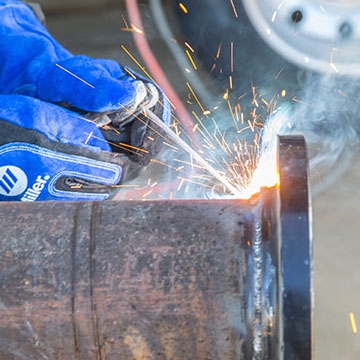
The welding processes employed and any specialized fabrication techniques are critical cost determinants in tank fabrication. These factors directly impact material integrity, structural strength, and the longevity of the finished product.
Advanced Welding Processes
- Welding Technology: Different welding methods, such as MIG/MAG/TIG welding machine, submerged arc welding, or resistance welding, have varying equipment, labor, and consumable costs. For instance, submerged arc welding flux HJ431 is often used for high-deposition rates on thick plates, which can be cost-effective for large, straightforward welds but may not be suitable for intricate geometries.
- Weld Quality and Inspection: Projects requiring higher weld quality (e.g., for pressure vessels) necessitate more rigorous welding procedures, more skilled welders, and extensive non-destructive testing (NDT), all of which add to the cost.
- Consumables: The type and quantity of welding wires, rods, and fluxes directly contribute to material costs. Our welding fluxes are produced from excellent raw materials like dolomite, bauxite, cryolite, silica, and fluorine ore, melted at 2000 °C, ensuring superior performance and reliability in demanding welding applications.
Precision Forming and Assembly
- Specialized Equipment: Large-scale tank fabrication often requires heavy-duty rolling machines, press brakes, and cutting equipment (e.g., plasma, laser, waterjet) to achieve precise dimensions and shapes. Investment in such machinery is reflected in fabrication costs.
- Tolerance Requirements: Tighter dimensional tolerances demand more precise fabrication processes, more frequent quality checks, and potentially more labor, increasing overall expenses.
- Modular Fabrication: For very large tanks, modular fabrication where sections are built off-site and assembled on-site can impact costs, particularly related to transport and site assembly logistics.
Crucial Post-Fabrication Processes and Their Costs
Once the primary tank fabrication is complete, several post-fabrication processes are essential for ensuring the tank's safety, performance, and longevity. These are often overlooked but significantly contribute to the total delivered project cost.
Testing and Quality Assurance
- Non-Destructive Testing (NDT): This includes methods like radiographic testing (X-ray), ultrasonic testing, magnetic particle inspection, and liquid penetrant testing to detect internal and surface defects without damaging the tank. The extent of NDT specified by project requirements or industry standards directly adds to costs.
- Hydrostatic Testing: Pressure vessels and storage tanks often undergo hydrostatic testing, where the tank is filled with water and pressurized to verify its structural integrity and leak-proofness. This requires specific equipment, controlled environments, and disposal of water, contributing to expenses.
- Visual Inspection and Dimensional Checks: Thorough visual inspections and dimensional checks are standard practice but require skilled personnel and time.
- Third-Party Inspection: Some projects mandate independent third-party inspections or certifications, adding another layer of cost but also an extra layer of assurance.
Surface Preparation and Coatings
- Surface Blasting: Before any coating application, the tank surface must be meticulously prepared, typically through sandblasting or grit blasting, to remove rust, mill scale, and contaminants, creating an optimal surface profile for coating adhesion.
- Protective Coatings: The type and number of coating layers (e.g., primers, intermediate coats, topcoats) are chosen based on the tank's operating environment, contents, and desired lifespan. Specialized coatings for corrosion resistance, chemical resistance, or aesthetic purposes can be expensive.
- Lining Systems: For highly corrosive contents, internal linings (e.g., rubber, glass flake, epoxy) might be required. These are labor-intensive to apply and cure, significantly impacting costs.
- Insulation: Tanks used for temperature-sensitive materials may require insulation systems, adding material and installation costs.

Navigating Logistics and Delivery for Global Tank Fabrication Projects
For B2B buyers, especially those in target markets like Brazil, Thailand, Australia, and Malaysia, understanding the complexities and costs associated with shipping and delivery is paramount. These factors can easily inflate the final delivered price if not properly accounted for.
Freight and Transportation
- Shipping Mode: The choice between road, rail, sea, or air freight depends on the tank's size, weight, urgency, and destination. For large-scale tank fabrication, sea freight is often the most economical for international shipments but comes with longer lead times.
- Packing and Crating: Proper packaging is crucial to protect the tank during transit. This can range from basic strapping to custom-built crates for delicate components or export.
- Oversize/Overweight Loads: Tanks that exceed standard transport dimensions or weights will incur additional costs for special permits, escorts, and specialized transport equipment.
- Incoterms: Clearly defined Incoterms (International Commercial Terms) are vital. Understanding whether the quote is EXW (Ex Works), FOB (Free On Board), CIF (Cost, Insurance, and Freight), or DDP (Delivered Duty Paid) will determine who is responsible for each segment of the journey and its associated costs.
Customs, Duties, and Taxes
- Import Duties: Depending on the country of origin and destination, import duties can add a significant percentage to the tank's value. Buyers in countries like Brazil, Thailand, Australia, and Malaysia should be aware of their specific import regulations.
- Value Added Tax (VAT) / Goods and Services Tax (GST): These consumption taxes are typically applied at the point of import or sale and must be factored into the total project cost.
- Customs Brokerage Fees: Engaging a customs broker to manage the import process, ensure compliance, and handle documentation is often necessary, incurring additional fees.
- Documentation: Accurate and complete documentation (commercial invoice, packing list, certificate of origin, bills of lading) is essential to avoid delays and penalties at customs.
On-Site Assembly and Installation
- Site Preparation: Costs associated with preparing the installation site, including foundation work, access roads, and utility connections, are typically the buyer's responsibility.
- Crane and Lifting Equipment: For large tanks, specialized heavy lifting equipment and skilled operators are required for on-site placement, adding significant costs.
- Assembly Labor: If the tank is shipped in modules, the labor and time required for on-site assembly and final welding must be budgeted.
- Commissioning: The final testing and start-up procedures to ensure the tank operates correctly before handover.
Partnering for Reliable Tank Fabrication
Choosing the right partner for your tank fabrication needs is crucial for project success and cost efficiency. A reliable supplier not only offers competitive pricing but also ensures quality, adherence to specifications, and timely delivery.
Oldwelders is a trusted manufacturer and supplier of comprehensive welding solutions, including high-performance welding electrodes and solid wire. Our ISO 9001 certification underscores our commitment to delivering products that meet stringent international quality standards. We understand the demands of industrial applications and offer a range of products vital for robust tank fabrication. Our efficient production process allows for a typical lead time of 30 days, ensuring your projects stay on track.
We work with clients across the globe, including key markets such as Brazil, Thailand, Australia, and Malaysia, providing tailored solutions and support. When evaluating quotes for tank fabrication, consider the total value proposition: the quality of materials, the expertise of the fabrication team, the thoroughness of testing and coatings, and the clarity of logistics and delivery terms. A lower initial price might hide hidden costs in quality compromises or unforeseen logistical challenges.
By partnering with a knowledgeable and experienced supplier like Oldwelders, you gain access to not just superior welding materials and equipment but also a commitment to successful project outcomes. We encourage you to engage with us to discuss your specific tank fabrication requirements, allowing us to provide detailed insights into how our products and capabilities can contribute to a cost-effective and successful project delivery.