
Shielded Arc Electrodes: Where SMAW Still Wins
Understanding Why the Shielded Arc Electrode Still Dominates in Field Applications
In an era of increasing automation and advanced welding processes, it's easy to assume that older, manual methods are becoming obsolete. Processes like Gas Metal Arc Welding (GMAW/MIG) and Flux-Cored Arc Welding (FCAW) offer high deposition rates and are relatively easy to learn. Yet, for project managers and industrial buyers overseeing field fabrication, remote repairs, and heavy-duty maintenance, the Shielded Metal Arc Welding (SMAW) process, commonly known as "stick welding," remains an indispensable tool. The key to its enduring relevance lies in the versatility and robustness of the Shielded Arc Electrode.
While semi-automatic processes have their place in controlled shop environments, they often fall short when faced with the unpredictable conditions of a real-world job site. This guide explores the specific operational scenarios where SMAW not only competes but outright wins, providing a reliable, cost-effective, and high-quality solution for demanding industrial welding tasks. Understanding these advantages is crucial for making informed procurement decisions that ensure project success, minimize downtime, and control costs.
The Foundational Advantages of SMAW in Modern Industry
The persistence of SMAW in the industrial landscape is not due to nostalgia; it's rooted in a set of practical, powerful advantages that other processes cannot easily replicate, especially outside of a controlled workshop. These benefits stem directly from the self-contained nature of the stick electrode.
Unmatched Portability and Simplicity
The primary advantage of SMAW is its minimal equipment requirement. A typical setup consists of a constant current power source, electrode and work leads, and an electrode holder. There are no bulky gas cylinders, complex wire feeders, or sensitive control systems to transport and protect. This makes it the ideal process for jobs in remote or difficult-to-access locations, such as pipeline repairs in the field, maintenance on agricultural equipment, or structural erection at the top of a high-rise building. The power source itself can be a relatively compact engine-driven arc welding machine, providing complete autonomy from the power grid.
Superior Performance in Outdoor and Adverse Conditions
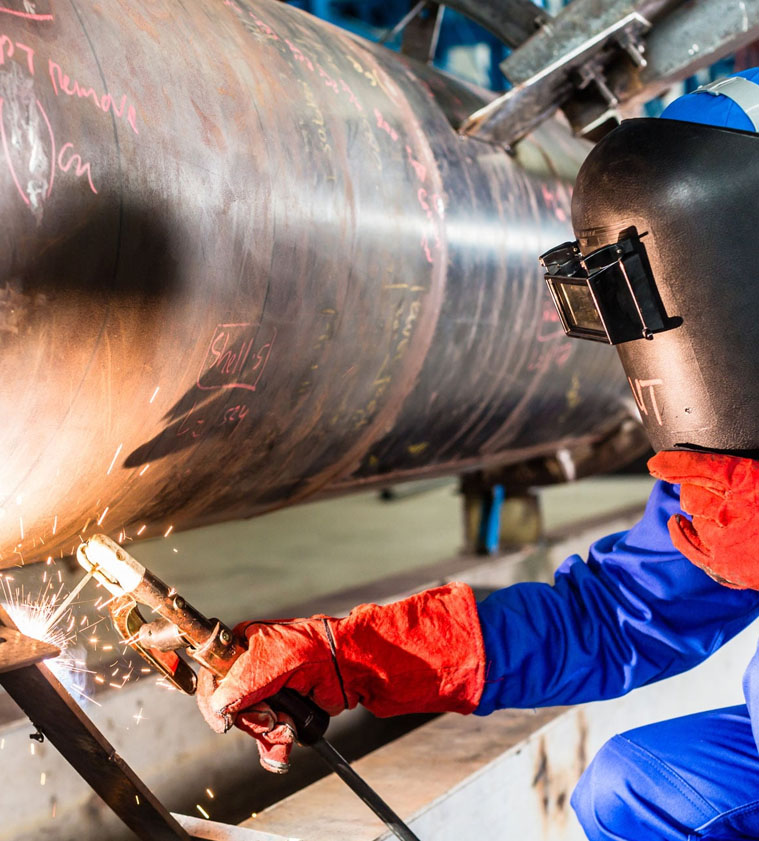
Gas-shielded processes like GMAW and TIG are highly susceptible to wind and drafts, which can blow away the shielding gas and lead to severe weld porosity and contamination. This makes them impractical for many outdoor applications. The Shielded Arc Electrode solves this problem by generating its own protection. The flux coating on the electrode vaporizes in the arc, creating a localized cloud of shielding gas that is far more resistant to wind. It also forms a layer of slag that covers the molten weld pool, offering further protection from atmospheric contamination as it cools. This self-shielding capability is a non-negotiable requirement for field work in construction, shipbuilding, and infrastructure repair.
Versatility Across a Wide Range of Materials
A vast array of electrodes is available for the SMAW process, enabling it to weld an extensive range of ferrous and non-ferrous metals. This includes carbon steels, low-alloy steels, stainless steels, cast irons, and even certain nickel alloys. For a maintenance department or a field service crew that encounters different materials on a daily basis, this versatility is invaluable. Switching from welding a carbon steel frame to a stainless steel pipe simply requires changing the electrode, not reconfiguring a complex wire feeder or changing shielding gas. This adaptability simplifies logistics and reduces the amount of equipment needed on a job site.
Cost-Effectiveness for Low-Volume and Repair Work
While GMAW and FCAW may offer higher productivity in a production line setting, the initial equipment investment is significantly higher. For businesses that perform more repair and maintenance than high-volume fabrication, the lower capital cost of SMAW equipment presents a more economical solution. The consumables themselves are straightforward, and the process generates less waste than wire-based processes that require trimming wire and purging gas lines.
Key Applications Where Stick Welding Excels
To fully appreciate the value of SMAW, it's helpful to examine the specific industrial scenarios where its advantages provide a clear competitive edge. These are not niche cases but core industrial operations where reliability and adaptability are paramount.
Structural Steel Erection and Construction
On a construction site, welders often work at significant heights and in exposed conditions. The portability of SMAW equipment allows them to move easily around the site, and its resistance to wind ensures sound welds on critical structural joints. The ability to perform high-quality welds in all positions (flat, horizontal, vertical, and overhead) is essential, and electrodes like the E7018 are specifically designed for this purpose.
Pipeline and Piping Systems
Whether it's new pipeline construction in a remote area or the repair of existing process piping in a refinery, SMAW is often the process of choice. The "downhill" welding technique using specific cellulosic electrodes (like E6010) allows for rapid and efficient completion of root passes. The process's robustness means that minor surface contaminants like rust or mill scale are less likely to cause weld defects compared to the more sensitive GMAW process.
Heavy Equipment Repair and Maintenance
Farm machinery, mining equipment, and construction vehicles are subjected to extreme stress and wear. When a piece of heavy equipment breaks down in the field, downtime is costly. SMAW provides the ability to perform strong, reliable repairs on-site, often on thick sections of steel. Specialized electrodes are available for welding high-strength, abrasion-resistant, and dissimilar steels commonly found in this type of machinery.
Shipbuilding and Offshore Fabrication
The marine environment is one of the most challenging for welding. The combination of outdoor conditions, the need for all-position welding on complex structures, and stringent quality requirements makes SMAW a go-to process. Its reliability and the proven performance of specific marine-grade electrodes ensure the integrity of hulls, decks, and offshore platforms.
Understanding Electrode Composition and Quality
The performance of any SMAW application hinges on the quality of the Shielded Arc Electrode. The electrode is more than just a filler metal; it is a highly engineered consumable designed to control every aspect of the weld.
The flux coating serves multiple critical functions:
- Shielding: It decomposes in the arc to create a gaseous shield that displaces atmospheric oxygen and nitrogen, preventing weld contamination.
- Slag Formation: It melts to form a protective slag layer over the molten weld metal, which shapes the bead, holds it in place for out-of-position welding, and slows the cooling rate to improve metallurgical properties.
- Deoxidation: It contains elements that react with and remove oxygen from the weld pool, preventing porosity and improving weld metal toughness.
- Arc Stabilization: It includes ingredients that help initiate and maintain a smooth, stable electric arc.
- Alloying: It can add specific alloying elements to the weld metal to achieve desired mechanical properties, such as strength or corrosion resistance.
At Oldwelders, we understand that consistent quality begins with superior raw materials. Our flux production process starts with excellent ores like dolomite, bauxite, cryolite, silica, and fluorine ore. These materials are meticulously processed and melted at 2000 °C to ensure the highest purity and homogeneity, resulting in electrodes that provide stable arcs and reliable, defect-free welds. For common structural applications, products like our AWS E6013 welding electrodes offer excellent performance and usability.
Choosing a Partner for Your Welding Consumable Needs
For industrial buyers and project managers, securing a stable supply of high-quality welding consumables is as critical as selecting the right process. A reliable supplier acts as a partner, ensuring that your operations are never compromised by a lack of materials or inconsistent product quality.
Oldwelders is an ISO 9001 certified manufacturer committed to excellence in welding technology. Our state-of-the-art plant covers an area of 1000 square meters and is equipped with six production lines, giving us the capacity to supply up to 100 tons of welding consumables per day. This scale ensures we can meet the demands of large-scale industrial projects and maintain a consistent supply chain for our partners.
With a minimum order quantity (MOQ) of just 1 ton and a standard lead time of 30 days, we are structured to serve businesses of all sizes. Our global reach extends to key markets including Brazil, Thailand, Australia, and Malaysia, demonstrating our experience in international logistics and our commitment to supporting clients worldwide.
Beyond a single Shielded Arc Electrode, we offer a comprehensive portfolio of welding materials, including welding wires and high-performance welding fluxes. This allows our clients to consolidate their procurement and rely on a single, trusted source for all their welding needs.
While the SMAW process is a cornerstone of field welding, its true potential is only realized with a high-quality consumable. The technology behind the seemingly simple stick electrode is complex, and partnering with a knowledgeable, certified manufacturer is the surest way to guarantee weld integrity, operator satisfaction, and project success.