
Prevent Porosity in Shipyard Welding Joints
How to Prevent Porosity in Shipyard Welding Joints
For quality assurance managers and welding foremen in the maritime industry, ensuring the structural integrity of every weld is paramount. A single defective joint can compromise the safety and longevity of a vessel. Among the most common and persistent defects is porosity—small gas-filled cavities trapped within the solidified weld metal. This guide provides a practical, in-depth look at the causes of porosity in shipyard welding environments and offers actionable solutions to maintain high-quality, defect-free joints.
Porosity not only weakens the weld by reducing its cross-sectional area but also creates stress concentration points that can lead to premature cracking and failure under load. In the demanding context of shipbuilding, where structures are subjected to immense dynamic forces and harsh corrosive environments, such defects are unacceptable. Understanding the root causes is the first step toward effective prevention.
What is Porosity and Why is it a Critical Defect in Shipbuilding?
Porosity in welding is the formation of gas pockets or voids within the weld bead. These defects occur when gas, primarily hydrogen, nitrogen, or oxygen, becomes trapped in the molten weld pool and fails to escape before the metal solidifies. The result is a weld that may appear sound on the surface but is internally compromised, akin to a sponge-like structure.
In the context of shipyard welding, the implications of porosity are severe:
- Reduced Mechanical Strength: Porous welds have a lower tensile and yield strength than solid welds. The voids reduce the effective load-bearing area, making the joint significantly weaker and more susceptible to failure under the operational stresses experienced by a ship's hull and superstructure.
- Decreased Ductility and Toughness: Porosity makes the weld more brittle. This is particularly dangerous in shipbuilding, where materials must withstand impacts and temperature fluctuations without fracturing. A brittle weld can fail catastrophically without warning.
- Initiation Points for Cracks: The sharp internal geometry of a pore acts as a stress riser. Over time, cyclic loading from waves and engine vibrations can cause fatigue cracks to initiate from these points, propagating through the structure and leading to major structural failure.
- Corrosion Pathways: If pores are open to the surface, they create crevices where moisture and corrosive agents like saltwater can accumulate, accelerating localized corrosion and compromising the long-term integrity of the vessel.
Given these risks, international maritime standards and classification societies have strict acceptance criteria for porosity. Exceeding these limits leads to costly rework, including grinding out the defective weld and re-welding the joint, causing significant project delays and budget overruns.
Primary Cause 1: Contamination of Base Metal and Consumables
The most frequent cause of porosity is contamination. Shipyards are inherently dirty environments, and foreign materials on the workpiece or welding consumables can introduce gases into the weld pool. Effective prevention starts with meticulous surface preparation.
Types of Contaminants and Their Effects
- Moisture: Water (H₂O) is a primary source of hydrogen. Even microscopic amounts of moisture from condensation, rain, or high humidity can break down in the heat of the welding arc, releasing hydrogen gas that becomes readily dissolved in the molten weld pool. As the metal cools, the solubility of hydrogen drops dramatically, and the gas attempts to escape, forming bubbles that get trapped as pores.
- Oil, Grease, and Cutting Fluids: Hydrocarbons from oils, lubricants, and anti-spatter compounds are common in fabrication shops. When heated by the arc, these compounds decompose, releasing large volumes of hydrogen and carbon monoxide, leading to severe porosity.
- Paint, Primers, and Coatings: Coatings applied for corrosion protection, such as zinc-rich primers, must be completely removed from the weld area. Zinc, for instance, has a low boiling point and will vaporize in the arc, creating significant gas turbulence and porosity. Other paints and organic coatings decompose and release various gases.
- Rust and Mill Scale: Hydrated iron oxide (rust) contains chemically bound water, which releases hydrogen when heated. Mill scale (a flaky surface of iron oxides) can also trap moisture and other contaminants beneath it.
Prevention Strategies for Contamination
A rigorous cleaning protocol is non-negotiable. All surfaces within the weld joint and at least one inch on either side must be cleaned to bare metal. This involves:
- Degreasing: Use an appropriate solvent to remove all oils, grease, and hydrocarbon-based contaminants. Ensure the solvent itself is fully evaporated before welding, as residual solvent can also cause porosity.
- Mechanical Cleaning: After degreasing, use a grinder, wire brush (stainless steel brushes for stainless steel, carbon steel brushes for carbon steel to avoid cross-contamination), or sandblasting to remove all paint, rust, and mill scale. The surface should be bright and free of any visible residue.
- Protecting Cleaned Surfaces: In a humid shipyard environment, a freshly cleaned steel surface can begin to rust in a matter of hours. Welding should commence as soon as possible after cleaning. If delays are unavoidable, the joint should be protected from the elements.
Primary Cause 2: Improper Storage and Handling of Welding Consumables
Even with a perfectly clean base metal, porosity can be introduced by contaminated or improperly stored welding consumables. Welding electrodes, wires, and fluxes are highly susceptible to moisture absorption, which is a major source of hydrogen.
Moisture in Consumables
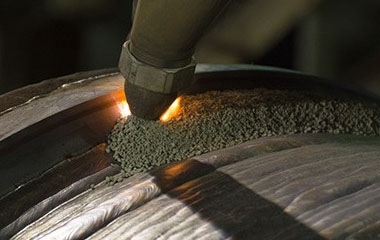
Low-hydrogen electrodes (e.g., E7018) are designed to produce high-quality, crack-resistant welds, but their flux coatings are hygroscopic, meaning they readily absorb moisture from the atmosphere. If these electrodes are exposed to humid air, their effectiveness is compromised. Similarly, the flux used in submerged arc welding (SAW) and flux-cored wires can absorb moisture, leading to the same hydrogen-related porosity issues.
As a manufacturer with ISO 9001 certification, we understand the critical importance of consumable quality. Our welding fluxes are produced from excellent raw materials like dolomite and bauxite, which are melted at 2000 °C to create a stable, glass-like granular product with controlled properties. This high-temperature process helps ensure a low-moisture starting point, but proper handling on-site remains crucial for success in shipyard welding.
Best Practices for Consumable Management
- Sealed Packaging: Keep all consumables in their original, hermetically sealed packaging until they are ready to be used. Check packaging for any damage that could have compromised the seal.
- Baking and Holding Ovens: Follow the manufacturer's recommendations for baking and storing low-hydrogen electrodes. Typically, this involves baking them in a specific temperature range to drive off any absorbed moisture and then transferring them to a holding oven (rod oven) at a lower temperature to keep them dry until use. Portable rod ovens should be used at the welding location.
- Flux Handling: Submerged arc welding flux should be stored in dry, temperature-controlled conditions. If flux is recycled, it must be properly filtered and, if necessary, re-baked according to specifications to remove contaminants and moisture. Our facility, with six production lines capable of supplying 100 tons per day, ensures that every batch of flux we ship meets stringent low-moisture standards, providing a reliable foundation for your operations.
- Wire Storage: While solid wires are less susceptible, flux-cored wires can absorb moisture. Store all wire spools in a dry, clean area and keep them covered to protect from dust and condensation.

Primary Cause 3: Incorrect Welding Parameters and Technique
The welder's technique and the settings on the welding machine play a significant role in allowing gases to escape the weld pool before it solidifies. In the often-challenging conditions of shipyard welding—such as confined spaces, out-of-position work, and exposure to wind—these factors become even more critical.
Shielding Gas Issues (GMAW/FCAW/GTAW)
The purpose of shielding gas is to protect the molten weld pool from atmospheric contamination (oxygen and nitrogen). Inadequate shielding is a direct path to porosity.
- Incorrect Flow Rate: Too low a flow rate will not provide adequate protection. Too high a flow rate can create turbulence, pulling in air from the surrounding atmosphere. Always set the flow rate according to the welding procedure specification (WPS).
- Wind and Drafts: Even a slight breeze (3-5 mph) can blow the shielding gas away from the weld. This is a common problem in open-air shipyards or large, drafty fabrication halls. Use windbreaks, welding tents, or screens to protect the weld zone.
- Leaks and Faulty Equipment: Check all gas hoses, fittings, and connections for leaks. A loose fitting or cracked hose can aspirate air into the gas stream, contaminating the weld.
- Contaminated Gas: Ensure gas cylinders are from a reputable supplier and the gas is the correct type and purity for the application.
Welding Technique and Parameters
- Arc Length: An excessively long arc increases the exposure of molten metal droplets to the atmosphere and reduces the effectiveness of the shielding gas or flux. Maintain a consistent, correct arc length for the process.
- Travel Speed: Moving too fast may not allow sufficient time for gases to escape the weld pool before it freezes. The weld pool solidifies too quickly, trapping the bubbles. Conversely, moving too slowly can overheat the plate and cause other issues.
- Weave Technique: An erratic or improper weave pattern can trap slag or gas. A steady, consistent motion is essential.
- Electrode Angle: The angle of the electrode or welding gun affects the shape of the weld pool and the action of the shielding gas. A proper push or drag angle helps the gas flow correctly over the solidifying metal.
For complex shipbuilding applications, using advanced equipment like a mig-mag-tig welding machine with precise digital controls can help maintain stable parameters, but operator skill and awareness of environmental conditions remain vital.
A Proactive Approach to Quality Control in Shipyard Welding
Preventing porosity requires a holistic and proactive approach that integrates material control, environmental management, and welder training. For global operations, from Brazil and Thailand to Australia and Malaysia, adapting these principles to local climate conditions, particularly high humidity, is key.
Establishing a robust quality control system is essential. This includes:
- Strict Material Receiving and Storage Protocols: Implement and enforce procedures for storing all welding consumables, especially low-hydrogen electrodes and fluxes.
- Mandatory Pre-Weld Cleaning: Make joint preparation and cleaning a formal, inspected step in the production process. Do not permit welding on improperly prepared surfaces.
- Regular Equipment Maintenance: Schedule routine checks for all welding machines, gas regulators, hoses, and cables to ensure they are in proper working order.
- Continuous Welder Training: Regularly train and qualify welders not just on technique, but also on the causes of defects like porosity. Empower them to identify and correct poor conditions, such as drafts or contaminated materials.
By focusing on these three core areas—cleanliness, consumable control, and correct technique—shipyard fabrication teams can drastically reduce the incidence of porosity. This commitment to quality not only ensures compliance with maritime standards but also enhances productivity by minimizing rework, ultimately contributing to the delivery of safe, reliable, and long-lasting vessels.