
Prevent Hydrogen Cracking With Covered Electrode Handling
How Proper Handling of a Covered Electrode Prevents Hydrogen Cracking
For fabrication supervisors and quality assurance personnel, few defects are as insidious as hydrogen-induced cracking (HIC), also known as cold or delayed cracking. It can appear hours or even days after a weld has passed visual inspection, leading to catastrophic failures in structural and high-strength steel applications. While factors like material selection and preheating are critical, a primary and often underestimated source of hydrogen is the welding consumable itself. Specifically, the improper handling of the covered electrode is a leading, yet entirely preventable, cause of hydrogen-related defects.
Understanding and implementing rigorous shop-floor controls for your welding consumables is not just a matter of best practice; it's a fundamental requirement for ensuring the integrity and safety of welded structures. This guide moves beyond basic product knowledge to provide actionable process controls for managing your electrode inventory and mitigating the risk of hydrogen cracking.
Understanding the Role of the Electrode Coating in Hydrogen Control
The flux coating on a shielded metal arc welding (SMAW) electrode is a complex, engineered material designed to perform multiple functions. It provides a shielding gas to protect the molten weld pool from atmospheric contamination, adds deoxidizers and scavengers to purify the weld metal, forms a slag to shape and protect the bead, and introduces alloying elements to achieve desired mechanical properties. However, a crucial function, especially in low-hydrogen electrodes (such as E7018), is to produce a weld deposit with minimal dissolved hydrogen.
The binders and compounds in these low-hydrogen coatings are specifically formulated to have a very low potential for releasing hydrogen into the arc. The trade-off is that these coatings are hygroscopic, meaning they readily absorb moisture from the surrounding atmosphere. This moisture (H₂O) becomes the primary source of diffusible hydrogen that can compromise the weld. When an electrode with a moisture-contaminated coating is used, the intense heat of the arc breaks down the water molecules, releasing atomic hydrogen which can then dissolve into the molten weld pool.
As the weld cools, this hydrogen becomes trapped. It diffuses towards areas of high stress, such as the heat-affected zone (HAZ), and accumulates at grain boundaries and microscopic discontinuities. This build-up of internal pressure eventually leads to the formation of micro-cracks that can propagate into a full-blown failure. Therefore, controlling the moisture content of the electrode coating is synonymous with controlling the hydrogen risk.
The Enemy Within: How Moisture Contaminates Your Consumables
Moisture contamination doesn't happen overnight; it's a gradual process that begins the moment a hermetically sealed package of electrodes is opened. The rate of moisture absorption depends on the type of electrode coating, the ambient humidity, and the duration of exposure.
Basic or low-hydrogen coatings, essential for welding higher-strength steels, are the most susceptible. Their chemical composition, which minimizes hydrogen, unfortunately makes them act like a sponge for airborne water vapor. Even a few hours of exposure in a humid environment can be enough to raise the moisture content of the coating above acceptable limits, typically specified by standards like the American Welding Society (AWS). For critical applications, the allowable moisture content can be as low as 0.2% by weight.
The journey of hydrogen from the atmosphere to a crack in the steel follows a clear path:
- Exposure: An opened container of electrodes is left in an uncontrolled environment, or individual electrodes are left out at a workstation.
- Absorption: The hygroscopic coating absorbs water vapor from the air.
- Decomposition: During welding, the arc's heat (~5000 °C) dissociates the H₂O in the coating into hydrogen and oxygen.
- Diffusion: Atomic hydrogen is readily dissolved into the molten weld metal and diffuses into the surrounding base metal, particularly the hardened HAZ.
- Embrittlement & Cracking: As the weld cools, the solubility of hydrogen in the steel decreases dramatically. The trapped hydrogen atoms collect at stress concentration points, causing embrittlement and initiating cracks under the surface.
This entire chain of events can be broken at the first step: preventing the exposure of the covered electrode to moisture. This is achieved through disciplined storage and handling procedures.
Shop-Floor Best Practices for Electrode Storage and Handling
Implementing a robust system for managing your electrode inventory is the most effective defense against hydrogen-induced cracking. This system should cover the entire lifecycle of the electrode, from receiving to use at the welding station.
Receiving and Initial Storage
Control begins the moment welding consumables arrive at your facility. Upon receipt, inspect all packaging for damage. Ripped or punctured containers, especially hermetically sealed cans or vacuum-sealed foil packs, should be quarantined and inspected further. Damaged packaging compromises the manufacturer's guarantee of dryness.
Store electrodes in a dedicated, dry, and climate-controlled storeroom, away from open doors or areas with high humidity. Implement a "First-In, First-Out" (FIFO) inventory system to ensure that the oldest stock is used first, minimizing the potential for long-term ambient moisture exposure. All storage should be off the floor, preferably on pallets or shelving.
Holding Ovens and Quivers
Once a hermetically sealed container of low-hydrogen electrodes is opened, the contents must be immediately transferred to a heated holding oven. These ovens are designed to maintain the electrodes at a specific temperature (typically 120 °C to 150 °C) that is high enough to prevent moisture absorption but not high enough to damage the coating.
Do not confuse holding with reconditioning (baking). A holding oven's purpose is purely preventative. For welders working away from the main oven, portable heated quivers serve the same function, maintaining the electrodes in a dry, ready-to-use condition right at the point of work.
Controlling Exposure at the Welding Station
The time an electrode spends out of a heated oven or quiver must be strictly limited. Company and project specifications often dictate a maximum exposure time, which can range from as little as 30 minutes to a few hours, depending on the electrode type and ambient conditions.
- Issue only enough electrodes for a specific period of work (e.g., a half-shift).
- Welders must return any unused electrodes to the holding oven at the end of their shift or during long breaks.
- Establish clear rules for what to do with electrodes that have been exposed beyond the allowable time. These should not be returned to the primary holding oven with fresh electrodes; they must be segregated for reconditioning.
Reconditioning Procedures for Exposed Electrodes
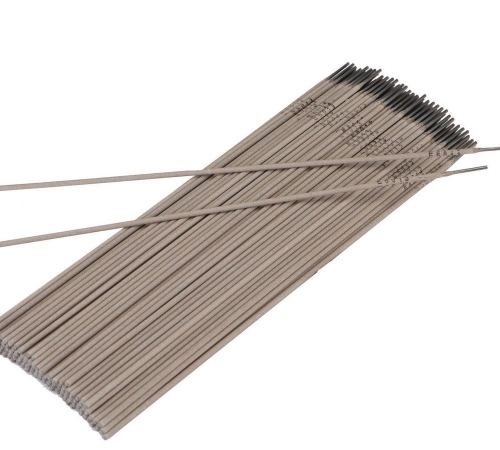
When low-hydrogen electrodes have been exposed to the atmosphere beyond their specified limit or have come from a damaged container, they may be salvaged through a reconditioning process known as baking. This involves heating the electrodes in a special high-temperature oven to drive out the absorbed moisture.
It is absolutely critical to follow the manufacturer’s specific recommendations for reconditioning. However, a general procedure is as follows:
- Arrange the electrodes in the baking oven, ensuring they are not tightly packed to allow for even air circulation.
- Slowly raise the temperature to the specified baking temperature, typically between 260 °C and 430 °C.
- Hold the electrodes at this temperature for the prescribed duration, usually one to two hours.
- After baking, the oven temperature can be reduced to a holding temperature, and the reconditioned electrodes can be stored there until needed.
Note that there is a limit to how many times an electrode can be reconditioned. Repeated baking cycles can degrade the coating's performance. Always track the history of reconditioned batches and discard any electrodes that have exceeded the manufacturer's limit. This level of process control is a hallmark of a quality-driven operation, aligning with principles found in ISO 9001 quality management systems.
Partnering with a Reliable Supplier for Consistent Quality
Your shop-floor procedures are only as effective as the quality of the consumables you start with. A successful fabrication project depends on a supply chain that delivers consistent, high-quality, and properly packaged products. This is where your choice of supplier becomes a critical control point.
As an ISO 9001 certified manufacturer, Oldwelders is committed to the highest standards of quality control. Our processes ensure that every batch of electrode meets stringent specifications for chemical composition and moisture content. Our modern plant, covering 1000 square meters with six production lines, has the capacity to supply 100 tons of welding consumables per day. This high-volume production ensures that our partners receive fresh stock, minimizing the risks associated with long-term storage before delivery.
We understand the challenges of global logistics and have extensive experience supplying key markets in Brazil, Thailand, Australia, and Malaysia. Our packaging is designed to withstand the rigors of shipping and varying climate conditions, ensuring that our welding materials arrive at your facility in the same condition they left our factory. By partnering with a reliable supplier, you establish a strong foundation for your own internal quality control programs. Whether you need an arc welding machine or high-grade consumables, starting with a quality-certified source is non-negotiable.
Ultimately, preventing hydrogen-induced cracking is a shared responsibility. It begins with a manufacturer's commitment to quality and ends with the welder's disciplined adherence to proper handling procedures. By implementing the controls outlined above, you can effectively break the chain of contamination and protect the integrity of your most critical welds, ensuring a safe and reliable finished product.