
How a Covered Electrode Coating Controls the Welding Arc
Understanding How the Coating on a Covered Electrode Governs the Welding Arc
For welding engineers and procurement managers, specifying the correct welding consumable is a critical decision that directly impacts project quality, efficiency, and cost. While the core wire of a covered electrode provides the filler metal, it is the external coating—the flux—that truly governs the welding process. This complex layer of carefully selected minerals and chemicals is not merely a protective shell; it is an active component that controls arc stability, shields the molten weld pool, and ultimately determines the mechanical properties and chemical composition of the finished weld.
Understanding the functions of this coating is essential for selecting the right consumable for your application, whether for structural steel fabrication, pipeline construction, or heavy equipment repair. This guide delves into the specific roles of the flux coating, breaking down its components to provide a clear picture of how it transforms a simple metal rod into a sophisticated welding tool.
The Fundamental Roles of an Electrode Coating
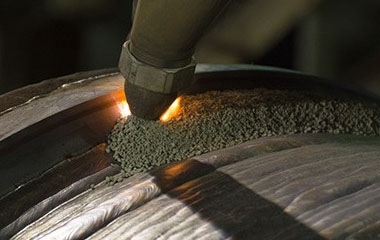
The flux coating on a shielded metal arc welding (SMAW) electrode performs several simultaneous functions as it is consumed in the arc. These functions work in concert to create a sound, high-quality weld. Without the coating, arc welding as we know it would be nearly impossible, resulting in a porous, brittle, and oxidized weld bead.
The primary roles include:
- Shielding the Arc and Weld Pool: As the coating burns, it decomposes and releases a gaseous shield of carbon dioxide and other inert gases. This shield displaces atmospheric oxygen and nitrogen from the immediate vicinity of the arc and the molten weld pool, preventing oxidation and nitriding, which lead to porosity and embrittlement.
- Forming a Protective Slag: Molten components from the flux float to the surface of the weld pool, forming a liquid slag layer. This slag is lighter than the molten metal and provides a secondary protective barrier against atmospheric contamination. It also helps shape the weld bead, holds it in place for out-of-position welding, and controls the cooling rate, which influences the final grain structure and mechanical properties of the weld metal.
- Stabilizing the Electric Arc: The arc is an inherently unstable phenomenon. The coating contains easily ionized elements, such as potassium and sodium compounds, that create a conductive path for the welding current. This results in a smoother, more stable, and more easily controlled arc, reducing spatter and improving the welder's ability to manipulate the weld pool.
- Deoxidizing and Refining the Weld Metal: The intense heat of the arc can cause reactions with even trace amounts of oxygen. The flux contains deoxidizers, such as ferromanganese and ferrosilicon, which react with oxygen to form oxides that are then absorbed into the slag. This process purifies and refines the weld metal, improving its strength and toughness.
- Adding Alloying Elements: The coating can be a vehicle for introducing specific alloying elements into the weld metal. Iron powder, chromium, nickel, and molybdenum can be included in the flux to enhance the final weld's properties, such as tensile strength, corrosion resistance, or high-temperature performance. This allows a single core wire to be adapted for a wide range of applications.
A Deeper Look at Coating Components and Their Functions
The specific behavior of a covered electrode is determined by the precise formulation of its coating. Manufacturers blend various minerals and chemicals to achieve the desired performance characteristics. These ingredients can be grouped into several key functional categories.
Gas-Forming Components
These materials decompose in the arc to produce the shielding gas. The primary gas former dictates the electrode's operational characteristics.
- Cellulose (C₆H₁₀O₅)n: Found in electrodes like E6010, cellulose is a major source of hydrogen and carbon monoxide in the shielding gas. This creates a deeply penetrating, forceful arc with a rapid freeze slag, ideal for all-position welding, especially vertical-down on pipelines. The high hydrogen content, however, requires careful consideration to avoid hydrogen-induced cracking in certain steels.
- Carbonates (e.g., Calcium Carbonate - CaCO₃): Common in low-hydrogen electrodes like E7018, carbonates decompose to form carbon dioxide (CO₂) and a basic slag. This creates a lower-spatter, more manageable arc and produces a weld deposit with very low diffusible hydrogen, crucial for welding high-strength or thick-section steels.
Slag-Forming and Shaping Components
These components melt to form the slag system, which protects, shapes, and cleans the weld metal.
- Titanium Dioxide (TiO₂): In its rutile or anatase forms, TiO₂ is a primary component in versatile electrodes like the AWS E6013 welding electrodes. It promotes excellent arc stability, easy slag removal, a smooth bead appearance, and good operational characteristics on both AC and DC currents.
- Silica and Silicates (e.g., SiO₂, K₂SiO₃): These are fundamental glass-formers that influence the viscosity and freezing point of the slag. They help control the bead shape and are often used in conjunction with other slag formers to fine-tune performance. Potassium silicate also doubles as a binder and an arc stabilizer.
- Fluorspar (CaF₂): A key ingredient in basic, low-hydrogen electrode coatings. Fluorspar increases slag fluidity, allowing gases to escape the molten weld pool easily. It is also highly effective at removing impurities like sulfur and phosphorus, resulting in a high-purity weld metal with excellent toughness and crack resistance.
Arc Stabilizers
Arc stabilizers are essential for maintaining a consistent and easily manageable arc, especially with AC power sources.
- Potassium and Sodium Compounds: These elements have low ionization potential, meaning they readily release electrons in the arc. This creates a stable and conductive plasma column for the current to flow through, resulting in a smooth arc with minimal "arc blow" or extinguishment. Potassium compounds are particularly effective for AC operation.
Deoxidizers and Alloying Elements
These metallic components are added to purify the weld metal or modify its final properties.
- Ferromanganese and Ferrosilicon: These are powerful deoxidizers. They have a stronger affinity for oxygen than iron does, so they combine with any free oxygen in the weld pool, forming oxides that are absorbed by the slag. This prevents the formation of porosity (wormholes) and improves the mechanical integrity of the weld.
- Metal Powders: Iron powder is often added to increase deposition rates and improve efficiency, creating "high-recovery" electrodes. Other powders like chromium, nickel, and molybdenum are added to produce alloy steel weld deposits with specific properties tailored for demanding service conditions.
How Coating Composition Dictates Electrode Classification
The American Welding Society (AWS) classification for a covered electrode, such as E7018, is a code that directly reflects its coating, intended use, and mechanical properties. The last two digits are particularly informative about the coating type and required current.
- EXX10/EXX11 (Cellulosic): High cellulose content. Deep penetration, all-position capability. Requires DC+ polarity. Used for pipe and general fabrication where deep fusion is critical.
- EXX12/EXX13 (Rutile): High titania (rutile) content. Smooth arc, low spatter, and good bead appearance. General-purpose electrodes for sheet metal and light fabrication. Works well on AC and DC.
- EXX18 (Basic/Low-Hydrogen): High in calcium carbonate and fluorspar. Produces high-quality, crack-resistant welds with excellent mechanical properties. Requires DC+ or AC and must be kept in a dry condition to maintain its low-hydrogen characteristics. This is the standard for critical structural and pressure vessel work.
This system allows engineers to specify an electrode with confidence, knowing its coating is formulated to deliver the required performance, from arc characteristics to the final deposit's toughness and hydrogen content.
Selecting the Right Coated Electrode for Your Application
Choosing the correct covered electrode involves matching the coating's characteristics to the demands of the job. Procurement teams and engineers should consider several factors:
- Base Metal Type: The electrode must be metallurgically compatible with the base material. Low-hydrogen electrodes (E7018) are essential for high-carbon and high-strength steels to prevent hydrogen cracking.
- Welding Position: Electrodes with fast-freezing slag (e.g., E6010, E7018) are necessary for vertical or overhead welding to prevent the weld pool from sagging.
- Required Mechanical Properties: The specification must meet the tensile strength, ductility, and impact toughness requirements of the application. The electrode's classification (e.g., "70" in E7018 denotes 70,000 psi tensile strength) is the primary guide.
- Power Source Availability: Ensure the chosen electrode is compatible with the available arc welding machine (AC, DC+, or DC-).
- Joint Design and Fit-Up: A deeply penetrating electrode like E6010 is excellent for cutting through rust or poor fit-up, while a rutile electrode like E6013 is better for smooth beads on clean, well-fitted joints.
Manufacturing Excellence in Electrode Production
The performance of a covered electrode is entirely dependent on the quality and consistency of its manufacturing. A reliable supplier ensures that every batch meets stringent specifications, providing predictable and repeatable results for fabricators. At Oldwelders, our commitment to quality is foundational to our production process.
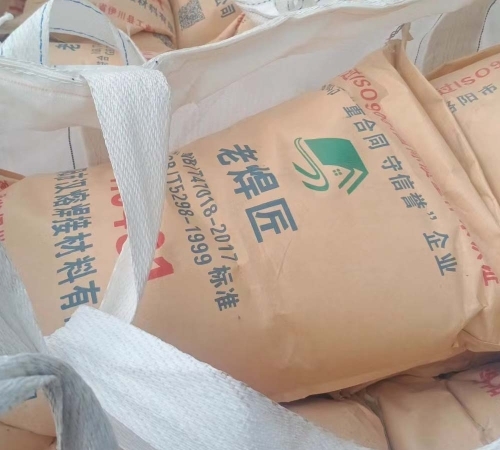
As an ISO 9001 certified manufacturer, we adhere to strict quality control protocols at every stage. The process begins with the sourcing of excellent raw materials, including high-purity dolomite, bauxite, cryolite, silica, and fluorine ore. These materials form the basis of our flux formulations and are melted at extreme temperatures of 2000 °C to ensure absolute purity and chemical homogeneity before being applied to the core wire.
Our 1000-square-meter plant is equipped with six modern production lines, giving us the capacity to supply up to 100 tons of finished welding consumables per day. This scale allows us to serve large industrial projects in our key markets of Brazil, Thailand, Australia, and Malaysia, with a standard lead time of 30 days and a minimum order quantity of 1 ton. This combination of quality-controlled manufacturing and robust production capacity ensures that our clients receive a consistent, high-performance product they can depend on for their most critical applications.
The intricate science of the flux coating is what elevates a simple stick of wire into a precision welding tool. By controlling everything from arc stability to weld metal chemistry, the coating is the key to achieving strong, reliable, and clean welds. Choosing a supplier who masters this science is the first step toward successful fabrication.