
Covered Electrodes: Coating Types and Weld Behavior
Understanding How Covered Electrode Coatings Influence Weld Behavior
In Shielded Metal Arc Welding (SMAW), the quality and efficiency of the operation depend heavily on the consumable used: the covered electrode. While often seen as a simple "stick," this component is a sophisticated engineered product. The core wire provides the filler metal, but it is the flux coating that dictates everything from arc stability and weld pool protection to the final mechanical properties of the weld deposit. For procurement managers, welding engineers, and fabrication planners, selecting the correct electrode is a critical decision that impacts project timelines, costs, and structural integrity.
This guide provides a detailed comparison of the primary coating families, moving beyond a simple list of types to explore how their chemical composition directly influences weld behavior. Understanding these relationships is key to specifying the right consumable for your application, ensuring optimal performance and avoiding costly rework.
The Fundamental Functions of an Electrode Coating
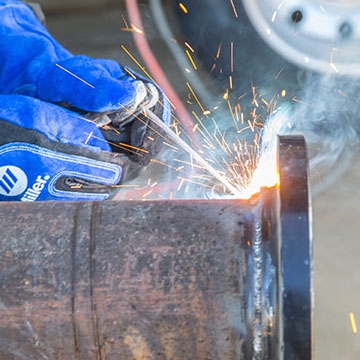
The flux coating on a covered electrode is a carefully formulated mixture of minerals, metals, and chemical compounds. When consumed in the electric arc, it performs several essential functions simultaneously, transforming a basic welding process into a reliable and versatile joining method.
- Shielding Gas Generation: The intense heat of the arc decomposes components in the coating, primarily carbonates and cellulose, to create a protective gaseous shield. This shield displaces atmospheric oxygen and nitrogen from the immediate vicinity of the molten weld pool, preventing porosity, embrittlement, and weld defects.
- Slag Formation: Silicates, oxides, and fluorides in the coating melt to form a liquid slag. Being less dense than the molten steel, this slag floats to the surface of the weld pool. It protects the cooling weld metal from atmospheric contamination, helps shape the weld bead, and controls the cooling rate, which can refine the grain structure and improve mechanical properties.
- Deoxidation and Cleaning: The weld pool can absorb oxygen from base metal scale or the atmosphere. Deoxidizing agents like manganese and silicon are included in the coating to react with these oxides, forming compounds that are then absorbed into the slag. This "cleanses" the weld metal, resulting in a sounder deposit.
- Arc Stabilization: Ionizing elements, such as potassium and sodium compounds, are added to the coating to help initiate and maintain a stable electric arc. A stable arc is easier for the welder to control, resulting in a more uniform weld bead and reduced spatter.
- Alloying Element Addition: For welding alloy steels or achieving specific mechanical properties, metallic powders like chromium, nickel, and molybdenum can be added to the coating. These elements transfer across the arc and become part of the final weld deposit, ensuring its properties match or exceed those of the base material.
A Comparative Analysis of Major Coating Families
Electrodes are classified into families based on the primary constituents of their flux coating. Each family offers a unique set of operating characteristics and produces a weld with distinct properties. The three most common families for carbon and low-alloy steels are cellulose, rutile, and basic (low-hydrogen).
Cellulose Coatings (e.g., E6010, E6011)
Cellulose-coated electrodes contain a high proportion of organic material in their flux. When this cellulose burns in the arc, it produces a significant volume of hydrogen and carbon dioxide, creating a powerful, deeply penetrating arc stream.
- Weld Behavior: The arc is forceful and often described as a "digging" or "driving" arc. This makes it exceptionally well-suited for welding through rust, oil, and mill scale. The slag produced is thin, friable, and fast-freezing, which is a major advantage for welding in vertical and overhead positions, as it prevents the weld pool from sagging.
- Deposition Rate: Deposition rates are relatively low, and spatter levels can be high.
- Applications: These electrodes excel in cross-country pipeline welding (for root passes), ship repair, and general maintenance where base metal cleanliness is not guaranteed. They are typically used with Direct Current Electrode Positive (DCEP) polarity.
Rutile Coatings (e.g., E6013, E7014)
Rutile, a mineral form of titanium dioxide, is the main component in this popular coating type. These electrodes are known for their excellent usability and smooth operating characteristics.
- Weld Behavior: Rutile coatings produce a soft, quiet arc that is easy to control, making them a favorite for novice and experienced welders alike. The slag is dense, viscous, and provides excellent bead-shaping capabilities, resulting in a smooth, aesthetically pleasing weld finish. Slag removal is typically very easy. Penetration is shallow to medium.
- Deposition Rate: Deposition rates are moderate. Some rutile electrodes, like the E7014, include iron powder in the coating to increase deposition speed. Our range of aws e6013 welding electrodes are a prime example of this versatile category.
- Applications: Ideal for general-purpose fabrication, sheet metal work, and applications where appearance is important. They are highly versatile and can be used in all positions with AC or DC polarity.
Basic / Low-Hydrogen Coatings (e.g., E7016, E7018)
These coatings are formulated with calcium carbonate and calcium fluoride, containing minimal amounts of organic materials and moisture. Their primary advantage is the deposition of weld metal with very low levels of diffusible hydrogen, which is critical for preventing hydrogen-induced cracking in high-strength, thick, or restrained steel sections.
- Weld Behavior: The arc is smooth and moderately penetrating. The slag is heavy, thick, and requires more effort to remove than rutile slag. These electrodes produce high-quality, X-ray-sound welds with excellent ductility and impact toughness, even at low temperatures.
- Operational Requirements: To maintain their low-hydrogen characteristics, these electrodes must be stored in controlled-humidity environments or baked in specific ovens before use. This requires strict procedural control, something our ISO 9001 certified quality management system helps our clients maintain.
- Applications: Essential for welding high-strength steels, pressure vessels, power generation components, and other critical structural applications where weld failure is not an option.
Matching the Covered Electrode to Your Application
Choosing the right electrode involves balancing the demands of the application with the performance trade-offs of each coating type. The following table provides a decision-making framework for common scenarios.
| Coating Type | Arc Characteristics | Penetration | Position Capability | Primary Application |
|---|---|---|---|---|
| Cellulose (E6010) | Forceful, Driving | Deep | All positions, excels in vertical/overhead | Pipe root passes, dirty or rusty materials |
| Rutile (E6013) | Soft, Smooth | Shallow to Medium | All positions | General fabrication, sheet metal, good aesthetics |
| Basic / Low-Hydrogen (E7018) | Smooth, Moderate Force | Medium | All positions | Critical structures, high-strength steels, pressure vessels |
| Iron Powder (E7024) | Smooth, Drag Technique | Shallow | Flat and horizontal only | High-deposition filling of joints and grooves |
Operational Factors and Power Source Compatibility
Beyond the coating chemistry, practical operational factors play a role in selection. The welding power source is a key consideration. While many modern inverter-based power sources can handle a wide range of electrodes, the type of current and polarity significantly affects performance.
- AC (Alternating Current): Rutile electrodes often run well on AC, making them suitable for use with less expensive transformer-based machines.
- DCEP (Direct Current Electrode Positive): This polarity provides deeper penetration and is required for most cellulose (E6010) and many basic (E7018) electrodes.
- DCEN (Direct Current Electrode Negative): This polarity results in lower penetration and higher deposition rates, often used for sheet metal or build-up applications.
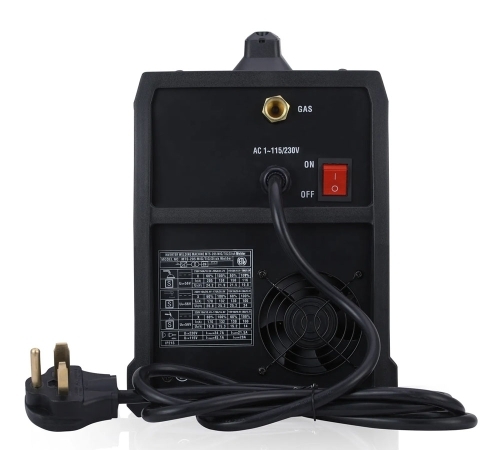
The choice of power source is directly linked to electrode performance. For demanding applications requiring specific electrode types, investing in a versatile arc welding machine that offers stable control over both AC and DC outputs is crucial for achieving consistent, high-quality results.
Ensuring Quality and Supply Chain Reliability
The performance of any covered electrode is only as good as its manufacturing process. Inconsistent coating thickness, eccentricity (off-center core wire), and improper chemical composition can lead to arc instability, porosity, and inconsistent weld properties. Therefore, partnering with a manufacturer with robust quality control is paramount.
At Oldwelders, we operate a 1000-square-meter facility with six production lines, capable of supplying 100 tons of welding consumables per day. This scale allows us to serve industrial clients in demanding markets from Brazil and Thailand to Australia and Malaysia. Our process begins with excellent raw materials—including high-purity dolomite, bauxite, silica, and fluorine ore—which are melted at 2000 °C to create the foundational components of our flux coatings. This meticulous control over inputs ensures the final product delivers predictable and reliable performance.
For B2B buyers, supply chain stability is as important as product quality. We support our partners with a standard lead time of 30 days and a minimum order quantity (MOQ) of 1 ton, providing the predictability needed for large-scale project planning. Whether you require a standard stick electrode or other specialized welding materials, a reliable manufacturing partner is the foundation of a successful welding operation.
Ultimately, the coating on an electrode is not merely a passive shell; it is an active, complex system that defines the arc's behavior, protects the weld, and determines the final metallurgical properties of the joint. By understanding the distinct characteristics of cellulose, rutile, and basic coatings, you can make an informed decision, ensuring every weld meets the required standards for quality, strength, and integrity.