
Verifying Flux Manufacturer Batch Consistency
Verify a Flux Manufacturer’s Batch Consistency
For any technical buyer or quality assurance manager in the welding industry, the reliability of materials is paramount. While securing a supplier for welding fluxes might seem straightforward, ensuring consistent batch-to-batch quality from your chosen flux manufacturer is a complex but crucial task. Inconsistent fluxes can lead to costly rework, compromised weld integrity, and significant production delays. This guide outlines the essential steps and considerations for validating a prospective supplier's ability to deliver repeatable, high-quality welding results every time.
At Oldwelders, we understand the critical importance of consistency in industrial applications. As an ISO 9001 certified organization, our commitment to quality spans every stage of production, from raw material sourcing to final product delivery. Our modern plant, covering an area of 1000 square meters and housing six advanced production lines, is engineered for precision and scale, capable of supplying up to 100 tons of flux products daily. This robust infrastructure, combined with rigorous quality control, positions us as a dependable partner for businesses in target markets such as Brazil, Thailand, Australia, and Malaysia.
The Indispensable Role of Batch Consistency in Welding Operations
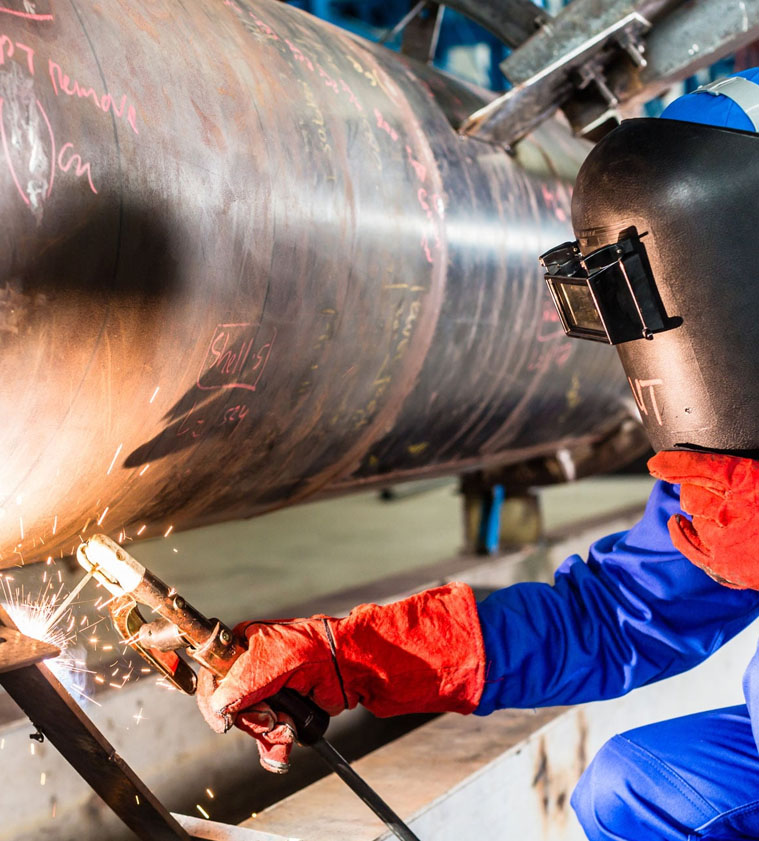
Welding fluxes are not merely auxiliary materials; they are integral components that directly influence the mechanical properties, appearance, and overall success of a weld. Whether used in submerged arc welding, electroslag welding, or other processes, the chemical composition, particle size distribution, and moisture content of a flux must remain consistent across all batches. Any deviation can lead to a cascade of problems, including:
- Variable Weld Penetration: Inconsistent flux activity can cause unpredictable penetration depths, leading to weak joints or burn-throughs.
- Alloy Contamination: Unexpected changes in flux composition can introduce unwanted elements into the weld pool, altering the metallurgical properties of the joint.
- Increased Porosity and Cracking: Variations in deoxidizing agents or slag formation properties can result in gas entrapment and solidification cracks.
- Inconsistent Bead Appearance: A non-uniform flux can lead to poor bead shape, excessive spatter, and slag detachability issues, necessitating additional post-welding cleanup.
- Higher Rework Rates and Costs: Ultimately, these inconsistencies translate into increased inspection, repair, and scrap, driving up operational costs and impacting project timelines.
For high-volume manufacturing environments, where thousands of welds are performed daily, even minor batch variations can accumulate into substantial losses. Therefore, selecting a flux manufacturer capable of maintaining stringent consistency is not just a preference, but a fundamental requirement for operational excellence and product integrity.
Hallmarks of a Quality-Driven Flux Manufacturer
Identifying a reliable flux manufacturer goes beyond simply reviewing product specifications. It involves a deep dive into their operational philosophies, manufacturing processes, and quality assurance frameworks. Here are the key indicators to scrutinize:
Rigorous Raw Material Sourcing and Purity Control
The quality of the final flux product is inherently tied to the purity and consistency of its raw ingredients. A reputable flux manufacturer implements strict protocols for sourcing and testing every incoming raw material. At Oldwelders, we begin with excellent dolomite, bauxite, cryolite, silica, fluorine ore, and other high-grade ores. These materials undergo meticulous inspection and analysis before processing. Our unique melting process, conducted at an extreme temperature of 2000 °C, ensures the homogenization and purification of these raw components, laying a solid foundation for batch consistency.
Advanced Manufacturing Processes and Automation
Manual processes introduce variability. A state-of-the-art flux manufacturer leverages automation and sophisticated manufacturing techniques to minimize human error and ensure precise control over every step. Our facility, with its six production lines across 1000 square meters, exemplifies this commitment. These lines are designed for consistent mixing, agglomeration, sintering, and crushing processes, all calibrated to exacting standards. Such controlled environments are crucial for achieving the uniform particle size, density, and chemical composition required for high-performance welding materials.
Comprehensive Quality Assurance and Testing Protocols
ISO 9001 certification is a strong indicator of a manufacturer's dedication to quality management, but the specific QA procedures are equally important. A reliable flux manufacturer will employ a multi-layered testing approach, including:
- In-Process Checks: Regular sampling and analysis during production to catch deviations early.
- Batch-Specific Testing: Each production batch should undergo a full suite of tests for chemical composition, physical properties (e.g., bulk density, moisture content, particle size distribution), and welding performance.
- Retention Samples: Maintaining samples from each batch for future reference or retesting.
- Statistical Process Control (SPC): Utilizing data analysis to monitor and control the manufacturing process, identifying trends and preventing out-of-spec products.
Oldwelders' adherence to ISO 9001 standards means these protocols are not just suggestions but integrated practices, ensuring that every ton of flux we produce, up to our daily capacity of 100 tons, meets the specified criteria.
Practical Methodologies for Verifying Flux Manufacturer Consistency
For technical buyers and QA managers, a proactive approach to supplier validation is essential. Here are concrete steps to verify a flux manufacturer's batch consistency:
Scrutinize Documentation and Certifications
Start by requesting a comprehensive documentation package. This should include:
- Certificates of Analysis (CoAs): Demand CoAs for multiple past batches, not just a single sample. Compare these documents to identify any significant fluctuations in critical parameters. A consistent CoA across various batches is a strong indicator of reliable manufacturing.
- ISO 9001 Certification: Verify the validity and scope of their ISO 9001 certification. This internationally recognized standard confirms a robust quality management system is in place. Oldwelders proudly maintains this certification, reflecting our commitment to global quality benchmarks.
- Material Safety Data Sheets (MSDS): Ensure all safety information is current and comprehensive.
Conduct Thorough Factory Audits and Site Visits
There's no substitute for seeing the operation firsthand. A factory audit allows you to:
- Observe Production Lines: Assess the cleanliness, organization, and level of automation on their six production lines. Look for evidence of standardized operating procedures.
- Inspect Raw Material Storage: Verify proper segregation, labeling, and environmental control for raw materials like dolomite and bauxite, preventing contamination or degradation.
- Evaluate Quality Control Laboratories: Review their testing equipment, calibration records, and the qualifications of their lab personnel. Discuss their specific testing methodologies for welding materials.
- Interview Key Personnel: Engage with QA managers, production supervisors, and R&D staff to understand their quality philosophy and problem-solving approaches.
Implement Independent Sample Testing and Performance Evaluation
Before committing to large orders, conduct independent testing:
- Request Multiple Batch Samples: Obtain samples from at least three different production batches. This is crucial for verifying consistency.
- Laboratory Analysis: Send these samples to an independent third-party lab for chemical and physical analysis, comparing results against the manufacturer's CoAs and your own specifications.
- In-House Welding Trials: Conduct welding tests using the samples under your typical operating conditions. Evaluate weld penetration, bead appearance, slag removal, mechanical properties, and defect rates. For specific applications, testing a submerged arc welding flux hj431 according to your standards would be a practical step.
Understand Supply Chain Logistics and Minimum Order Requirements
Logistical capabilities also play a role in consistent supply. Discuss lead times and minimum order quantities. Oldwelders, for instance, typically works with a 30-day lead time for orders, and our minimum order quantity (MOQ) is set at 1 ton, ensuring we can cater to substantial B2B requirements efficiently across our markets in Brazil, Thailand, Australia, and Malaysia. Consistent delivery schedules and robust packaging further contribute to maintaining product integrity from our plant to your facility.
Partnering with an Expert Flux Manufacturer for Unwavering Quality
The process of verifying a flux manufacturer’s batch consistency is an investment that pays dividends in operational efficiency, product quality, and cost savings. By focusing on raw material quality, advanced manufacturing, stringent QA, and thorough validation, you can secure a supplier that consistently meets your demanding specifications.
Oldwelders stands ready to meet these rigorous standards. Our ISO 9001 certification, combined with our extensive production capacity of 100 tons per day from six sophisticated lines, ensures that partners worldwide receive only the highest quality, most consistent welding fluxes. Whether you require specific welding fluxes, electrodes, or industrial welding machine solutions, you can trust Oldwelders to deliver performance and reliability. We invite you to explore our comprehensive range of welding materials and discover how our commitment to consistency can enhance your welding operations.