Understanding How SAW Flux Basicity Influences Weld Metal Chemistry
Understanding How SAW Flux Basicity Influences Weld Metal Chemistry
For fabrication and welding-process teams, achieving consistent and predictable mechanical results in submerged arc welding (SAW) hinges on a meticulous understanding of all process variables. While welding parameters and wire selection are often at the forefront, the role of welding fluxes, specifically their basicity, is equally critical yet sometimes overlooked. The right SAW flux does more than just shield the arc; it actively participates in the metallurgy of the weld pool, profoundly influencing the final weld metal chemistry and, consequently, its mechanical properties.
This article delves into the intricate relationship between SAW flux basicity and weld metal chemistry, providing a comprehensive guide for professionals seeking to optimize their welding procedures. By understanding how flux basicity dictates element transfer, inclusion formation, and impurity removal, welding engineers can make informed decisions that lead to superior weld quality, enhanced performance, and increased operational efficiency.
The Fundamental Role of SAW Flux in Submerged Arc Welding
Submerged Arc Welding (SAW) is renowned for its high deposition rates and deep penetration, making it a preferred choice for heavy fabrication across various industries. At its core, the process relies on a granular, fusible material – the SAW flux – that completely covers the arc. While its primary functions include shielding the arc from atmospheric contamination, stabilizing the arc, and shaping the weld bead, its metallurgical interactions with the weld pool are equally significant.
The flux melts under the intense heat of the arc, forming a molten slag that floats on top of the weld pool. This slag acts as a refining agent, influencing the transfer of elements between the wire, base metal, and the flux itself. This dynamic interaction directly impacts the oxygen content, inclusion morphology, and the concentration of critical alloying and impurity elements within the solidified weld metal. Oldwelders, as an ISO 9001 certified manufacturer, understands that the quality of these interactions starts with meticulously controlled flux formulations, ensuring our customers receive products that consistently meet the highest industry standards.
Defining Basicity in SAW Fluxes and Its Measurement
Basicity is a fundamental characteristic of SAW fluxes that describes their chemical reactivity in the molten state. In metallurgical terms, it refers to the ratio of basic oxides (like CaO, MgO, MnO, Na2O, K2O, CaF2) to acidic oxides (like SiO2, Al2O3, TiO2, ZrO2) present in the flux composition. This ratio is typically quantified using a basicity index, with higher values indicating a more basic flux.
Fluxes are generally categorized into:
- Acidic Fluxes: Characterized by a high content of acidic oxides (e.g., SiO2, Al2O3). They typically have lower basicity indexes.
- Neutral Fluxes: Possess a more balanced composition of basic and acidic oxides, resulting in a basicity index close to unity.
- Basic Fluxes: Dominated by basic oxides, leading to higher basicity indexes. These fluxes are often designed for applications requiring superior mechanical properties.
- Highly Basic Fluxes: Represent the extreme end of the basicity spectrum, containing a very high proportion of basic oxides.
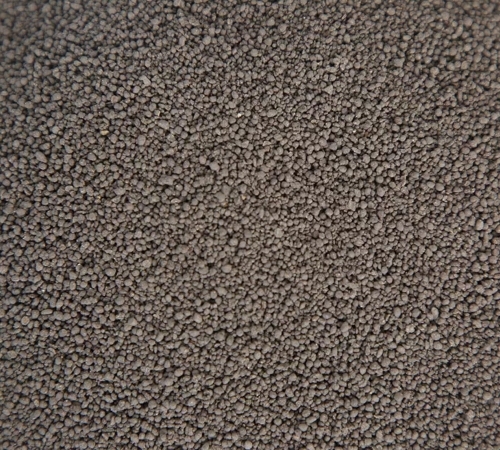
The raw materials used in the production of welding fluxes directly dictate their basicity. For instance, excellent dolomite and bauxite contribute basic oxides, while silica and fluorine ore typically contribute acidic components. At Oldwelders, we rigorously select and process these raw materials, including cryolite, ensuring they are melted at precise temperatures of 2000 °C to create homogeneous and high-performance flux granules that meet specific basicity requirements for diverse welding applications.
How Basicity Directly Alters Weld Metal Chemistry
The basicity of a SAW flux is a primary determinant of the chemical reactions that occur in the weld pool, leading to distinct changes in the final weld metal composition. These changes are crucial for achieving specific mechanical properties and overall weld integrity.
Oxygen Content and Inclusions
One of the most significant impacts of flux basicity is on the oxygen content in the weld metal. Acidic fluxes tend to produce welds with higher oxygen levels, primarily due to the dissociation of SiO2 and other oxygen-containing compounds into the weld pool. This higher oxygen content promotes the formation of numerous oxide inclusions, often silicates, which can act as stress concentrators and reduce the weld's fracture toughness and impact resistance.
Conversely, basic and highly basic fluxes are designed to minimize oxygen transfer into the weld metal. Their compositions are less prone to dissociation, leading to lower oxygen levels and, consequently, fewer and finer non-metallic inclusions. This reduction in inclusions is a key factor in achieving superior toughness and ductility, particularly in critical applications.
Manganese and Silicon Transfer
Manganese (Mn) and Silicon (Si) are common deoxidizers and alloying elements in welding solid wire. The transfer efficiency of these elements from the wire to the weld metal is heavily influenced by flux basicity. Acidic fluxes often cause a significant transfer of Mn and Si from the flux into the weld metal, sometimes leading to an increase in their concentrations beyond what is desired from the welding wire.
Basic fluxes, by contrast, are generally characterized by a lower tendency to transfer Mn and Si from the flux. This means that the weld metal composition for these elements will more closely reflect the composition of the welding wire and base metal. This characteristic is particularly advantageous when precise control over alloy chemistry is required, allowing the welding engineer to rely more heavily on the welding materials composition for the final weld properties.
Sulfur and Phosphorus Reduction
Sulfur (S) and Phosphorus (P) are detrimental impurities in steel, known to cause hot cracking, embrittlement, and reduced toughness. Highly basic fluxes excel at removing these impurities from the weld pool. The basic slag actively absorbs sulfur and phosphorus, effectively transferring them out of the molten metal and into the slag phase. This desulfurization and dephosphorization capability of basic fluxes is invaluable for producing high-quality welds with enhanced ductility and impact properties, especially in applications where base metals may have higher levels of these impurities.
Impact on Alloying Elements
Beyond Mn and Si, flux basicity also influences the transfer and retention of other alloying elements such as nickel (Ni), chromium (Cr), and molybdenum (Mo). Basic fluxes tend to be more "metallurgically neutral" in terms of alloy element transfer, meaning they preserve the alloying elements present in the welding wire and base metal more effectively. This is crucial for welding high-strength low-alloy (HSLA) steels and other specialized alloys where specific chemical compositions are required to achieve target mechanical properties. Acidic fluxes, due to their higher oxidizing potential, can sometimes lead to a loss of these valuable alloying elements from the weld metal.
Matching SAW Flux Basicity to Achieve Desired Weld Properties
The judicious selection of SAW flux basicity is paramount for optimizing weld performance and meeting specific application requirements. This selection process involves a careful consideration of desired mechanical properties, base metal chemistry, and welding wire composition.
For High Toughness and Impact Resistance
When applications demand exceptional toughness, especially at low temperatures, and superior impact resistance, basic to highly basic fluxes are the preferred choice. These fluxes minimize oxygen content, reduce inclusion formation, and effectively remove detrimental impurities like sulfur and phosphorus. This results in a cleaner, tougher weld metal microstructure that is less prone to brittle fracture. Typical applications include critical structures in offshore platforms, pressure vessels, pipelines, and heavy construction where structural integrity under extreme conditions is non-negotiable.
For High Deposition Rates and Soundness
In scenarios where high productivity and good weld bead appearance are primary concerns, and extreme toughness is not the overriding factor, neutral to slightly acidic fluxes may be considered. These fluxes often provide excellent arc stability, good bead shape, and high deposition rates, which can be advantageous for general fabrication and resurfacing operations. However, it is essential to balance these benefits against potential reductions in impact toughness compared to welds made with basic fluxes.
For Specific Alloy Welding
When welding specialized alloys such as stainless steels or various low-alloy steels, maintaining precise control over the weld metal chemistry is vital. Basic fluxes are often recommended here because they are more "transparent" to the alloying elements in the welding wire, minimizing unwanted chemical reactions and preserving the intended properties of the alloy. This ensures that the weld metal chemistry closely matches the design specifications for corrosion resistance, strength, and other specific characteristics.
The interplay between flux basicity, welding wire, and the chosen welding machine parameters is complex. Achieving optimal results requires a holistic approach, where each component is selected to complement the others. Oldwelders supports this need with extensive production capabilities; our plant covers an area of 1000 square meters and has six production lines, which together can supply up to 100 tons of flux daily. This robust capacity ensures we can meet the diverse and demanding needs of our B2B partners, from small custom orders (minimum order quantity of 1 ton) to large-scale industrial requirements.
Practical Considerations for Selecting the Right SAW Flux
Selecting the appropriate SAW flux basicity is a multi-faceted decision that requires careful evaluation of several practical factors:
- Application Requirements: Understand the service environment (temperature, corrosive agents, dynamic loads) and any relevant industry standards or codes (e.g., ASME, AWS) that dictate minimum mechanical properties.
- Base Metal Chemistry: Analyze the composition of the base material. This will inform the choice of flux that either complements existing elements or helps remove undesirable impurities.
- Welding Wire Composition: The interaction between the welding wire and the flux is critical. Choose a flux that works synergistically with the wire to achieve the target weld metal chemistry.
- Desired Mechanical Properties: Clearly define the required tensile strength, yield strength, elongation, and especially impact toughness (e.g., Charpy V-notch values at specific temperatures).
- Welding Parameters: While flux basicity is key, welding parameters like voltage, current, and travel speed also influence the slag-metal reactions and the overall weld profile.
- Cost-Benefit Analysis: Consider the total cost of the welding consumable system versus the performance benefits and potential rework costs. Higher-performance basic fluxes may have a higher initial cost but can significantly reduce failures and improve product longevity.
Oldwelders is committed to supporting our clients in making these critical selections. Our extensive experience serving target markets such as Brazil, Thailand, Australia, and Malaysia demonstrates our global reach and understanding of diverse industrial demands. We also ensure efficient logistics, with a typical lead time of 30 days for many of our products, allowing our partners to plan their operations with confidence.
Oldwelders' Commitment to Quality and Performance in SAW Flux Production
At Oldwelders, we pride ourselves on being a trusted partner for B2B clients seeking high-performance welding solutions. Our commitment to quality begins with the selection of raw materials – excellent dolomite, bauxite, cryolite, silica, and fluorine ore – which are meticulously processed and melted at 2000 °C to create premium submerged arc welding flux HJ431 and other formulations. This rigorous manufacturing process, coupled with our ISO 9001 certification, ensures that every batch of flux meets stringent quality controls and delivers consistent metallurgical performance.
Our expansive facility, covering 1000 square meters and housing six advanced production lines, boasts a daily supply capacity of 100 tons. This robust infrastructure allows us to accommodate diverse order sizes, from the minimum order quantity of 1 ton to large-scale industrial demands, all while maintaining our commitment to timely delivery and exceptional product quality. Beyond welding fluxes, Oldwelders offers a comprehensive range of welding consumables and equipment, including welding machines, welding wire, and welding rods, providing a complete solution for various industrial welding needs.

Understanding and applying the principles of SAW flux basicity is not merely a technical detail; it is a strategic advantage for any fabrication or welding-process team aiming for optimal results. By precisely matching flux basicity to weld metal chemistry, engineers can achieve the desired mechanical properties, enhance weld integrity, and ensure the long-term performance of welded structures. Oldwelders stands ready to support your operations with our expertise and a range of high-quality SAW fluxes designed to meet the most demanding specifications.