
How to Choose SAW Flux for Low-Temperature Toughness
How to Choose SAW Flux for Low-Temperature Toughness
In demanding industrial applications such as pressure vessels, offshore structures, and pipelines operating in frigid environments, achieving exceptional low-temperature toughness in weldments is paramount. This critical property ensures the structural integrity and reliability of components under extreme cold, preventing brittle fracture. The selection of welding consumables, particularly the submerged arc welding flux, plays a decisive role in dictifying the final metallurgical and mechanical properties of the weld metal. For welding engineers tasked with qualifying consumables for these challenging conditions, understanding the intricate relationship between flux composition, wire pairing, and welding parameters is essential.
Understanding Low-Temperature Toughness Requirements
Low-temperature toughness is primarily quantified through Charpy V-notch (CVN) impact testing, where specimens are subjected to impact at specified sub-zero temperatures. The energy absorbed during fracture indicates the material's resistance to brittle failure. Project specifications often mandate minimum absorbed energy values at target temperatures, which can range from -20 °C to -60 °C or even lower, depending on the service environment. Adherence to international standards, such as those from API, DNV, and various EN specifications, guides these requirements and dictates the necessary testing protocols.
The microstructure of the weld metal is the fundamental determinant of its toughness. Finer, more acicular microstructures, often a blend of fine-grained ferrite and bainite, generally exhibit superior toughness compared to coarser microstructures with large grain boundaries or unfavorable inclusion morphologies. Controlling these microstructural features through consumable selection and welding procedure is key to meeting stringent low-temperature performance criteria.
The Role of SAW Flux Basicity and Composition
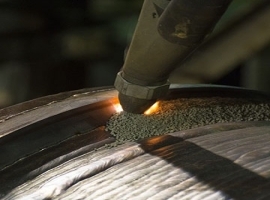
The basicity index of a submerged arc welding flux is a crucial indicator of its metallurgical behavior and impact on weld metal properties. Fluxes are generally categorized as acidic, neutral, or basic, with basic fluxes typically offering superior low-temperature toughness. This is because basic fluxes promote a lower oxygen content in the weld pool, leading to cleaner weld metal with fewer non-metallic inclusions and a more favorable inclusion morphology. These inclusions, often silicates or aluminates, can act as stress concentrators if present in detrimental forms, initiating cracks and reducing toughness.
Beyond basicity, the specific chemical composition of the SAW flux is critical. Oldwelders prioritizes the metallurgical integrity of our welding fluxes by utilizing excellent raw materials such as dolomite, bauxite, cryolite, silica, and fluorine ore. These select ores are melted at an extremely high temperature of 2000 °C during our manufacturing process. This precise thermal treatment ensures the consistent quality and uniform composition required for reliable performance in critical applications. The presence of specific deoxidizers and alloying elements within the flux, transferred to the weld metal, can further refine the microstructure, enhancing toughness and strength. For instance, controlled additions of manganese (Mn) and silicon (Si) from the flux can help deoxidize the weld pool and contribute to a desirable microstructure, while subtle additions of other elements can further improve impact properties.
Synergistic Selection: Pairing Flux with Welding Wire
Achieving optimal low-temperature toughness is not solely dependent on the SAW flux; it is a synergistic outcome of the entire consumable system, particularly the pairing of flux with the appropriate welding wire. The wire provides the bulk of the weld metal's alloying elements, which interact with the flux to define the final metallurgical properties. For applications requiring stringent low-temperature toughness, specific wire chemistries are often chosen.
Common wire types, such as EM12K or EH14, are standard for general-purpose structural steels. However, for enhanced low-temperature toughness, wires containing controlled levels of nickel (Ni), molybdenum (Mo), or other micro-alloying elements are frequently employed. Nickel, in particular, is highly effective in improving impact properties at sub-zero temperatures by promoting the formation of fine-grained acicular ferrite and reducing the ductile-to-brittle transition temperature. The flux's role then becomes to protect these alloying elements from excessive oxidation and to ensure their efficient transfer into the weld metal, while also contributing to the overall deoxidation and refinement of the microstructure.
When selecting welding materials, engineers must consider the combined effect of both components. A highly basic flux paired with a nickel-alloyed wire, for example, can produce outstanding low-temperature toughness suitable for arctic conditions. Careful consultation of consumable manufacturers' technical data sheets, which often recommend specific flux-wire combinations and their corresponding mechanical properties, is crucial. For specialized applications, Oldwelders offers a range of high-performance options, including specific products like our submerged arc welding flux HJ431, engineered to meet stringent requirements.
Optimizing Welding Parameters and Procedure Qualification
Even with the ideal SAW flux and wire combination, suboptimal welding parameters can negate efforts to achieve low-temperature toughness. Heat input, preheat temperature, interpass temperature, and travel speed all significantly influence the cooling rate of the weld metal and the heat-affected zone (HAZ), thereby dictating the final microstructure.
- Heat Input: Excessive heat input leads to slower cooling rates, promoting coarser microstructures (e.g., polygonal ferrite and upper bainite) that are detrimental to toughness. Conversely, optimized heat input encourages the formation of finer, tougher microconstituents.
- Preheat and Interpass Temperatures: These temperatures control the initial and sustained cooling rates. While necessary to prevent hydrogen-induced cracking, excessively high preheat or interpass temperatures can prolong cooling and coarsen the microstructure.
- Travel Speed: Faster travel speeds generally result in lower heat input and quicker cooling, which can be beneficial for toughness, provided proper fusion and bead shape are maintained.
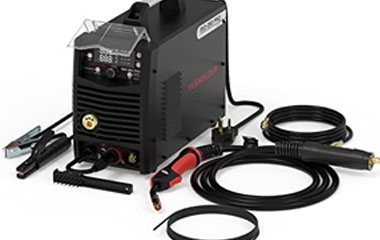
Rigorous procedure qualification testing (PQR) is indispensable for validating the chosen consumable system and welding parameters. This involves fabricating test coupons under representative conditions and subjecting them to extensive mechanical testing, including Charpy V-notch impact tests at the specified low temperatures. Only through such comprehensive testing can the suitability of a welding procedure for low-temperature toughness applications be definitively established. Modern welding machine technology offers precise control over these parameters, crucial for repeatable, high-quality welds.
Ensuring Quality and Reliability in Your Supply Chain
The consistent achievement of low-temperature toughness relies heavily on the quality and reliability of your welding consumable supplier. Oldwelders is committed to delivering superior performance, a commitment underpinned by our ISO 9001 certification. This certification attests to our robust quality management systems, ensuring that every batch of SAW flux and other welding consumables meets the highest international standards.
Our manufacturing facility, spanning an area of 1000 square meters, houses six state-of-the-art production lines. This extensive infrastructure allows us to maintain a daily production capacity of 100 tons, ensuring a consistent and ample supply for our global clientele. With a minimum order quantity (MOQ) of just 1 ton, Oldwelders makes high-quality welding consumables accessible to projects of various scales, and we typically manage a lead time of 30 days for orders. Our established presence in target markets such as Brazil, Thailand, Australia, and Malaysia demonstrates our capability to serve diverse international requirements with efficiency and expertise.
Partnering with a supplier that understands the nuances of material science and manufacturing consistency is paramount for critical applications. Oldwelders provides not just products, but a partnership grounded in knowledge and quality assurance, helping you achieve the demanding low-temperature toughness specifications for your most challenging projects.
Conclusion
Selecting the optimal SAW flux for low-temperature toughness is a multifaceted process that demands a deep understanding of metallurgy, consumable chemistry, and welding mechanics. It involves carefully considering the basicity and composition of the flux, pairing it synergistically with the correct welding wire, and meticulously controlling welding parameters during procedure qualification. By focusing on these critical aspects and partnering with a reputable, quality-driven supplier like Oldwelders, welding engineers can confidently achieve superior low-temperature toughness in weldments, ensuring the long-term integrity and safety of structures operating in extreme cold environments.