
Tank Fabrication RFQ Guide to Prevent Project Delays
A comprehensive RFQ is the first step to successful tank fabrication.
In the world of industrial projects, few components are as critical as storage and processing tanks. Whether for chemical storage, water treatment, or food and beverage processing, the integrity of these vessels is paramount. The journey to a high-quality, reliable tank begins long before the first metal plate is cut or the first weld is laid. It starts with the Request for Quotation (RFQ). A detailed, unambiguous RFQ is the single most effective tool for preventing misunderstandings, ensuring accurate pricing, and eliminating costly delays in your tank fabrication project.
An incomplete RFQ forces fabricators to make assumptions about design, materials, and quality standards. These assumptions often lead to inaccurate quotes, extended revision cycles, and a final product that may not meet your specific operational requirements. This guide is designed for engineers and procurement professionals to help you structure an RFQ that provides absolute clarity, enabling your fabrication partners to deliver precise quotes and, ultimately, a superior final product on schedule. By focusing on critical details from materials to welding procedures, you can build a foundation for a successful partnership and a project delivered without costly surprises.
Defining Material Specifications and Certifications
The choice of material is fundamental to the tank's performance, longevity, and compliance with industry regulations. Your RFQ must be explicit about the materials of construction to avoid ambiguity and ensure the final product meets its intended service conditions.
Material Grade and Type
Clearly specify the exact grade of material required. Vague descriptions like "stainless steel" are insufficient. Instead, be precise:
- Carbon Steel: Specify the grade, such as SA-516-70 for pressure vessels, or A36 for general structural components. Note any requirements for normalization or impact testing, especially for low-temperature service.
- Stainless Steel: Indicate the specific grade (e.g., 304/304L, 316/316L, Duplex 2205). Include whether a low-carbon ("L") grade is required to prevent sensitization during welding, which is crucial for corrosion resistance.
- Alloys: For specialized applications, list the exact alloy designation, such as Hastelloy C-276 or Inconel 625.
Specify the material for all components, including the shell, heads, nozzles, manways, reinforcement pads, and internal supports. Different components may require different materials based on their function and exposure.
Material Certifications and Traceability
To guarantee material quality and compliance, your RFQ should demand Mill Test Reports (MTRs) for all pressure-retaining materials. These documents provide a certified record of the material's chemical composition and mechanical properties, ensuring it meets the specified standards (e.g., ASTM, ASME). This traceability is non-negotiable for pressure vessels and tanks used in critical applications. Partnering with suppliers who can provide consistent, high-quality materials is essential. For our part, to guarantee the quality of our welding consumables, we adhere to strict quality management systems, as demonstrated by our ISO 9001 certification, ensuring every batch meets rigorous standards.
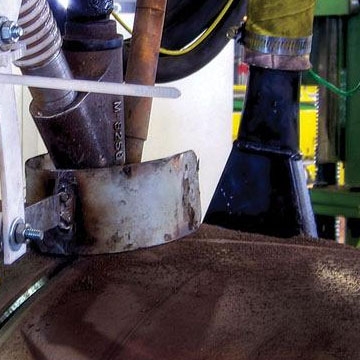
Specifying Design, Dimensions, and Codes
The physical design and governing codes are the blueprint for your tank fabrication. Providing comprehensive and accurate information in this section is critical for the fabricator to understand the scope and complexity of the project.
Detailed Engineering Drawings
The most effective way to communicate design requirements is through detailed engineering drawings. Your RFQ package should include drawings that specify:
- Overall Dimensions: Diameter, length/height (seam-to-seam), and total volume.
- Orientation: Clearly state whether the tank is vertical or horizontal.
- Component Details: Specify the type of heads (e.g., F&D, 2:1 elliptical), shell thickness, and knuckle/crown radii.
- Nozzles and Manways: Provide a schedule listing the size, pressure rating (e.g., 150# RFSO), location (orientation and elevation), and projection for every connection.
- Internal and External Features: Detail any requirements for ladders, platforms, baffles, heating/cooling coils, or support structures (e.g., saddles, legs, skirts).
If final drawings are not available, provide detailed sketches and preliminary specifications. The more information you provide, the more accurate the quote will be.
Governing Codes and Standards
State the specific industry codes and standards the tank must be designed, fabricated, and tested to. This dictates everything from material selection and weld procedures to inspection requirements. Common codes include:
- ASME Section VIII, Division 1: For unfired pressure vessels.
- API 650: For welded steel tanks for oil storage.
- API 620: For large, welded, low-pressure storage tanks.
- UL 142: For steel aboveground tanks for flammable and combustible liquids.
Failing to specify the governing code is a major source of delay and can result in a non-compliant vessel. If your industry has specific standards (e.g., 3-A for sanitary applications), they must also be clearly stated in the RFQ.
Welding Procedures and Quality Control Requirements
The long-term integrity of a fabricated tank is determined by the quality of its welds. Your RFQ must provide clear directives on welding processes, procedures, and the quality assurance measures you expect the fabricator to follow. This ensures the structural soundness and leak-free performance of the vessel.
Welding Process Specification
While fabricators typically have preferred methods, you can specify or state a preference for certain welding processes based on your project's needs. Key processes in tank fabrication include:
- Submerged Arc Welding (SAW): Ideal for long, straight seams on tank shells. It offers high deposition rates and deep penetration, resulting in strong, high-quality welds. The quality of the flux is critical here; using a high-purity submerged arc welding flux hj431 ensures a stable arc and a clean weld bead free of impurities.
- Gas Metal Arc Welding (GMAW / MIG): A versatile process often used for nozzles, attachments, and thinner materials. It is faster than TIG but requires skilled operators to avoid defects like lack of fusion.
- Flux-Cored Arc Welding (FCAW): Similar to MIG but uses a tubular wire filled with flux. It is well-suited for outdoor fabrication and thicker materials, offering high deposition rates.
- Gas Tungsten Arc Welding (GTAW / TIG): Provides the highest quality and most precise welds. It is often specified for root passes on critical joints and for welding non-ferrous alloys where cosmetic appearance and precision are key.
For large-scale projects, ensuring a consistent and reliable supply of welding consumables is crucial to avoid delays. At Oldwelders, our 1000 square meter facility with six production lines can supply up to 100 tons of high-quality flux per day, ensuring that material availability never becomes a bottleneck for major international projects, such as those we support in Brazil and Thailand.
Welder Qualifications and Procedure Documentation
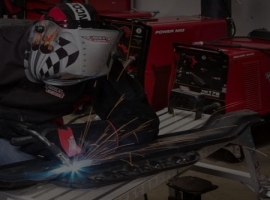
Your RFQ should mandate that all welding be performed in accordance with a qualified Welding Procedure Specification (WPS) and supported by a Procedure Qualification Record (PQR). Additionally, require that all welders and welding operators be qualified for the specific procedures they will be using, as per ASME Section IX or an equivalent standard. Requesting this documentation ensures that the fabricator has a proven, repeatable process for producing sound welds.
Non-Destructive Examination (NDE)
NDE is essential for verifying weld integrity without damaging the tank. Your RFQ must specify the type and extent of NDE required. Common methods include:
- Visual Testing (VT): A 100% inspection of all welds is standard.
- Radiographic Testing (RT): X-ray inspection used to detect internal defects like porosity, slag inclusions, and lack of penetration. Specify the percentage of welds to be tested (e.g., "100% of butt welds," "spot RT on 10% of T-joints").
- Ultrasonic Testing (UT): Uses sound waves to detect internal flaws. Often used on thick sections where RT may be less effective.
- Magnetic Particle Testing (MT): For detecting surface and near-surface discontinuities in ferromagnetic materials.
- Liquid Penetrant Testing (PT): For detecting surface-breaking defects in non-porous materials, including stainless steel.
Clearly defining your NDE requirements upfront prevents disputes over quality standards and avoids the need for costly rework after fabrication is complete. The choice of the right welding machine and consumables directly impacts the NDE pass rate.
Surface Preparation, Finishing, and Coatings
The final surface condition of the tank is critical for corrosion resistance, product purity, and aesthetic appearance. These requirements must be detailed in the RFQ to ensure the fabricator's quote includes the necessary labor and materials.
Surface Preparation
Specify the required level of surface cleanliness before any coating is applied. Use standardized callouts, such as the SSPC/NACE standards:
- SSPC-SP10 / NACE No. 2 (Near-White Blast Cleaning): A high level of cleaning typically required for high-performance coatings.
- SSPC-SP6 / NACE No. 3 (Commercial Blast Cleaning): A standard level of cleaning for general-purpose coatings.
- SSPC-SP3 (Power Tool Cleaning): Used for repairs or in areas where blasting is not feasible.
Coatings and Linings
Provide a complete specification for the coating system. This should include:
- System Type: Specify the full system, including primer, intermediate coat, and topcoat. For example, "Three-coat system: inorganic zinc primer, epoxy mid-coat, polyurethane topcoat."
- Manufacturer and Product Names: If you have a preferred supplier, list the specific products.
- Dry Film Thickness (DFT): State the required DFT for each coat and the total system.
- Color: Specify the final color using a RAL number or other standard.
For internal linings, be even more specific, as these are critical for product compatibility and corrosion prevention. Specify post-weld heat treatment (PWHT), passivation for stainless steel, or other special treatments if they are required by the process or code.
Logistics, Documentation, and Commercial Terms
The final section of your RFQ should cover the project's logistical and commercial aspects. Clear expectations in these areas prevent last-minute issues related to shipping, payment, and documentation.
Delivery and Shipping
State the final delivery address and any specific site requirements, such as restrictions on truck size or delivery hours. Define the required delivery date and ask the fabricator to confirm their lead time. Clear commercial terms are essential for both parties; for example, at Oldwelders, we provide clear terms for our welding materials, such as a typical 30-day lead time and a 1-ton minimum order quantity, which helps our clients in markets from Australia to Malaysia plan their production schedules effectively.
Documentation Package
List all the documentation you require for the final turnover package. This typically includes:
- Final "As-Built" drawings.
- All Material Test Reports (MTRs).
- Welding documentation (WPS, PQR, welder qualifications).
- NDE reports and inspector certifications.
- Pressure test charts and reports.
- Coating inspection reports.
- ASME Data Report (if applicable).
Requesting this information in the RFQ ensures the fabricator includes the cost of compiling this critical documentation in their bid. A thorough approach to every stage, from RFQ to final weld, is the hallmark of a successful tank fabrication project.