
Optimizing SAW Parameters for Wind Tower Welding
Optimizing Submerged Arc Welding Parameters for Wind Tower Welding Longitudinal Seams
The global shift towards renewable energy sources has placed wind power at the forefront of sustainable development. Central to the construction of robust and reliable wind turbines are the towers themselves, which must withstand immense structural stresses, dynamic loads, and environmental factors over decades. The integrity of these structures hinges critically on the quality of their welded seams, particularly the longitudinal seams that run the length of each tower section.
Submerged Arc Welding (SAW) is the preferred method for joining these thick-walled steel sections due to its high deposition rates, deep penetration capabilities, and consistent quality. However, achieving optimal results in wind tower welding requires a meticulous understanding and precise control of SAW parameters. For production weld supervisors, mastering these parameters is not just about efficiency; it is about ensuring the structural integrity and longevity of the entire wind turbine.
This article delves into the critical aspects of setting and optimizing SAW parameters for wind tower longitudinal seams, offering practical insights for troubleshooting, quality assurance, and leveraging advanced welding solutions. Oldwelders, with its comprehensive range of welding machines, wires, rods, and fluxes, is dedicated to supporting the industry with high-quality, ISO 9001 certified products designed for demanding applications like wind tower fabrication.
Understanding the Unique Demands of Wind Tower Welding
Wind towers are subjected to a complex array of forces, including static loads from the nacelle and rotor, dynamic loads from wind gusts and turbine operation, and fatigue stresses over millions of cycles. The materials used, typically high-strength low-alloy steels ranging in thickness, demand welding processes that deliver exceptional mechanical properties, resistance to fatigue, and minimal defects.
The longitudinal seams are particularly critical as they form the backbone of each tower section. Any defect, such as porosity, lack of fusion, or excessive residual stress, can become a stress concentration point, potentially leading to premature failure. Therefore, the welding process must ensure:
- Full Penetration: Essential for transferring loads across the joint.
- Excellent Mechanical Properties: Weld metal must match or exceed the base metal's strength, toughness, and fatigue resistance.
- Low Distortion: Minimizing warping and misalignment in large sections.
- High Productivity: Meeting demanding production schedules without compromising quality.
Oldwelders provides a full suite of solutions, including robust automatic welding machine options, essential for meeting the stringent requirements of wind tower welding. Our commitment to quality ensures that every component contributes to the structural integrity of the final product.
Key Submerged Arc Welding Parameters and Their Impact
Optimizing SAW for wind tower longitudinal seams involves a delicate balance of several interconnected parameters. Each parameter plays a crucial role in determining weld quality, penetration, bead shape, and mechanical properties.
Current (Amperage)
Current is arguably the most influential parameter in SAW. It directly controls the melting rate of the welding wire and the penetration depth into the base material. For thick-section wind tower steels, high currents are often employed to achieve the necessary penetration and deposition rates.
- Too Low: Insufficient penetration, lack of fusion, narrow bead.
- Too High: Excessive penetration, burn-through, increased risk of hot cracking, large heat-affected zone (HAZ) affecting material properties.
The selection of current should align with the material thickness, joint design, and electrode diameter. For example, a higher current is typically used for the root pass to ensure full penetration, while subsequent fill passes might use slightly lower currents to control heat input and bead profile.
Voltage
Arc voltage primarily affects the arc length and, consequently, the width and reinforcement of the weld bead. A longer arc (higher voltage) will produce a wider, flatter bead with less penetration, while a shorter arc (lower voltage) results in a narrower, more convex bead with deeper penetration.
- Too Low: Narrow, convex, ropey bead; potential for lack of fusion at the edges; unstable arc.
- Too High: Wide, flat bead; increased flux consumption; potential for porosity due to gas entrapment; excessive spatter.
Achieving the right voltage is crucial for good bead appearance, proper tie-in to the side walls, and minimizing defects. It also influences the mechanical properties of the weld metal and the heat input.
Travel Speed
Travel speed dictates the rate at which the welding arc moves along the joint. It is inversely related to heat input per unit length of weld. Along with current and voltage, it directly influences penetration depth, bead geometry, and overall productivity.
- Too Slow: Excessive heat input, wide and flat bead, potential for burn-through, increased distortion, larger HAZ.
- Too Fast: Insufficient heat input, narrow and convex bead with inadequate penetration, potential for undercut, lack of fusion, and porosity.
Optimizing travel speed is key to balancing productivity with quality. For wind tower sections, consistent travel speed is paramount, often achieved through automated welding systems to maintain uniformity over long seams.
Electrode Stick-Out (ESO)
Electrode stick-out, or wire extension, is the distance from the contact tip to the arc. It affects the resistance heating of the welding wire before it enters the arc. A longer ESO increases the electrical resistance heating, leading to a higher deposition rate for a given current, but can also reduce penetration.
- Too Short: Reduced deposition rate, potential for arc instability.
- Too Long: Increased deposition rate, reduced penetration, increased risk of arc blow, and potential for wire feeding issues.
Careful control of ESO helps fine-tune deposition rates and penetration, directly impacting the efficiency and quality of multi-pass welds in thick sections.
Wire Diameter and Type
The choice of welding wire diameter and type is fundamental. Larger diameter wires generally allow for higher currents and deposition rates, suitable for thick sections. The chemical composition of the wire (e.g., carbon-manganese, low-alloy) must be carefully matched to the base material to achieve the desired mechanical properties in the weld metal.
Oldwelders offers a range of high-quality solid wire and flux-cored wire, ensuring the right metallurgical match for various wind tower steel grades.
Flux Type
The welding flux in SAW serves multiple critical functions: shielding the arc and molten weld pool from atmospheric contamination, introducing deoxidizers and alloying elements, shaping the weld bead, and influencing the mechanical properties of the weld metal. Fluxes are typically classified as active, neutral, or alloyed.
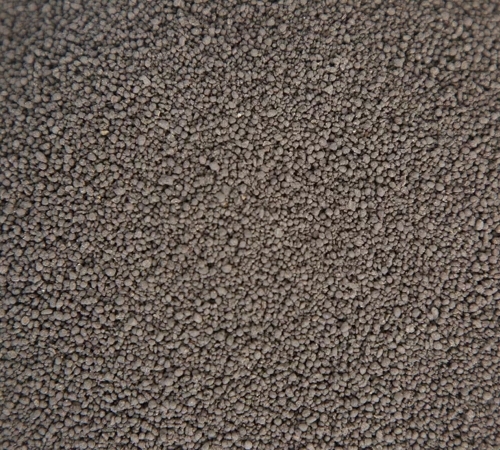
For wind tower applications, typically neutral or slightly active fluxes are preferred to ensure good toughness and crack resistance. Oldwelders' welding fluxes are meticulously crafted from excellent raw materials including dolomite, bauxite, cryolite, silica, and fluorine ore, which are melted at a precise 2000 °C to achieve superior performance, such as our submerged arc welding flux hj431. This high-temperature melting process ensures homogeneity and consistent quality, crucial for critical structural welds.
Number of Wires/Electrodes
For exceptionally high deposition rates required in thick-section wind tower fabrication, multi-wire SAW systems (e.g., tandem wire, twin wire) are often employed. These systems can significantly increase productivity compared to single-wire setups, but they also introduce additional complexity in parameter management, as each wire's parameters must be synchronized.
Developing a Robust Parameter Optimization Strategy
Optimizing SAW parameters for wind tower longitudinal seams is an iterative process that requires systematic testing and evaluation. Production supervisors should adopt a structured approach:
1. Initial Setup and Baseline Parameters
Begin with recommended parameters from the welding consumable manufacturer, welding equipment supplier, or relevant welding codes (e.g., AWS D1.1, EN 1090). These provide a sensible starting point based on material type, thickness, and joint design.
2. Test Coupons and Evaluation
Fabricate test coupons that accurately replicate the actual joint configuration and material thickness. These coupons should be subjected to both non-destructive testing (NDT) like visual inspection, ultrasonic testing, and X-ray, and destructive testing (DT) such as tensile tests, impact tests (Charpy V-notch), and macro-etch examinations. DT is crucial for assessing mechanical properties and penetration profiles.
3. Systematic Adjustments and Iteration
Adjust one parameter at a time, making small, incremental changes, and re-evaluate the results through additional test coupons. This methodical approach helps isolate the effects of each parameter change. For example, if penetration is insufficient, gradually increase current while keeping other parameters constant. If undercut occurs, adjust voltage or travel speed.
4. Comprehensive Documentation
Maintain detailed records of all parameters used, the resulting weld characteristics, and the outcomes of all testing. This documentation is invaluable for future reference, troubleshooting, and ensuring repeatability across production runs. It also supports traceability, a key requirement in ISO 9001 certified manufacturing, which Oldwelders proudly adheres to.
5. Considerations for Specific Applications
Different sections of a wind tower, such as the wider base sections versus the narrower top sections, may require slight variations in parameters due to differences in plate thickness and accessibility. The optimization strategy should account for these nuances.
6. Leveraging Automated Systems
The use of advanced automatic welding machine technology allows for precise control and consistent application of optimized parameters, significantly reducing human error and improving overall weld quality and efficiency. Oldwelders offers a range of automated solutions tailored for heavy fabrication.
Quality Assurance and Troubleshooting Common Issues
Even with optimized parameters, issues can arise. A thorough understanding of common SAW defects and their relationship to welding parameters is essential for effective troubleshooting and maintaining high quality in wind tower welding projects.
Common Defects and Their Causes:
- Porosity: Often caused by inadequate shielding (e.g., insufficient flux coverage, excessive voltage), moisture in the flux, or contaminants on the base metal.
- Lack of Fusion/Penetration: Typically due to insufficient current, excessively high travel speed, or improper joint preparation.
- Undercut: Result of too high voltage, too high travel speed, or improper electrode positioning.
- Excessive Reinforcement: Can be caused by too low travel speed, too low voltage, or excessive current.
- Cracking (Hot & Cold): Hot cracking is often related to weld metal chemistry (e.g., high sulfur, phosphorus) or excessive restraint. Cold cracking is usually hydrogen-induced and related to high heat input, high-strength steels, and inadequate preheat/post-weld heat treatment.
- Slag Inclusions: Poor cleaning between passes, improper flux selection, or insufficient current/voltage combination leading to incomplete slag removal.
Parametric Solutions:
- To reduce Porosity: Lower voltage, ensure flux is dry, clean base metal thoroughly.
- To improve Penetration: Increase current, decrease travel speed, ensure proper joint gap.
- To eliminate Undercut: Decrease voltage, decrease travel speed, adjust electrode angle.
- To control Reinforcement: Increase travel speed, adjust voltage.
- To prevent Cracking: Optimize heat input, use appropriate preheat, select suitable welding consumables with low diffusible hydrogen, ensure proper cooling rates.
Consistent inspection using visual, ultrasonic, and radiographic methods is vital. Regular calibration of welding equipment and proper storage of welding accessories and consumables are also critical preventative measures.
Oldwelders: Your Partner in Precision Wind Tower Welding Solutions
For production supervisors seeking to optimize wind tower welding processes and ensure the highest quality, Oldwelders stands as a reliable, knowledgeable partner. Our commitment to excellence is deeply embedded in our operations and products:
- ISO 9001 Certified Quality: Oldwelders is an ISO 9001 certified manufacturer, a testament to our unwavering commitment to quality management in every product, from arc welding machine to specialized fluxes. This certification assures you of consistent product quality and reliable processes.
- Robust Production Capacity: Our state-of-the-art plant, covering an area of 1000 square meters, houses six production lines, enabling us to supply up to 100 tons of product daily. This robust capacity ensures that even large-scale wind tower projects can rely on a consistent and timely supply, with a minimum order quantity starting from just 1 ton to accommodate diverse project needs.
- Global Reach and Efficient Supply Chain: We pride ourselves on an efficient supply chain, typically delivering orders within 30 days, a crucial factor for project timelines in markets such as Brazil, Thailand, Australia, and Malaysia. Our global presence underscores our ability to support your operations wherever they are.
- Comprehensive Product Range: From advanced special welding machine to a wide array of welding wires, rods, and fluxes, Oldwelders offers a complete solution for all your wind tower fabrication needs. Our expertise extends to supporting complex applications, including resistance welding machine and plastic welding machine for specific auxiliary components, ensuring you have the right tools for every task.
The successful fabrication of wind tower longitudinal seams through Submerged Arc Welding is a testament to precision engineering and meticulous parameter control. By understanding the intricate relationships between current, voltage, travel speed, wire type, and flux, production supervisors can optimize their processes to achieve superior weld quality, enhance productivity, and ensure the long-term reliability of these critical renewable energy structures. Oldwelders is proud to be at the forefront of this effort, providing the high-performance welding solutions that power the future of wind energy.