
Sourcing Welding Equipment for Fabrication: A Buyer's Guide
How to Source the Right Welding Equipment for Your Fabrication Line
Establishing or upgrading a fabrication line is a significant capital investment. The success of the entire operation hinges on selecting the correct machinery, processes, and consumables from the outset. For procurement managers and fabrication supervisors, the task of sourcing the ideal package of welding tools can be complex, with choices directly impacting productivity, quality, and long-term operating costs. A well-defined sourcing strategy ensures you acquire a system that not only meets current production demands but also provides the flexibility for future growth.
This comprehensive guide outlines a structured approach to sourcing industrial welding systems. We will explore how to define your technical requirements, select the appropriate technologies, and vet potential suppliers to ensure a reliable and efficient partnership. By focusing on a holistic view—from the power source to the filler metal—you can build a robust Request for Quotation (RFQ) and make an informed purchasing decision that drives operational excellence.
Defining Your Fabrication Line's Core Requirements
Before you can evaluate suppliers or specific models, you must first create a detailed profile of your operational needs. This internal assessment is the foundation of your entire sourcing process. Without a clear understanding of your application, you risk overspending on unnecessary features or, conversely, selecting underpowered gear that creates production bottlenecks.
Material and Thickness Analysis
The type and thickness of the metals you work with are the primary determinants of the welding process you will need. Different materials have unique metallurgical properties that demand specific approaches.
- Carbon Steel: Widely used in structural and general fabrication, carbon steel is versatile and can be joined using most common processes like MIG/MAG, Stick (SMAW), and Submerged Arc Welding (SAW). Thicker sections may require processes with higher deposition rates. -
- Stainless Steel: To preserve its corrosion-resistant properties, stainless steel requires precise heat control and proper shielding gas coverage. TIG (GTAW) welding is often preferred for high-purity, aesthetic welds, while MIG welding offers higher speeds for production environments.
- Aluminum: Aluminum's high thermal conductivity and oxide layer present unique challenges. It requires AC output for TIG welding or specialized pulse MIG/MAG welders with a dedicated wire feed system to prevent wire bunching.
Document the full range of material types and thicknesses your line will handle. This information will directly influence the required amperage range of your power source and the type of welding materials needed for strong, reliable joints.
Production Volume and Cycle Time
Next, quantify your production targets. Are you engaged in high-volume, repetitive manufacturing or low-volume, high-customization projects? Your answer will guide the level of automation and the required duty cycle of the machinery.
- Duty Cycle: This rating indicates how long a machine can operate within a 10-minute period before it needs to cool down. A machine with a 60% duty cycle at 300 amps can weld continuously for 6 minutes at that amperage. For a high-volume production line, selecting machines with a high duty cycle is non-negotiable to prevent downtime.
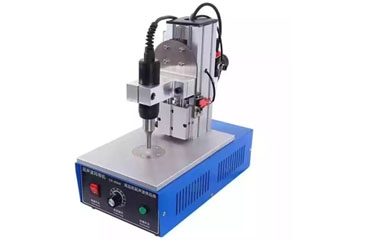
- Automation Potential: For repetitive tasks, an automatic welding machine or robotic cell can dramatically increase throughput and consistency. Even semi-automated solutions like welding tractors for long, straight seams in SAW can provide a significant return on investment. Evaluate your workflow to identify opportunities for automation.
Selecting the Appropriate Welding Processes and Machinery
With your requirements defined, you can now narrow down the specific welding processes and the machinery needed to execute them. Most modern fabrication shops utilize a combination of processes to handle diverse tasks efficiently.
Common Industrial Welding Processes
Each welding process offers a unique balance of speed, quality, and versatility. Understanding their core strengths is key to making the right choice.
- MIG/MAG (GMAW): Gas Metal Arc Welding is a workhorse in fabrication due to its high speed, ease of use, and adaptability to various metals and thicknesses. It's ideal for production environments working with steel, stainless steel, and aluminum.
- TIG (GTAW): Gas Tungsten Arc Welding provides the highest quality and most precise welds. It is a slower process but is essential for applications requiring impeccable finish and control, such as in the aerospace, food-grade, or nuclear industries.
- Stick (SMAW): Shielded Metal Arc Welding is valued for its simplicity, portability, and effectiveness in outdoor or windy conditions. It's excellent for repairs, maintenance, and welding on thick or dirty materials.
- Submerged Arc Welding (SAW): SAW is a high-productivity process used for long, straight welds on thick steel plates, such as in shipbuilding or pressure vessel manufacturing. It produces high-quality welds at very high deposition rates.
Matching Machines to the Process
Once you've identified the necessary processes, you can select the corresponding machines. A reliable supplier will offer a range of options to fit your needs, from basic power sources to advanced multi-process systems. For instance, a versatile fabrication shop might invest in a powerful mig-mag-tig welding machine that can handle multiple tasks, providing flexibility and saving floor space. For specialized, heavy-duty applications, a dedicated submerged arc system would be more appropriate.
Sourcing High-Quality Welding Consumables
The performance of your welding machinery is directly dependent on the quality of the consumables you use. Welding wire, electrodes, and fluxes are not commodities; they are engineered products that have a profound impact on weld integrity, arc stability, and overall productivity. Sourcing these from a knowledgeable manufacturer is as important as choosing the right power source.
The Critical Role of Welding Wire, Rods, and Fluxes
Consumables do more than just fill a joint. They are designed to introduce deoxidizers, add specific alloying elements, and shield the molten weld pool from atmospheric contamination. Using a sub-par consumable can lead to defects like porosity, cracking, and lack of fusion, resulting in costly rework and potential product failure.
When evaluating consumables, consider factors like chemical composition, wire diameter consistency, and proper packaging to prevent moisture absorption. For example, specific applications may require specialized consumables like aws e6013 welding electrodes for general-purpose mild steel fabrication or high-purity filler metals for stainless steel.
The Science Behind Superior Welding Fluxes
In processes like Submerged Arc Welding, the flux is a critical component that shapes the final weld bead and determines its mechanical properties. The quality of a flux is a direct result of the raw materials and the manufacturing process. At Oldwelders, our welding fluxes are produced from a carefully controlled blend of premium raw materials, including dolomite, bauxite, cryolite, silica, and fluorine ore. These components are melted at an intense 2000 °C to create a homogenous, stable flux that ensures consistent performance, excellent slag detachability, and a smooth weld finish.
Vetting and Qualifying Your Welding Equipment Supplier
The final step in the sourcing process is to identify and qualify a supplier who can not only provide the right products but also act as a long-term partner. A supplier's reliability, technical expertise, and production capacity are crucial trust signals.
Key Supplier Credentials to Verify
Look for internationally recognized certifications that demonstrate a commitment to quality management. An ISO 9001 certification, for example, indicates that the supplier has established and maintains a rigorous quality assurance system covering design, manufacturing, and service. This provides an independent verification of their ability to consistently meet customer and regulatory requirements.
Assessing Production Capacity and Lead Times
Your supplier must be able to meet your demand, especially as your business grows. Inquire about their manufacturing capabilities. For instance, a supplier with a 1000-square-meter plant and six production lines capable of supplying 100 tons of consumables per day demonstrates the scale required to serve major industrial clients. This capacity ensures a stable supply chain and helps maintain consistent lead times. Ask for specifics, such as a standard lead time (e.g., 30 days) and minimum order quantity (e.g., 1 ton), to see if their logistics align with your procurement cycle.
Global Supply Chain and Market Experience
A supplier with experience in international markets is better equipped to handle the complexities of global logistics, customs, and regional standards. A proven track record of successfully supplying to diverse markets, such as Brazil, Thailand, Australia, and Malaysia, indicates that the supplier has the experience and infrastructure to deliver your order reliably, regardless of your location. This global footprint is a strong indicator of a mature and dependable business partner.
Preparing Your Request for Quotation (RFQ)
With all your research complete, you can now assemble a detailed RFQ. The more specific your RFQ, the more accurate and comparable the quotes you receive will be.
Your RFQ should include:
- Detailed Technical Specifications: List the required welding processes, amperage ranges, duty cycles, and any specific features like pulse or synergic controls.
- Scope of Supply: Clearly state everything you need, including power sources, wire feeders, torches, and all necessary welding accessories.
- Consumable Requirements: Specify the types and quantities of welding wire, electrodes, and fluxes needed.
- Delivery and Commercial Terms: Outline your required delivery timeline, shipping location, and desired payment terms.
- Support and Warranty: Inquire about the length of the warranty, the availability of spare parts, and the process for obtaining technical support.
By following this structured approach, you can systematically navigate the complexities of sourcing industrial welding systems. A thorough definition of needs, careful selection of technology, and rigorous vetting of suppliers will lead to a successful investment that enhances your fabrication line's capability and profitability for years to come.