
How Flux Raw Materials Influence Weld Basicity
Understanding How Flux Raw Materials Influence Weld Basicity
For welding engineers and technical buyers, grasping the intricate relationship between the constituent welding fluxes and their overall basicity is paramount. The properties of the final weld metal are not solely determined by the welding wire or rod; the flux plays a critical, often understated, role in shaping the weld's mechanical strength, toughness, and resistance to defects. At Oldwelders, we understand that selecting the right flux raw material is fundamental to achieving superior weld performance and consistency.
The basicity index of a welding flux is a key indicator of its metallurgical behavior. It dictates how the flux interacts with the molten weld pool, influencing slag formation, deoxidation, desulfurization, and the transfer of alloying elements. A precise understanding of how each raw material contributes to this basicity allows for the formulation of fluxes tailored to specific applications, ensuring optimal results in various industrial settings.
The Fundamental Role of Flux Basicity in Welding
Basicity, in the context of welding fluxes, refers to the chemical nature of the oxides present within the flux. These oxides are broadly categorized as basic, acidic, or amphoteric. Basic oxides, such as CaO (from dolomite) and MgO, tend to promote the refinement of the weld metal by facilitating the removal of impurities like sulfur and phosphorus. They also generally lead to lower oxygen content in the weld, which can significantly improve impact toughness and ductility.
Conversely, acidic oxides, primarily SiO2 (silica), often result in higher oxygen levels in the weld metal. While acidic fluxes can offer good arc stability and slag detachability, they may contribute to reduced impact toughness and increased susceptibility to hydrogen-induced cracking in certain high-strength steel applications. Amphoteric oxides, like Al2O3 (alumina from bauxite), exhibit characteristics of both basic and acidic oxides, with their behavior often depending on the overall composition of the flux and the welding conditions.
The basicity index itself is typically calculated using empirical formulas that weigh the proportions of basic, acidic, and amphoteric oxides. A higher basicity index generally correlates with improved weld metal toughness, lower hydrogen content, and better resistance to hot cracking. This is why meticulous control over the raw materials is essential. Oldwelders maintains strict quality control measures, evidenced by our ISO 9001 certification, ensuring that the consistency and purity of our raw materials directly translate to predictable and high-performance welding solutions.
Key Flux Raw Materials and Their Basicity Contribution
The selection and combination of specific raw materials are critical to engineering a flux with desired basicity and performance characteristics. At Oldwelders, we utilize excellent dolomite, bauxite, cryolite, silica, fluorine ore, and other specialized ores as the foundational components for our welding fluxes. These materials are melted at an intense 2000 °C during our production process, ensuring optimal chemical transformation and homogeneity for consistent welding materials.
Silica (SiO2)
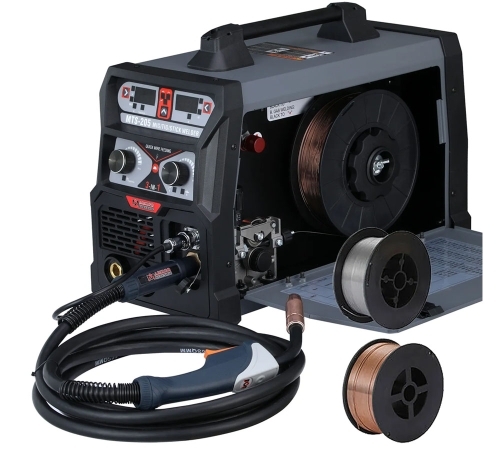
Silica is a primary acidic component in many welding fluxes. Its presence increases the slag's viscosity and can lead to a higher oxygen content in the weld metal. While high silica content might reduce toughness, it can also improve arc stability and provide a stable slag, especially in certain mig-mag-tig welding machine applications. Careful balancing is required to prevent detrimental effects on mechanical properties.
Dolomite (CaCO3·MgCO3)
Dolomite is a crucial basic raw material. Upon heating, it decomposes to form calcium oxide (CaO) and magnesium oxide (MgO), both strong basic oxides. These oxides are instrumental in refining the weld metal, reducing impurities, and improving its mechanical properties such, as ductility and impact toughness. Fluxes rich in dolomite derivatives are often favored for applications requiring high-quality welds with excellent low-temperature toughness.
Bauxite (Al2O3)
Bauxite, which yields aluminum oxide (Al2O3), is typically considered an amphoteric oxide. Its role in basicity can vary depending on the overall flux composition. Al2O3 contributes to slag viscosity and strength, impacting slag detachability and the overall shape of the weld bead. It can also act as a deoxidizer in certain conditions, influencing oxygen levels in the weld metal.
Cryolite (Na3AlF6) and Fluorine Ore (CaF2)
Fluorine-containing compounds like cryolite and calcium fluoride (from fluorine ore) play a complex yet vital role. CaF2 is a basic flux former that significantly enhances slag fluidity, improves slag detachability, and helps to reduce hydrogen content in the weld metal, which is critical for preventing hydrogen-induced cracking. Cryolite also contributes to arc stability and can influence metal transfer characteristics. The presence of fluorides can lower the melting point of the slag, aiding in smoother welding operations and improved bead appearance.
The precise blending of these materials, considering their individual contributions to basicity, melting characteristics, and metallurgical interactions, is a core strength of Oldwelders' manufacturing process. Our facility, covering an area of 1000 square meters and housing six production lines, allows us to produce up to 100 tons of flux daily, ensuring consistent supply for our global partners.
Formulating for Optimal Weld Performance with Specific Flux Raw Material Blends
The objective of flux formulation is to achieve a specific basicity that yields the desired weld metal properties for a given application. For instance, in applications where high impact toughness is critical, such as structural steel fabrication or pipeline welding, a higher basicity flux is generally preferred. This is achieved by carefully increasing the proportion of basic flux raw material components like dolomite and fluorine ore, while moderating acidic components like silica.
Conversely, for certain applications requiring specific slag characteristics or where cost efficiency is a primary driver, a more acidic or neutral flux might be chosen. However, even in these cases, the balance must be carefully struck to avoid compromising essential weld properties. Oldwelders' expertise lies in our ability to develop and produce a wide range of submerged arc welding flux hj431 and other specialized formulations, precisely controlling the basicity index to meet stringent industry standards.
The interplay of these raw materials extends beyond basicity: they also influence slag viscosity, electrical conductivity, arc stability, and the transfer of elements from flux to weld metal. For example, the inclusion of certain manganese or silicon compounds as deoxidizers can also affect the overall basicity balance, alongside their primary function of scavenging oxygen from the weld pool. Our engineers meticulously analyze these complex interactions to ensure that each batch of welding flux delivers consistent, high-quality results.

Oldwelders' Commitment to Quality and Global Supply
At Oldwelders, our commitment to quality is embedded in every stage of our production, from the careful sourcing of each flux raw material to the final dispatch of our products. Our ISO 9001 certification stands as a testament to our rigorous quality management systems, ensuring that every product, whether it's a welding machine or specialized welding flux, meets the highest international standards.
We understand the demands of the B2B market, where reliability and supply chain efficiency are paramount. With six advanced production lines and a daily capacity of 100 tons, we are well-equipped to handle large-scale orders, offering a minimum order quantity of 1 ton and a standard lead time of 30 days. This operational strength allows us to serve diverse markets effectively, including Brazil, Thailand, Australia, and Malaysia, where our high-performance welding fluxes are already making a significant impact.
Our goal is to be a trusted partner for welding professionals worldwide, providing not just products but solutions that enhance productivity and weld integrity. By focusing on the scientific principles behind flux formulation, particularly the critical role of raw material basicity, we empower our customers to achieve superior welding outcomes consistently.
Conclusion
The impact of flux raw material basicity on weld properties cannot be overstated. It is a fundamental factor that dictates the metallurgical reactions within the weld pool, directly influencing strength, toughness, and resistance to defects. For welding engineers and technical buyers, a deep understanding of how raw materials like dolomite, bauxite, cryolite, silica, and fluorine ore contribute to the overall basicity index is essential for selecting the optimal flux for any given application.
Oldwelders stands at the forefront of welding flux innovation, leveraging our extensive expertise and state-of-the-art production capabilities to provide premium quality fluxes. Our commitment to using excellent raw materials, combined with stringent quality controls and a robust production capacity, ensures that our partners receive consistent, high-performance solutions for their most demanding welding challenges. By choosing Oldwelders, you are choosing a partner dedicated to metallurgical excellence and reliable global supply.