
How to Source BFA Powder by Purity and Particle Size
Understanding How to Source BFA Powder by Purity and Particle Size
For procurement professionals in surface treatment, refractories, or industrial manufacturing, precisely specifying and sourcing Brown Fused Alumina (BFA) powder is paramount. This abrasive material, renowned for its hardness and toughness, forms the backbone of numerous applications, from welding fluxes and grinding wheels to protective coatings and refractory linings. The performance of your end product hinges directly on the quality, purity, and particle size distribution of the BFA powder you acquire. At Oldwelders, our deep expertise in industrial materials, including the rigorous standards applied to raw materials for our own high-quality flux products—derived from excellent dolomite, bauxite, cryolite, silica, and fluorine ore melted at 2000 °C—informs our understanding of critical material specifications.
This guide offers a comprehensive approach for import buyers and procurement teams to navigate the complexities of BFA powder sourcing. We will delve into the essential specifications that define quality, outline robust verification processes, and highlight key considerations for selecting a reliable supplier capable of meeting stringent industrial demands.
Defining Your BFA Powder Requirements
Before engaging with potential suppliers, a clear and precise definition of your BFA powder needs is essential. Ambiguity in specifications can lead to costly material mismatches and production delays. Focusing on purity levels, chemical composition, and particle size distribution will lay a solid foundation for successful procurement.
Purity Levels and Chemical Composition
The purity of BFA powder directly impacts its performance characteristics, particularly in terms of hardness, wear resistance, and refractory properties. Brown Fused Alumina is primarily composed of aluminum oxide (Al₂O₃), typically ranging from 94% to 97%. The remaining percentage consists of minor impurities such as titanium oxide (TiO₂), silicon dioxide (SiO₂), and iron oxide (Fe₂O₃).
- Aluminum Oxide (Al₂O₃): Higher percentages generally indicate superior hardness and refractory performance. For high-performance abrasives or critical refractory applications, a purity of 96% or higher is often preferred.
- Titanium Oxide (TiO₂): This impurity contributes to the toughness of BFA but can also affect its friability. The optimal TiO₂ content depends on the desired balance between toughness and cutting efficiency.
- Silicon Dioxide (SiO₂): High levels of SiO₂ can reduce the hardness and refractoriness of the BFA powder, making it less suitable for extreme conditions.
- Iron Oxide (Fe₂O₃): Iron impurities can be detrimental in applications where color stability, electrical insulation, or non-ferrous contamination is a concern. Low iron content is crucial for certain precision grinding and refractory applications.
Always request a comprehensive Certificate of Analysis (CoA) from your supplier, detailing the exact chemical composition. This document serves as a critical baseline for verifying the material's grade against your specifications.
Particle Size Distribution (PSD)
The particle size distribution of BFA powder is arguably its most application-specific characteristic. Whether you require a coarse grit for heavy-duty grinding or a fine micro-powder for precision polishing, the uniformity and range of particle sizes are critical. Different industries adhere to various sizing standards, and understanding these is key to specifying your requirements accurately.
- Macrogrit Sizes: Typically defined by FEPA (Federation of European Producers of Abrasives) F-grades (e.g., F12 to F220) or ANSI (American National Standards Institute) grades. These are used for rough grinding, blasting, and some refractory applications.
- Microgrit Sizes: Ranging from F230 to F1200 (FEPA) or JIS (Japanese Industrial Standards) grades, these fine powders are essential for precision polishing, lapping, and fine surface finishing.
- Sub-micron Powders: For ultra-fine applications requiring exceptional surface quality, specific sub-micron distributions are required, often measured in micrometers (µm).
Suppliers should be able to provide detailed particle size distribution curves, typically generated through laser diffraction or sieve analysis, confirming that the BFA powder falls within your specified range. Variations in PSD can lead to inconsistencies in surface finish, abrasive performance, or refractory density.
Other Critical Physical Properties
Beyond purity and particle size, several other physical properties contribute significantly to the overall performance of BFA powder:
- Bulk Density: Important for volumetric dosing and for determining the density of refractory formulations.
- Specific Gravity: A measure of the material's density relative to water, relevant for material handling and formulation.
- Hardness: Brown Fused Alumina typically has a Mohs hardness of 9, making it highly effective as an abrasive. Knoop hardness values can also be specified for precision applications.
- Toughness: Resistance to fracture under impact, crucial for demanding abrasive applications.
- Crystal Structure: Blocky grains offer better impact resistance, while sharper, more angular grains provide higher cutting efficiency.
Verifying BFA Powder Quality and Consistency
Once you have defined your specifications, the next crucial step is to establish a robust verification process. This ensures that the BFA powder delivered consistently meets your exacting standards, safeguarding your production quality and operational efficiency.
Requesting Comprehensive Documentation
Reputable suppliers will provide a suite of documents for every shipment. These are not merely administrative formalities but vital tools for quality assurance:
- Certificate of Analysis (CoA): This is the cornerstone of material verification. It must clearly state the chemical composition (Al₂O₃, TiO₂, SiO₂, Fe₂O₃, etc.) and the particle size distribution according to the agreed-upon standard (FEPA, JIS, ANSI). Ensure that the CoA is batch-specific and correlates directly with your received material.
- Material Safety Data Sheet (MSDS/SDS): Essential for safe handling, storage, and transportation of the BFA powder. It provides information on potential hazards, first aid measures, and protective equipment.
- Certificates of Origin: Necessary for international trade, customs clearance, and to verify the material's sourcing country.
- ISO Certifications: A supplier's adherence to international quality management standards, such as ISO 9001, provides an additional layer of assurance. Oldwelders is proud to be an ISO 9001 certified company, demonstrating our unwavering commitment to consistent quality management across all our operations and product offerings. This certification ensures that our processes are standardized, customer-focused, and continuously improved, providing reliable products and services to our global partners.
Independent Laboratory Testing
For critical applications or when onboarding a new supplier, engaging an independent third-party laboratory for material testing is a highly recommended practice. This provides an unbiased verification of the BFA powder's specifications, mitigating risks associated with potential supplier discrepancies. Key tests typically include:
- Chemical Analysis: Using techniques like X-ray Fluorescence (XRF) or Inductively Coupled Plasma (ICP) to verify elemental composition.
- Particle Size Analysis: Employing laser diffraction or image analysis to confirm PSD, especially for fine and micro-powders.
- Physical Property Testing: Such as bulk density, specific gravity, and hardness measurements.
Ensure that the lab adheres to recognized international testing standards and that their sampling procedures are representative of the entire batch.
Supplier Quality Management Systems
Beyond individual product testing, understanding a supplier's overall quality management system is key. A robust QMS, often evidenced by certifications like ISO 9001, indicates a structured approach to quality control at every stage, from raw material inspection to final product packaging. This commitment to quality minimizes variations between batches and ensures long-term consistency, which is vital for uninterrupted production in your facilities.
Strategic Supplier Selection for BFA Powder
Choosing the right supplier for BFA powder is a strategic decision that extends beyond mere price comparisons. A reliable partner ensures not only consistent product quality but also stable supply chains and effective communication.
Assessing Production Capabilities and Reliability
A supplier's manufacturing infrastructure directly reflects their capacity to meet your demands. Inquire about their production scale, technological capabilities, and quality control processes. For instance, Oldwelders operates a state-of-the-art plant covering an area of 1000 square meters, equipped with six production lines. This robust infrastructure allows us to supply up to 100 tons of high-quality materials a day, ensuring that our partners, whether in Brazil, Thailand, Australia, or Malaysia, receive their orders consistently and on time. Such substantial capacity is crucial for B2B partners requiring large volumes and dependable supply.
Experience and Market Reach
An experienced supplier will possess a deep understanding of BFA powder applications and industry-specific requirements. They should demonstrate a track record of serving clients in sectors relevant to your business, whether it's abrasives, refractories, or welding materials. Oldwelders, for example, has established a strong presence in key international markets, including Brazil, Thailand, Australia, and Malaysia, indicating our global reach and ability to navigate diverse market demands.
Customer Support and Technical Expertise
Effective communication and technical support are invaluable during the procurement process and beyond. A knowledgeable supplier team can assist with technical specifications, troubleshoot issues, and provide guidance on product selection. This partnership approach fosters trust and ensures that any challenges are addressed promptly and effectively.
Logistics, Lead Times, and Minimum Order Quantities
Practical considerations related to order fulfillment and delivery are just as important as material specifications. Understanding a supplier's operational policies will help in planning your procurement cycles and managing inventory efficiently.
Understanding MOQs and Production Schedules
Minimum Order Quantities (MOQs) are standard in B2B transactions, reflecting the efficiencies of large-scale production. It is important to clarify a supplier's MOQ upfront to ensure it aligns with your purchasing volumes. Oldwelders, for example, typically operates with a minimum order quantity of 1 ton, which is designed to cater to industrial-scale requirements while maintaining competitive pricing and efficient production runs. Discussing your specific volume needs can help in negotiating terms that are mutually beneficial.
Managing Lead Times and Delivery
Lead time refers to the duration between placing an order and receiving the shipment. Accurate lead time promises are crucial for production planning and inventory management. Oldwelders typically maintains a lead time of 30 days for orders, allowing for efficient production scheduling, thorough quality checks, and reliable logistics to our global clientele. Understanding and incorporating these timelines into your own operational schedules is essential to avoid bottlenecks.
Packaging and Shipment Protocols
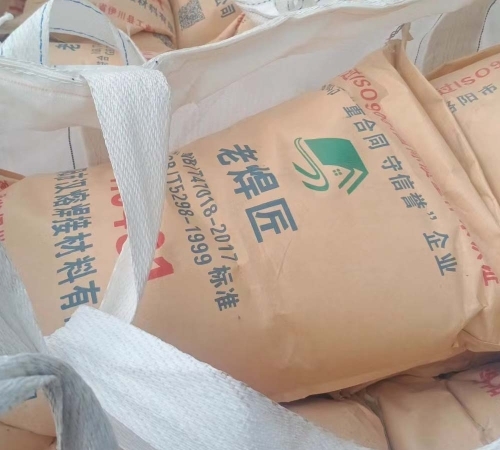
BFA powder is typically shipped in bulk bags (FIBCs) ranging from 500 kg to 1500 kg, or in smaller sacks (25 kg or 50 lb) for more manageable quantities. Ensure the packaging is robust, sealed to prevent contamination, and suitable for your handling equipment. For international shipments, clarify incoterms, freight options (sea, air), and any specific documentation required for customs clearance in your region. A reliable supplier will have established protocols for secure and compliant international shipping, much like we handle our welding machine exports.
Conclusion
Sourcing BFA powder by purity and particle size demands a meticulous approach, from defining precise technical specifications to rigorously verifying quality and strategically selecting a capable supplier. By prioritizing detailed chemical analysis, accurate particle size distribution, and a supplier's commitment to quality management systems like ISO 9001, procurement teams can secure materials that consistently meet their application needs.
Oldwelders stands as a professional and knowledgeable partner in the industrial materials sector. Our robust production capabilities, stringent quality controls, and established global presence mean we are well-equipped to support your BFA powder requirements. By partnering with a proven expert, you gain not just a supplier, but a reliable ally committed to the success of your operations.