
Control SAW Slag via Flux Raw Material Ratios
Understanding How Flux Raw Material Ratios Influence Submerged Arc Welding Slag Release
For process engineers grappling with the intricacies of submerged arc welding (SAW), achieving optimal slag release is not merely a convenience; it is a critical factor influencing weld quality, productivity, and post-weld finishing costs. The fundamental key to controlling this behavior lies deep within the chemical composition of your welding fluxes, specifically the precise ratios of its various components. At Oldwelders, we understand that mastering this aspect is paramount for consistent, high-integrity welds. Our commitment to quality, backed by ISO 9001 certification, ensures that our partners in demanding markets like Brazil, Thailand, Australia, and Malaysia receive welding materials engineered for performance.
The journey from raw material selection to shop-floor validation demands a nuanced understanding of how each constituent in a flux formulation contributes to the final slag characteristics. This article delves into how careful manipulation of flux raw material ratios can translate directly into predictable and controllable slag detachment, streamlining your SAW operations and elevating your final product quality.
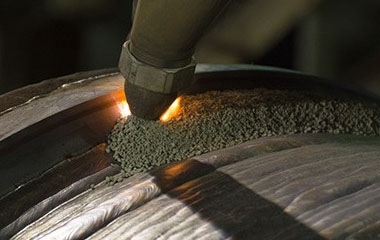
The Critical Role of Flux Raw Material in SAW Slag Formation
In submerged arc welding, the flux serves multiple vital functions beyond simply shielding the arc and molten pool. It plays a pivotal role in refining the weld metal, controlling arc stability, and, most importantly for this discussion, forming the protective slag layer that solidifies over the weld bead. This slag layer is crucial; it insulates the cooling weld, slows its solidification rate, and influences the final bead shape and mechanical properties. However, if this slag is difficult to remove, it can significantly impede production efficiency and necessitate costly post-weld cleaning operations.
The characteristics of this slag – its viscosity, melting point, density, and ultimately, its detachability – are directly dictated by the chemical composition of the flux raw material. The constituent minerals, when melted at extreme temperatures (such as the 2000 °C processes used in Oldwelders' manufacturing), undergo complex reactions, forming a molten glass-like substance that solidifies into slag. Different mineral oxides contribute distinct properties: some enhance fluidity, others increase viscosity, and some act as deoxidizers or alloying elements. Understanding these individual contributions is the first step toward purposeful slag control.
Understanding Slag's Purpose and Detachability
The primary purpose of SAW slag is twofold: to protect the molten metal from atmospheric contamination and to influence the weld bead's metallurgical properties. A well-designed slag should solidify at a rate that allows gases to escape, preventing porosity, and should form a consistent, uniform layer that is easily removable once the weld has cooled. Poor slag detachability often indicates an imbalance in the flux's chemical composition, leading to excessive adhesion to the weld bead. This can result from inappropriate melting points, surface tension issues, or chemical interactions that create strong bonds with the solidified weld metal. By precisely adjusting the flux raw material ratios, engineers can fine-tune these properties to ensure the slag lifts cleanly and efficiently, minimizing rework and maximizing throughput.
Key Flux Raw Materials and Their Impact on Slag Characteristics
The foundation of any high-performance welding flux lies in its expertly selected raw materials. At Oldwelders, we utilize excellent dolomite, bauxite, cryolite, silica, fluorine ore, and other specialty ores, meticulously melted at 2000 °C to ensure optimal homogeneity and performance. Each of these components contributes uniquely to the final slag properties:
- Dolomite (Calcium Magnesium Carbonate): Primarily a source of basic oxides (CaO, MgO), dolomite increases the basicity of the flux. Higher basicity generally correlates with improved metallurgical properties of the weld metal, such as better toughness and impact strength, and often contributes to more readily detachable slag. It can also influence the viscosity of the molten slag, making it more fluid at welding temperatures.
- Bauxite (Aluminum Hydroxide): Rich in alumina (Al2O3), bauxite acts as an amphoteric oxide, meaning it can behave as both an acid and a base depending on the overall flux composition. Alumina significantly influences slag viscosity and melting point. In appropriate ratios, it can help stabilize the arc and contribute to a more stable, easily removable slag layer.
- Cryolite (Sodium Aluminum Fluoride): Cryolite is a powerful activator and deoxidizer. Its fluorine content, derived from fluorine ore, plays a crucial role in lowering the melting point of the slag and increasing its fluidity. This can be highly beneficial for improving slag detachability, as a more fluid slag tends to separate more easily from the solidifying weld metal. However, excessive fluorine can lead to increased fume generation and potential metallurgical issues, necessitating careful control of its ratio.
- Silica (Silicon Dioxide): As an acidic oxide, silica (SiO2) is a primary glass-forming component in many fluxes. It significantly impacts slag viscosity and melting point. Higher silica content generally leads to more viscous, slower-cooling slags, which can be advantageous for certain applications by allowing more time for gas escape. However, an overdose can result in excessively sticky slag that is hard to remove.
- Fluorine Ore (e.g., Fluorspar): Beyond cryolite, other fluorine-containing ores directly contribute fluorine to the flux. Fluorine, in general, enhances arc stability, lowers slag viscosity, and improves slag detachability. It also helps in the transfer of certain alloying elements into the weld metal.
By understanding the individual roles of these flux raw material components, engineers can strategically adjust their ratios to achieve specific slag characteristics, directly impacting the ease of slag removal and the overall efficiency of the welding process. This precise control over formulation is a hallmark of high-quality welding materials.
Formulating for Controlled Slag Release: Ratio Optimization Strategies
The art and science of flux formulation for SAW slag control lie in balancing the contributions of each raw material. It is not about maximizing one property, but about achieving synergistic effects that lead to optimal slag behavior. Here are key strategies for optimizing flux raw material ratios to control slag release:
Balancing Basicity and Acidity
The basicity index of a flux (often calculated based on the ratio of basic oxides like CaO, MgO, MnO, FeO to acidic oxides like SiO2, Al2O3, TiO2) is a fundamental parameter. Higher basicity generally improves slag detachability and metallurgical properties. To increase basicity, elevate the ratios of dolomite and other basic oxide sources while carefully managing acidic components like silica. However, excessively high basicity can sometimes lead to very brittle slag that shatters into small, hard-to-clean fragments, or can make the slag too fluid, leading to arc instability.
Managing Viscosity and Fluidity
Slag viscosity at welding temperatures is crucial. A very viscous slag can trap gases and make removal difficult, while an overly fluid slag might not provide adequate protection or could lead to bead instability. Components like silica and alumina tend to increase viscosity, while fluorine compounds (from cryolite and fluorine ore) and certain basic oxides can decrease it. Adjusting the ratios of these components allows for fine-tuning the slag's flow characteristics. For instance, a slightly higher cryolite content might improve fluidity and detachability, but must be balanced against potential fume and metallurgical impacts.
Controlling Melting Point and Solidification Range
The melting point and solidification range of the slag relative to the weld metal are vital. Ideally, the slag should solidify slightly after the weld metal, allowing it to "release" from the weld bead as it cools and shrinks. Fluorine-containing compounds are excellent for lowering the slag's melting point. Strategic additions of these can ensure the slag remains molten long enough to flow smoothly and then solidifies into a brittle, easily detachable layer. Careful control over the specific blends of flux raw material ensures this delicate balance is achieved.
Experimentation and Validation
Theoretical understanding must always be complemented by practical experimentation. Small-batch trials with varying flux raw material ratios, followed by visual inspection, mechanical testing, and slag detachability assessments, are essential. Observing how slag behaves under different welding parameters (voltage, current, travel speed) will provide critical feedback for iterative refinement of the flux formulation. This empirical approach, combined with a deep knowledge of material science, is how Oldwelders develops its superior welding machine and welding flux offerings.
Oldwelders' Commitment to Quality Flux Raw Material and Production
At Oldwelders, our dedication to excellence in submerged arc welding flux hj431 and other welding consumables is unwavering. Our manufacturing process begins with the careful selection of superior flux raw material, including excellent dolomite, bauxite, cryolite, silica, and fluorine ore. These materials undergo a precise melting process at 2000 °C, ensuring optimal homogeneity and chemical integrity for consistent performance.
Our state-of-the-art facility underscores this commitment: the plant covers an area of 1000 square meters and houses six production lines, enabling us to supply up to 100 tons of product per day. This substantial capacity ensures reliable supply for our global partners, including those in Brazil, Thailand, Australia, and Malaysia. Furthermore, our ISO 9001 certification is not just a badge; it represents our rigorous quality management system applied to every aspect of production, from raw material sourcing to final product inspection. We understand that precision is paramount for B2B clients, which is why we maintain strict control over every batch. With a minimum order quantity (MOQ) of just 1 ton and a lead time of typically 30 days, we are equipped to support both large-scale industrial operations and specialized project requirements, delivering high-quality welding fluxes tailored to your needs.
Beyond Ratios: Other Factors Influencing SAW Slag Behavior
While flux raw material ratios are foundational to slag control, it's important to acknowledge that other operational parameters also play a significant role in slag detachability and overall weld quality. A holistic approach considers these factors in conjunction with flux chemistry:
- Welding Parameters: Voltage, current, and travel speed directly affect the heat input and the size and shape of the weld pool. Higher heat input can influence the cooling rate and the interaction between the molten slag and the solidifying weld metal. Adjusting these parameters can sometimes compensate for minor slag detachability issues or optimize the performance of a given flux.
- Base Metal Chemistry: The composition of the base metal can influence the weld pool chemistry and, consequently, the slag-metal reactions. Elements from the base metal can dissolve into the weld pool and then partition into the slag, altering its properties.
- Joint Design and Fit-up: The geometry of the weld joint and the accuracy of fit-up can impact the flow of molten slag and its ability to consolidate into a uniform, easily removable layer. Irregularities can create pockets where slag becomes trapped or adheres more strongly.
- Cooling Rate: The rate at which the weld and slag cool can affect the microstructure of both, influencing slag brittleness and adhesion. Faster cooling can sometimes lead to more brittle, easily detached slag, but must be balanced against potential metallurgical issues in the weld metal.
By understanding the interplay between flux formulation and these operational variables, process engineers can achieve comprehensive control over the SAW process, resulting in consistently high-quality welds with minimal post-weld cleaning.
Conclusion
The ability to control SAW slag release is a distinguishing characteristic of an optimized welding process, directly impacting productivity and the integrity of the final product. By meticulously adjusting flux raw material ratios, engineers can precisely tune slag viscosity, melting point, and detachability. Oldwelders stands as a reliable partner in this endeavor, providing expertly formulated welding fluxes backed by stringent quality control and extensive manufacturing capabilities. Our commitment to utilizing superior raw materials and advanced production methods ensures that our clients receive welding materials that consistently deliver excellent performance and predictable slag behavior. Partner with Oldwelders to achieve seamless operations and superior weld quality, leveraging our expertise in the foundational science of flux formulation.