
Selecting Optimal Pipe Welding Flux for Production
Selecting the Optimal Pipe Welding Flux for Your Production Needs
For production engineers and procurement teams in the B2B sector, the selection of the correct welding fluxes is a critical decision that profoundly impacts the quality, efficiency, and cost-effectiveness of pipe fabrication. An effective pipe welding flux acts as a shield, protecting the molten weld pool from atmospheric contamination, while also influencing arc stability, bead shape, and mechanical properties of the finished weld. Choosing the right flux involves a deep understanding of its chemical composition, how it interacts with different joint metals, and its performance under various heat sources.
At Oldwelders, we understand these complexities. Our commitment to quality is underscored by our welding materials being manufactured under ISO 9001 certified processes, ensuring consistency and reliability for demanding industrial applications. This article will guide you through the essential considerations for validating whether a flux fits your specific heating method and throughput requirements, helping you achieve superior results in your pipe welding operations.

The Critical Role of Pipe Welding Flux in Fabrication
Pipe welding is a specialized field demanding precision and integrity, given the high-pressure and critical applications of pipelines across various industries. The flux plays several indispensable roles in achieving a robust and defect-free weld:
- Protection: It generates a protective gas shield and a slag layer over the molten weld pool, preventing oxidation and nitridation from ambient air, which can lead to porosity and brittleness.
- Deoxidation and Alloying: Fluxes contain deoxidizers that scavenge impurities from the weld metal, enhancing its mechanical properties. They can also introduce alloying elements into the weld metal, tailoring its composition to meet specific strength, toughness, or corrosion resistance requirements.
- Arc Stability: Certain flux components contribute to a stable arc, which is crucial for consistent heat input and uniform weld bead formation.
- Bead Shape and Slag Removal: The flux formulation influences the viscosity and surface tension of the molten slag, which in turn dictates the shape of the weld bead and the ease of slag removal after cooling. A well-designed flux ensures a smooth, well-contoured bead and self-peeling slag, reducing post-weld cleaning efforts.
Understanding these fundamental functions is the first step in appreciating why meticulous flux selection is paramount for critical pipe welding applications.
Understanding Flux Composition and Its Impact on Weld Properties
The performance characteristics of a welding flux are directly tied to its chemical composition. Fluxes are complex mixtures of various mineral compounds, each contributing specific properties to the welding process and the final weld metal. These compounds are carefully balanced to achieve desired metallurgical reactions and physical behaviors.
Key Raw Materials and Manufacturing Excellence
The foundation of a high-performance flux lies in the quality of its raw materials and the precision of its manufacturing process. At Oldwelders, we pride ourselves on using excellent dolomite, bauxite, cryolite, silica, fluorine ore, and other high-grade minerals as the raw ingredients for our flux products. These materials are meticulously selected for their purity and specific properties. Our manufacturing process involves melting these raw materials at an extremely high temperature of 2000 °C. This high-temperature melting ensures a homogeneous mixture and activates the chemical components, preparing them for optimal performance during welding.
The precise blending and processing of these materials allow us to produce fluxes designed for specific applications, whether it's for enhanced toughness, improved corrosion resistance, or superior deposition rates. Different flux types, such as neutral, active, or alloying fluxes, are formulated by adjusting these raw material ratios. For instance, basic fluxes (rich in calcium fluoride, calcium oxide) provide excellent toughness and crack resistance, often preferred for critical applications, while acidic fluxes (high in silica, manganese oxide) offer good bead shape and easy slag removal, suitable for general fabrication.
Our expansive production facility, covering an area of 1000 square meters and housing six production lines, demonstrates our capability to meet substantial demand. This infrastructure allows us to supply up to 100 tons of product a day, ensuring that our B2B partners have a reliable source for their welding material requirements. This robust capacity, combined with a minimum order quantity (MOQ) of just 1 ton and a typical lead time of 30 days, provides flexibility and efficiency for various project scales.
Matching Pipe Welding Flux to Joint Metal and Heat Source
The true art of flux selection lies in harmonizing its properties with the specific joint metal being welded and the characteristics of the heat source employed. This synergistic approach maximizes weld quality and operational efficiency.
Flux Selection for Diverse Metal Alloys
Different pipe materials demand fluxes with tailored compositions to achieve optimal results:
- Carbon Steels: For general carbon steel pipes, fluxes are often designed to provide good deoxidation and mechanical properties. Balanced fluxes (e.g., manganese-silicate types) are common, offering good arc stability and easy slag removal. For higher strength carbon steels, fluxes that contribute to improved toughness and crack resistance are preferred.
- Stainless Steels: Welding stainless steel pipes requires fluxes that protect against chromium oxidation, which can deplete chromium from the weld metal and reduce corrosion resistance. Basic fluxes with low oxygen potential are often used, as they minimize carbon pick-up and help maintain the corrosion resistance of the stainless steel.
- Low Alloy Steels: For pipes made from low alloy steels (e.g., Cr-Mo steels used in power generation), the flux must be carefully chosen to ensure the correct alloying element transfer and to achieve specific mechanical properties, particularly high-temperature strength and creep resistance. Alloying fluxes can introduce elements like molybdenum or nickel into the weld.
- Specialty Alloys: High-nickel alloys or other specialty materials used in demanding environments require highly specific flux formulations that prevent hot cracking and ensure metallurgical compatibility.
Adapting Flux to Different Welding Processes
The heat source and welding process significantly influence how a flux performs:
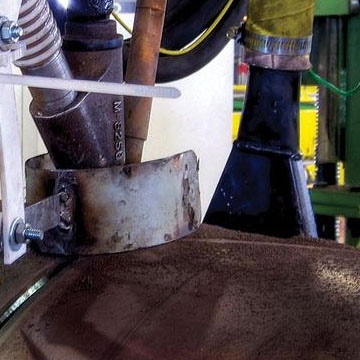
- Submerged Arc Welding (SAW): This process relies entirely on the flux to shield the arc and molten pool. For SAW, the submerged arc welding flux hj431 is critical for controlling bead shape, penetration, and the metallurgical properties of the weld. The flux type (fused, agglomerated, or bonded) and its basicity index are key factors. Fused fluxes offer consistency, while agglomerated fluxes allow for easier alloying additions. The high heat input of SAW means the flux must be stable and consistent at elevated temperatures.
- Electroslag Welding (ESW): Primarily used for very thick sections, ESW uses a conductive slag bath to melt the electrode and base metal. The flux forms this slag bath, and its electrical conductivity, viscosity, and chemical reactions are paramount. The flux for ESW must be extremely robust to handle the large molten pool and high deposition rates.
- Flux-Cored Arc Welding (FCAW): While FCAW uses a continuous wire with flux in its core, the external shielding gas and the internal flux work in tandem. The internal flux provides deoxidation, alloying, and slag formation. The choice between self-shielded and gas-shielded FCAW wire depends on the application and environment, with the flux composition tailored accordingly.
Each welding process presents unique demands on the flux, making a 'one-size-fits-all' approach impractical and often detrimental to weld quality.
Ensuring Quality and Supply Chain Reliability for Your Pipe Welding Flux
Beyond technical specifications, B2B buyers must consider the quality assurance and logistical capabilities of their flux supplier. Reliability in both product performance and delivery is non-negotiable for maintaining production schedules and achieving consistent results.
Our ISO 9001 certification is not just a badge; it represents a comprehensive quality management system that governs every stage of our production, from raw material sourcing and processing to final product inspection. This meticulous approach ensures that every batch of pipe welding flux we produce meets stringent international standards and performs predictably in your operations.
Furthermore, Oldwelders is equipped to support your global operations. We actively serve target markets including Brazil, Thailand, Australia, and Malaysia, demonstrating our capability to handle international logistics and understand diverse market requirements. Our six production lines and a daily capacity of 100 tons mean we are well-positioned to fulfill large-scale orders reliably, minimizing lead times and preventing costly production delays.
When evaluating a supplier, consider asking about their quality control protocols, batch consistency, and their ability to provide technical support for specific application challenges. A truly knowledgeable partner will offer not just products, but solutions and expertise to optimize your welding processes.
Partnering for Advanced Pipe Welding Solutions
Selecting the ideal pipe welding flux is a strategic decision that influences the integrity and longevity of your fabricated pipes. It demands a detailed understanding of material science, welding metallurgy, and process engineering. As a professional B2B partner, Oldwelders offers not only a comprehensive range of high-quality welding fluxes but also the technical expertise to assist you in making informed choices.
Whether you are working with standard carbon steels or advanced alloys, and regardless of your chosen heat source, our team is dedicated to helping you identify the flux that will deliver optimal performance, efficiency, and cost savings. Our commitment to using excellent raw materials, combined with our rigorous 2000 °C melting process and ISO 9001 certified production, ensures that our fluxes consistently meet the highest industry standards.
In addition to our welding fluxes, Oldwelders also provides a full spectrum of welding machine options, welding wire, and welding rods, offering a complete solution for your fabrication needs. We invite you to leverage our extensive experience and robust manufacturing capabilities to enhance your pipe welding operations. Contact us today to discuss your specific requirements and discover how Oldwelders can become your trusted partner in achieving welding excellence.