
Optimize Pipe Welding Flux Use to Cut Costs
Optimizing Pipe Welding Flux Usage to Reduce Operational Costs
For purchasing managers and pipe-fabrication supervisors, the true cost of consumables extends far beyond the nominal purchase price. While a kilogram of welding fluxes may appear to be a straightforward expense, the reality of production often reveals significant hidden costs, particularly when it comes to Pipe Welding Flux. Understanding and accurately calculating the waste cost per joint is critical for optimizing operations and ensuring competitive project bids. This article provides a practical methodology for assessing your actual flux consumption, helping you identify inefficiencies and make informed sourcing decisions.
Oldwelders understands the rigorous demands of industrial welding. As an ISO 9001 certified manufacturer, our commitment to quality ensures that our products, including various welding fluxes, meet the highest international standards. We recognize that precision in cost management is as vital as the quality of the weld itself, which is why we aim to provide comprehensive insights into optimizing your operational expenditures.
Understanding the True Economic Impact of Pipe Welding Flux
Many procurement strategies focus solely on the unit price of Pipe Welding Flux, overlooking the substantial financial implications of material waste during the welding process. For high-volume pipe fabrication, even marginal inefficiencies can accumulate into significant losses over time. These hidden costs can arise from various factors, including excessive spatter, unrecoverable slag, insufficient penetration requiring rework, and improper arc stability leading to material degradation.
The economic impact of unmanaged flux consumption extends beyond mere material loss. It can affect labor costs due to increased cleanup time, energy consumption from inefficient processes, and ultimately, the overall profitability of a project. A comprehensive understanding of your flux consumption pattern allows for better inventory management, reduced waste disposal costs, and improved environmental performance. By analyzing the variables involved in each weld, businesses can transition from reactive problem-solving to proactive cost control, ensuring that every ton of flux purchased delivers maximum value.
A Practical Methodology for Calculating Flux Waste per Pipe Joint
To accurately assess the cost of Pipe Welding Flux waste, a systematic approach is necessary. This methodology breaks down the flux consumption process into measurable variables, allowing you to quantify the actual amount of usable flux per joint versus the total purchased volume. This calculation provides a clear picture of your operational efficiency and highlights areas for improvement.
Key Variables in Your Flux Cost Equation
The core of this calculation relies on understanding the initial amount of flux used and subtracting what can be effectively recovered or is essential to the welding process. Here are the key variables:
- Initial Flux Weight (IFW): This is the total weight of flux loaded into the hopper for a specific batch of pipe joints or a single joint if measured precisely. This should be measured in kilograms (kg).
- Recovered Flux Weight (RFW): After the welding process, a portion of the unused, clean flux can often be recovered and reused. This weight (kg) must be carefully separated from slag and contaminants.
- Slag Weight (SW): The non-metallic layer that forms over the weld bead. While slag is necessary for weld protection, its weight represents flux material that is consumed and not recoverable for reuse. This should be measured in kg.
- Spatter Weight (SPW): Small particles of molten metal and flux that are expelled from the weld pool during the process. While typically associated with metal, flux spatter also contributes to waste. Measure in kg.
- Joint Length (JL) and Diameter (JD): These dimensions are crucial for normalizing your cost calculations across different pipe sizes and understanding consumption per linear meter or joint.
- Number of Joints (NJ): The total number of pipe joints welded during the measurement period.
The Calculation Formula
The primary goal is to determine the "Net Consumed Flux Weight per Joint" (NCFWPJ) and subsequently, the "Waste Cost per Joint" (WCPJ).
Step 1: Calculate Total Net Consumed Flux (TNCF) for a batch:
TNCF = IFW - RFW
Step 2: Calculate Average Net Consumed Flux per Joint (ANCFPJ):
ANCFPJ = TNCF / NJ
Step 3: Calculate the Usable Flux Weight per Joint (UFWPJ): This is trickier as it depends on ideal consumption. An estimate can be derived from manufacturer specifications or best practice guidelines for the specific pipe diameter and weld pass. For a more direct waste calculation, we focus on the difference between total consumed and what was ideally needed or what was wasted beyond ideal consumption.
Step 4: Calculate Waste Flux Weight per Joint (WFWPJ):
WFWPJ = ANCFPJ - Ideal Flux Consumption per Joint (IFCJ)
Where IFCJ can be estimated based on engineering standards for the specific weld configuration and material. If IFCJ is difficult to determine, an alternative is to focus on the total cost of consumed flux.
Step 5: Calculate Waste Cost per Joint (WCPJ):
WCPJ = WFWPJ × Unit Cost of Flux (per kg)
Alternatively, if focusing on the total cost of consumed flux (including necessary consumption and waste):
Total Flux Cost per Joint (TFCPJ) = (TNCF / NJ) × Unit Cost of Flux (per kg)
This formula provides a robust framework. Remember to ensure consistent units of measurement throughout your calculations. Regular monitoring and comparison of these figures will highlight trends and the impact of any operational changes.
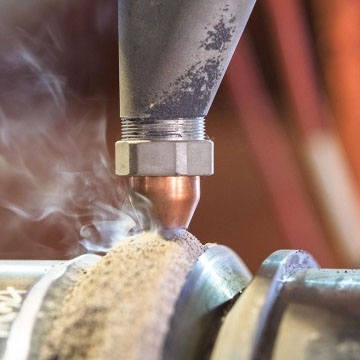
Factors Influencing Pipe Welding Flux Efficiency and Waste
Several factors can significantly impact the efficiency of your Pipe Welding Flux and, consequently, the amount of waste generated. Understanding these variables is crucial for implementing effective waste reduction strategies.
Flux Type and Composition
Different types of welding fluxes are formulated for specific applications and welding processes. For instance, whether you are using a fused, agglomerated, or bonded flux can influence its flow characteristics, density, and susceptibility to spatter. Oldwelders produces its flux products from excellent raw materials such as dolomite, bauxite, cryolite, silica, and fluorine ore, melted at 2000 °C. This meticulous process ensures a consistent, high-quality product that contributes to stable arc performance and reduced waste. The choice of flux must be appropriate for the base metal, joint design, and welding position to minimize waste and optimize weld quality.
Welding Parameters
Incorrect welding parameters are a common cause of flux waste. Amperage, voltage, travel speed, and electrode stick-out all play a role in how efficiently the flux performs. For example, excessively high voltage can lead to increased spatter and a wider, shallower bead, consuming more flux than necessary. Conversely, too low voltage might result in poor penetration and an unstable arc. Optimal parameters, often specified by the flux manufacturer or derived through empirical testing, are essential for minimizing waste and achieving the desired weld characteristics. Pairing the right mig-mag-tig welding machine with the correct flux is critical.
Operator Skill and Training
The experience and training of the welding operator are paramount. Skilled operators can maintain consistent travel speeds, arc lengths, and torch angles, which directly translate to efficient flux utilization. Inconsistent technique can lead to erratic arc behavior, excessive spatter, and the need for rework, all contributing to increased flux consumption. Continuous training and adherence to best practices can significantly reduce waste and improve overall productivity.
Equipment Condition and Calibration
Well-maintained and calibrated welding equipment is fundamental to efficient flux usage. Issues with flux delivery systems, worn out nozzles, or inconsistent wire feeding mechanisms can all lead to problems that increase flux waste. Regular maintenance checks and calibration ensure that the equipment is performing optimally, providing a stable arc and consistent flux delivery. Investing in reliable welding machine equipment is a long-term strategy for cost reduction.
Strategic Sourcing and Quality Assurance for Your Pipe Welding Flux
Choosing the right supplier for your Pipe Welding Flux is a strategic decision that directly impacts your operational efficiency and cost management. A reliable partner not only provides high-quality products but also offers the consistency and support necessary for demanding industrial applications.
The Oldwelders Advantage in Quality and Capacity
At Oldwelders, we pride ourselves on our robust manufacturing capabilities and unwavering commitment to quality. Our facility, covering an area of 1000 square meters, houses six production lines, enabling us to supply up to 100 tons of product per day. This significant capacity ensures that we can meet the demands of large-scale pipe fabrication projects and supply our partners consistently, even for orders with a minimum quantity of 1 ton.
Our dedication to quality is underscored by our ISO 9001 certification, which guarantees adherence to stringent quality management systems from raw material sourcing to final product delivery. The precision in our manufacturing process, including the careful selection of raw materials like excellent dolomite, bauxite, cryolite, silica, and fluorine ore, melted at 2000 °C, results in fluxes that offer superior performance characteristics. This includes excellent arc stability, minimal spatter, and easy slag removal, all of which contribute to reducing waste and improving the overall quality of your welds. For specific applications, our submerged arc welding flux hj431 is an example of our specialized offerings.
Global Reach and Reliable Supply Chain
Our commitment to serving diverse markets is reflected in our robust export capabilities. Oldwelders regularly supplies high-quality welding consumables, including Pipe Welding Flux, to target markets such as Brazil, Thailand, Australia, and Malaysia. This global presence is supported by an efficient supply chain designed to ensure timely delivery and responsive customer service, facilitating seamless procurement for our international partners. While lead times can vary based on order specifics and destination, our expansive production capacity helps us manage orders effectively to support your project timelines.
By partnering with Oldwelders, you gain access to a supplier that understands the intricacies of industrial welding and the importance of cost-effective solutions. We offer a comprehensive range of welding materials designed to optimize your operations and enhance your competitive edge in the market.
Conclusion
Accurately calculating the waste cost per joint for Pipe Welding Flux is an indispensable practice for modern pipe fabrication enterprises. It moves beyond superficial unit pricing to reveal the true operational expenses, enabling purchasing managers and supervisors to make data-driven decisions that enhance profitability and efficiency. By applying the methodology outlined in this article and understanding the factors that influence flux efficiency, businesses can significantly reduce waste and optimize their welding processes.
Oldwelders stands as a trusted partner in this endeavor. Our ISO 9001 certified manufacturing, extensive production capacity, and commitment to producing fluxes from superior raw materials provide the foundation for consistent, high-performance welding. We are dedicated to helping our global partners achieve their operational goals by supplying reliable Pipe Welding Flux and other welding fluxes that minimize waste and maximize value. Contact us today to discuss how our solutions can support your next project.