
Rutile Welding Rods: Arc Stability vs Deposition
Balancing Arc Stability and Deposition Rate with Rutile Welding Rods
For welding engineers and procurement teams, selecting the appropriate welding materials is a critical decision that directly impacts project efficiency, weld quality, and operational costs. Among the diverse range of electrodes available, the rutile welding rod stands out as a popular choice due to its distinctive characteristics. However, understanding the inherent trade-offs, particularly between arc stability and deposition rate, is essential for optimizing fabrication processes.
At Oldwelders, we specialize in providing high-performance welding solutions, from welding machine technology to advanced welding fluxes. Our commitment to quality is underscored by our ISO 9001 certification, ensuring that every product, including our comprehensive range of welding rods, meets stringent international standards. This article will delve into the properties of rutile welding rods, examining how their formulation influences both arc stability and deposition rate, and guide you in making informed choices for your specific applications.
The Characteristics of Rutile Welding Rods
Rutile welding rods, identified by their flux coating primarily composed of titanium dioxide (rutile), are renowned for their exceptional user-friendliness and versatility. The rutile content in the flux aids in producing a soft, stable arc with minimal spatter, making them particularly suitable for general-purpose welding across various industries. These electrodes typically generate a smooth weld bead with a fine ripple, offering an aesthetically pleasing finish that often requires less post-weld cleaning.
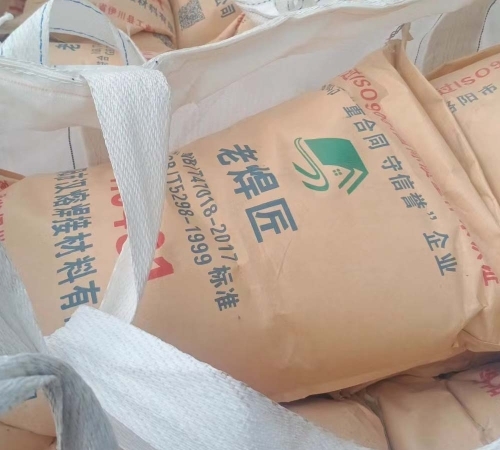
One of the primary advantages of a rutile welding rod is its excellent arc reignition properties, which contribute to ease of use, especially for intermittent welding or when working in challenging positions. The slag produced is generally fluid and easy to remove, often self-peeling, which further enhances productivity. This combination of attributes makes rutile electrodes a preferred choice for sheet metal work, general fabrication, and maintenance welding. Oldwelders ensures the quality of our welding rods by utilizing excellent raw materials such as dolomite, bauxite, cryolite, silica, and fluorine ore, melted at 2000 °C, guaranteeing consistent performance across our product lines.
Understanding Arc Stability in Welding Applications
Arc stability refers to the consistency and predictability of the electric arc during the welding process. A stable arc is crucial for producing high-quality welds, as it minimizes spatter, reduces porosity, and allows the welder greater control over the molten pool. Rutile coatings are specifically formulated to enhance arc stability through the presence of easily ionizable elements. These elements help to maintain a consistent plasma column, even at lower open-circuit voltages, which is a significant benefit for various arc welding machine types.
The smooth and stable arc provided by rutile electrodes translates directly into improved operator comfort and reduced fatigue, especially during extended welding sessions. This characteristic is particularly valuable in applications requiring precise control, such as positional welding or when working with thinner materials where burn-through is a concern. The stable arc also contributes to a more consistent heat input, which is vital for preventing defects like undercut and incomplete fusion. For businesses in markets like Thailand and Australia, where skilled labor availability and consistent weld quality are key, the inherent arc stability of rutile electrodes offers a reliable solution.
Factors Contributing to Rutile Arc Stability:
- Ionizing Agents: The titanium dioxide in the flux produces a stable plasma.
- Slag Formation: The molten slag provides a protective atmosphere, shielding the arc from atmospheric contamination.
- Smooth Metal Transfer: Rutile coatings promote a fine droplet transfer, leading to a quieter, more controlled arc.
Maximizing Deposition Rate for Enhanced Productivity
Deposition rate, often measured in kilograms per hour (kg/hr) or pounds per hour (lb/hr), quantifies the amount of weld metal deposited per unit of time. For high-volume fabrication and manufacturing operations, maximizing the deposition rate is paramount for achieving optimal productivity and meeting tight production schedules. While standard rutile welding rods excel in arc stability and ease of use, their deposition rates are generally moderate compared to basic or iron powder enhanced electrodes.
However, advancements in electrode technology have led to specialized rutile variants designed to offer improved deposition rates. These often incorporate iron powder into the flux coating, which melts along with the core wire, adding to the weld metal. Electrodes like AWS E7014 (iron powder rutile) or AWS E7024 (iron powder rutile, high deposition) are examples of such formulations. These electrodes sacrifice some of the extreme positional versatility of standard rutile types but offer significantly higher deposition rates, making them ideal for flat and horizontal fillet welds where speed is prioritized.
For operations focused on maximizing throughput, such as in heavy fabrication shops in Malaysia, selecting an iron powder-enhanced rutile welding rod can lead to substantial gains in efficiency. It's a strategic decision that balances the ease of use inherent in rutile coatings with the demands of high-production environments. Our Oldwelders production facility, covering an area of 1000 square meters with six production lines, is capable of supplying 100 tons a day, ensuring we can meet the high-volume demands for these specialized electrodes.
Strategies to Optimize Deposition Rate with Rutile Rods:
- Electrode Diameter: Using larger diameter electrodes generally increases deposition.
- Welding Current: Higher amperage, within the electrode's specifications, can boost deposition.
- Positional Welding: Limiting high-deposition electrodes to flat and horizontal positions maximizes their efficiency.
- Iron Powder Content: Opting for rutile electrodes with added iron powder for specific applications.
Selecting the Right Rutile Welding Rod for Your Project
The choice between a standard rutile electrode and a high-deposition rutile variant depends heavily on the specific requirements of your welding project. Welding engineers and procurement teams must consider several factors to make the most informed decision:
Application and Material Type:
- For general fabrication, repair work, or welding thin-gauge materials where excellent arc stability, easy slag removal, and good bead appearance are critical, a standard AWS E6013 welding electrodes, a common type of rutile welding rod, is often the best choice.
- When working with thicker sections or in situations where high production speed in flat or horizontal positions is the priority, an iron powder-enhanced rutile welding rod like E7014 or E7024 will deliver superior deposition rates.
Operator Skill Level:
Rutile electrodes are often favored for their forgiving nature and ease of use, making them an excellent choice for operators across various skill levels. This can reduce training time and improve overall weld quality consistency.
Desired Weld Appearance and Post-Weld Processing:
The smooth, fine-rippled bead and easy slag removal of rutile electrodes can reduce the need for extensive post-weld grinding and cleaning, contributing to faster project completion and lower labor costs.
At Oldwelders, we understand these nuances. Our expert team is available to assist you in selecting the precise rutile welding rod that aligns with your operational goals, whether you prioritize a stable arc for intricate work or a high deposition rate for rapid fabrication. We pride ourselves on offering flexible solutions, with a minimum order quantity of 1 ton and a reliable lead time of 30 days, designed to support your project timelines effectively.
Quality Assurance and Supply Chain Excellence at Oldwelders
Our commitment to delivering superior welding consumables is ingrained in every aspect of our operations. Oldwelders is an ISO 9001 certified manufacturer, a testament to our rigorous quality management systems and dedication to continuous improvement. This certification assures our B2B partners that our products, including every rutile welding rod, consistently meet or exceed international quality standards.
Our state-of-the-art manufacturing facility, covering an area of 1000 square meters, houses six advanced production lines. This robust infrastructure allows us to maintain a daily supply capacity of 100 tons, ensuring consistent availability for our global clientele. We meticulously source our raw materials, using only excellent dolomite, bauxite, cryolite, silica, fluorine ore, and other ores, which are melted at 2000 °C to create the high-quality fluxes for our products.
Oldwelders proudly serves target markets including Brazil, Thailand, Australia, and Malaysia, understanding the unique demands of each region. Our efficient supply chain, combined with a minimum order quantity of 1 ton and a reliable 30-day lead time, empowers our partners to manage their inventory effectively and execute projects without unnecessary delays. We are not just a supplier; we are a strategic partner in your welding success, providing the knowledge, quality, and service you need to excel.
Whether your priority is exceptional arc stability for intricate work or a high deposition rate for maximizing productivity, understanding the nuances of the rutile welding rod is crucial. Oldwelders offers the expertise and the quality products to ensure your welding operations achieve optimal results every time.