
Reduce Tank Fabrication Costs with Smarter Specifications
Reduce Your Tank Fabrication Costs Through Smarter Specification
In large-scale industrial projects, the cost of tank fabrication is a significant line item. While raw material prices and labor rates are major factors, experienced project managers know that the greatest control over the final budget lies in the initial planning and specification phase. An overly conservative or poorly defined specification can lead to unnecessary expenses, extended timelines, and compromised efficiency. Conversely, a well-considered, intelligent specification is the most powerful tool for achieving a cost-effective, high-quality outcome.
This guide is for project buyers, engineers, and procurement managers who are refining their requirements before issuing a Request for Quotation (RFQ). We will explore key areas where smarter specifications can yield substantial savings without sacrificing structural integrity or operational performance. By focusing on material selection, welding process optimization, and design for manufacturability, you can ensure your project is built on a foundation of efficiency and value from the very beginning.
The Foundation of Cost Control: Material Selection and Grade
The choice of material is the single largest cost driver in any tank fabrication project. While the service requirements—such as the substance being stored, operating temperature, and pressure—dictate the fundamental material type (e.g., carbon steel, stainless steel, or an alloy), there is often significant room for optimization within that category.
Matching the Grade to the Application
Specifying a higher-grade material than necessary is a common source of budget overruns. For example, while a 316L stainless steel offers superior corrosion resistance, a 304L grade may be perfectly adequate and more economical for many applications. A thorough analysis of the stored medium's corrosive properties and the tank's operational environment is crucial. Collaborating with a materials engineer and a knowledgeable supplier can help identify the most cost-effective material that meets all safety and performance standards. Don't just default to the "safest" option; specify the "correct" one.
The Impact of Material Thickness
Plate thickness directly influences cost in three ways: the raw material purchase price, the weight affecting logistics and handling, and the welding requirements. A 20% increase in specified thickness can lead to a much larger increase in welding time and consumable consumption due to the need for more weld passes. Engineering calculations should be precise. Building in an excessive safety margin "just in case" is a costly habit. Modern design software allows for precise modeling to determine the minimum required thickness that satisfies all design codes (like API 650 or ASME) and operational loads.
Standard vs. Custom Plate Sizes
Specifying dimensions that align with standard steel plate sizes available from mills can significantly reduce material waste and cost. Custom-sized plates often carry a premium and can lead to longer lead times. Designing the tank shell courses and floor/roof layouts to maximize the use of standard 8ft x 20ft or 10ft x 40ft plates minimizes scrap. The savings from reduced waste can be substantial, especially on multi-tank projects. Your RFQ should allow fabricators to propose slight design modifications that improve material yield.
Optimizing Welding Processes for Efficiency and Quality
Welding is the most labor-intensive part of the tank fabrication process. The welding procedures and consumables specified in your RFQ have a direct and profound impact on both the project timeline and overall cost. Specifying the right process for each joint is key to maximizing efficiency.
Choosing the Right Welding Method
Different welding processes offer distinct advantages in speed, quality, and cost. While Shielded Metal Arc Welding (SMAW) is versatile and common for repairs and tacking, it is slow for long, continuous seams. Your specification should encourage or require the use of more efficient, automated, or semi-automated processes where appropriate:
- Submerged Arc Welding (SAW): For long, straight, and circumferential seams on the shop floor, SAW is unparalleled in speed and deposition rate. It produces high-quality, repeatable welds with minimal operator fatigue. Specifying SAW for floor plates and shell-to-bottom joints can drastically cut down on labor hours.
- Flux-Cored Arc Welding (FCAW): This semi-automatic process is much faster than SMAW and is well-suited for out-of-position welding common in field erection. It offers high deposition rates and excellent weld quality.
- Gas Metal Arc Welding (GMAW): Ideal for thinner materials and root passes, GMAW is a fast and clean process that can improve efficiency in specific applications.
The Critical Role of High-Quality Consumables
The efficiency of any welding process is directly tied to the quality of the consumables used. Specifying a particular welding process is only half the battle; ensuring a consistent supply of high-performance welding materials is essential for maintaining project schedules. Inferior welding wire or flux can lead to defects, rework, and costly delays.
At Oldwelders, we understand the importance of consistency. Our 1000 square meter plant, equipped with six production lines, can supply up to 100 tons of welding flux per day. We produce our high-purity fluxes from premium raw materials like dolomite, bauxite, and cryolite, which are melted at 2000 °C to ensure exceptional purity and performance. This scale and quality control, backed by our ISO 9001 certification, provide our clients in demanding markets like Brazil, Thailand, and Malaysia with the confidence that their welding operations will be consistent and reliable, minimizing defects and maximizing productivity.
Design for Manufacturability (DFM) in Tank Fabrication
How a tank is designed has a massive impact on how easily and cheaply it can be built. Design for Manufacturability (DFM) principles should be applied early in the design phase to streamline the entire fabrication process.
Simplifying Joint Design
Complex weld joints are time-consuming to prepare and weld. Where possible, specifications should favor simpler designs. For example, specifying butt welds over fillet welds on certain attachments can reduce weld volume and distortion. Minimizing the number of nozzles and attachments, and standardizing their design, also simplifies the fabrication sequence and reduces the chance for errors. Every complex intersection is a potential point of failure and a definite point of increased labor cost.
Accessibility and Automation
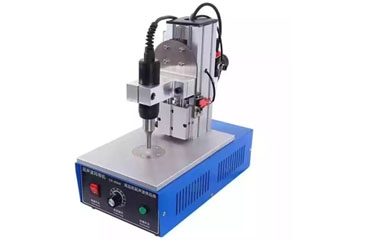
A design must consider access for welders and their equipment. Tight, confined spaces make welding slow, difficult, and potentially hazardous, which increases labor costs. A well-designed tank provides ample space for welders to work comfortably and safely. Furthermore, designing with automation in mind can unlock significant savings. For example, designing long, uninterrupted seams makes it easier to deploy automated welding carriages or SAW tractors. Investing in an appropriate automatic welding machine can be paid back many times over through increased speed and consistency on large projects.
Modular Construction and Pre-Fabrication
Your specification can encourage fabricators to maximize work done in a controlled shop environment versus out in the field. Shop fabrication is generally faster, cheaper, and of higher quality due to better equipment, controlled conditions, and a more stable workforce. Specifying that shell courses be pre-rolled, roof structures be pre-assembled, or nozzle assemblies be completed in the shop before being shipped to the site can dramatically reduce expensive on-site labor and exposure to weather-related delays.
Specifying Quality Control and Testing Intelligently
Quality assurance is non-negotiable, but over-specifying testing requirements can add unnecessary costs and time to a project. The goal is to specify a level of inspection that guarantees integrity without being excessive.
Right-Sizing Non-Destructive Testing (NDT)
Non-Destructive Testing (NDT) is essential for verifying weld quality. However, different methods have different costs and applications.
- Visual Testing (VT): The first line of defense. All welds should undergo 100% visual inspection.
- Magnetic Particle (MT) / Dye Penetrant (PT): Cost-effective methods for detecting surface-breaking defects.
- Radiographic Testing (RT): Provides a permanent film record and is excellent for detecting volumetric defects, but it is slow, expensive, and involves radiation safety protocols.
- Ultrasonic Testing (UT): A highly sensitive method for detecting internal flaws, often faster and cheaper than RT for thicker sections. Phased Array Ultrasonic Testing (PAUT) offers even greater accuracy and data recording capabilities.
Specifying 100% RT on all seams is a costly default. A smarter approach, aligned with codes like API 650, is to specify a percentage of RT (e.g., 10% on vertical seams, 100% on "T" intersections) and supplement it with UT or other methods. This tiered approach ensures critical areas are thoroughly inspected while controlling costs on less critical seams.
Clarity in Acceptance Criteria
Your specification must be crystal clear about the acceptance criteria for defects. Vague language leads to disputes between the fabricator and the inspection team, resulting in delays and costly rework. Reference specific clauses from established codes (e.g., ASME Section VIII, API 650) to define the allowable size and type of imperfections. This removes ambiguity and ensures everyone is working to the same standard. Using a high-quality consumable like AWS E6013 welding electrodes can help achieve these stringent criteria more consistently, reducing the likelihood of rejectable defects from the start.
Partnering with a Strategic Supplier for Long-Term Value
Ultimately, your specifications are executed by your fabricator and their suppliers. Choosing a partner who understands the nuances of cost-effective fabrication is invaluable. A strategic supplier does more than just deliver products; they provide expertise that can help you refine your specifications and optimize your project.
Look for a supplier with a proven track record in global markets and a robust supply chain. Our experience supporting major projects across Australia, Thailand, and Brazil has given us insight into the logistical and technical challenges of large-scale construction. We offer clear commercial terms, such as a standard 30-day lead time and a practical 1-ton minimum order quantity for our flux products, which allows for better project planning and inventory management.
By engaging with a knowledgeable supplier early in the process, you can leverage their expertise to select the most efficient welding processes and the right consumables for your specific material and design. This collaborative approach turns the procurement process from a simple transaction into a strategic partnership, ensuring your tank fabrication project is delivered on time, on budget, and to the highest quality standards.