
Reduce Stick-Weld Spatter With Rutile Welding Rods
Achieving Cleaner Welds and Reduced Spatter with Rutile Welding Rods
For professional welders and fabrication shops, inconsistent weld quality, particularly excessive spatter, can significantly impact productivity and finished product aesthetics. While various factors contribute to spatter, selecting the right electrode and optimizing welding techniques are paramount. The electrode of choice for many welders seeking ease of use and superior aesthetic finish is often a Rutile Welding Rod. These specific electrodes are known for their smooth arc, minimal spatter, and excellent bead appearance, making them ideal for a wide range of applications where appearance and clean-up time are critical considerations.
At Oldwelders, we understand the demands of precise welding operations. Our commitment to quality ensures that our welding consumables, including our comprehensive range of welding materials, meet the highest industry standards. With an ISO 9001 certification and a robust production facility covering 1000 square meters, featuring six production lines capable of supplying 100 tons a day, we are equipped to support your operational needs, whether you are in Brazil, Thailand, Australia, or Malaysia. Our raw materials for flux products, such as excellent dolomite, bauxite, cryolite, silica, and fluorine ore, are melted at 2000 °C to achieve superior consistency and performance in every product.
The Core Advantages of Rutile Electrodes
Rutile electrodes, characterized by their high titanium dioxide content in the flux coating, offer distinct advantages that make them a preferred choice for many welding tasks. This unique composition facilitates a soft, stable arc that is easy to strike and maintain, even for less experienced welders. The resulting weld bead is typically smooth, finely rippled, and visually appealing, requiring minimal post-weld clean-up. Slag removal is also remarkably easy, often peeling off by itself or with a light tap.
These characteristics are particularly beneficial in general fabrication, repair welding, and structural steel applications where good cosmetic appearance is desired. They excel in welding thin to medium-thick sections and are suitable for both AC and DC welding machines. The ease of use and forgiving nature of AWS E6013 welding electrodes, a common type of rutile rod, make them a staple in many workshops for their balance of performance and practicality.
Despite their many advantages, it is important to note that rutile electrodes generally offer lower penetration compared to basic or cellulosic types. This makes them less suitable for applications requiring deep penetration or those involving heavily contaminated base metals. However, for the specific challenge of reducing spatter while achieving a clean finish, the unique composition of a Rutile Welding Rod is undeniably effective.
Troubleshooting Spatter: A Practical Guide for Rutile Rods
Even with the inherent spatter-reducing properties of rutile electrodes, excessive spatter can still occur. Understanding the common causes and implementing systematic troubleshooting steps can significantly improve your weld quality and reduce clean-up time. Here's a practical guide:
1. Amperage Settings and Polarity
- Too High Amperage: One of the most common culprits of spatter is excessively high current. High amperage causes the weld pool to become overly fluid and unstable, leading to explosive metal transfer. Reduce your amperage gradually until spatter diminishes while maintaining adequate penetration.
- Too Low Amperage: Conversely, very low amperage can also cause spatter due to an unstable arc and poor fusion. The arc struggles to melt the base metal and the electrode effectively.
- Incorrect Polarity: While rutile rods are versatile, ensuring the correct polarity for your specific electrode type and application is crucial. Most rutile rods perform well on AC, DC+, or DC-. Consult the electrode manufacturer's recommendations. For instance, using DC- when DC+ is recommended can lead to arc instability and increased spatter.
2. Arc Length and Travel Speed
- Long Arc Length: A long arc creates higher arc voltage and less concentrated heat, leading to a wider, more fluid weld pool that is prone to throwing spatter. Maintain a short, consistent arc length, typically equivalent to the core wire diameter of the electrode.
- Incorrect Travel Speed:
- Too Fast: Insufficient deposition and lack of fusion, leading to a thin bead and potential spatter as the arc struggles to keep up.
- Too Slow: Excessive heat input, a large, fluid weld pool that can sag, and increased spatter. Aim for a travel speed that allows the weld pool to form and solidify properly, leaving a smooth bead.
3. Electrode Angle and Manipulation
- Improper Angle: The correct electrode angle helps direct the arc force and molten metal into the weld joint. Generally, a slight drag angle (10-30 degrees from vertical in the direction of travel) is recommended for most rutile electrodes. An excessively steep or shallow angle can disrupt the arc and increase spatter.
- Poor Manipulation: Erratic or inconsistent electrode manipulation can cause the arc to wander, leading to uneven heat distribution and spatter. Practice smooth, consistent weaving or dragging techniques.
4. Base Material Preparation
- Contamination: Rust, paint, oil, grease, or excessive mill scale on the base metal can vaporize under the arc, causing violent reactions and significant spatter. Always clean your base material thoroughly before welding.
- Joint Fit-up: Poor joint fit-up can lead to inconsistent arc action and difficulty controlling the weld pool, increasing the likelihood of spatter. Ensure tight and consistent joint gaps.
Optimizing Parameters for Smooth Rutile Arc Performance
Beyond troubleshooting spatter, achieving consistently smooth arc performance with rutile electrodes involves fine-tuning your entire setup and technique. This includes your welding machine settings, environmental factors, and operator skill.
1. Selecting the Right Rutile Welding Rod
While many rutile electrodes exist, choosing the correct diameter for your material thickness and amperage range is fundamental. Thinner materials generally require smaller diameter electrodes and lower amperages. Always refer to the manufacturer's data sheet for recommended parameters for your specific Rutile Welding Rod.
2. Consistent Arc Starting
Sticking and erratic arc starts are common frustrations. To mitigate this:
- Clean Contact Surface: Ensure the striking surface on the base metal is clean and free from rust or scale.
- Proper Striking Technique: Use a quick scratching motion (like striking a match) or a tapping motion. Avoid holding the electrode against the work too long, which can cause it to stick.
- Pre-heating (if necessary): For thicker materials or certain alloys, a slight pre-heat can make arc starting easier and reduce thermal shock.
3. Moisture Control
Moisture absorption by electrode coatings is a significant cause of erratic arcs and porosity. Rutile electrodes are less susceptible to moisture than basic electrodes, but proper storage is still vital. Keep electrodes in a dry environment, preferably in a heated cabinet, especially in humid climates. Never use electrodes that show signs of moisture damage (e.g., crumbling flux).
4. Machine Maintenance
A well-maintained arc welding machine is crucial for stable performance. Check for loose connections, damaged cables, and proper grounding. Inconsistent power delivery from the machine can lead to an unstable arc, regardless of the electrode type.
Oldwelders' Commitment to Quality Rutile Welding Consumables
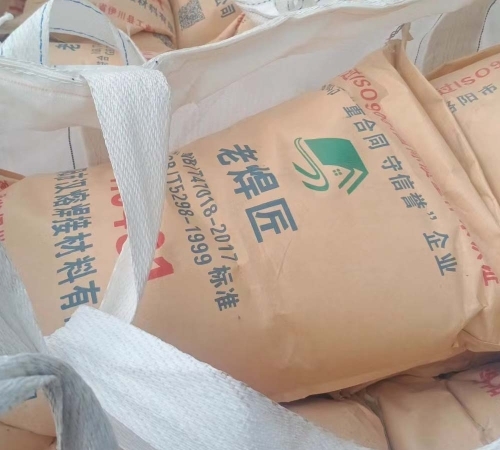
At Oldwelders, we pride ourselves on delivering welding consumables that empower professionals to achieve superior results. Our rigorous manufacturing processes, backed by ISO 9001 certification, ensure that every product, from welding wires to welding fluxes, meets stringent quality controls. We understand that precision and consistency are non-negotiable in your operations.
Our expansive plant, covering 1000 square meters and housing six advanced production lines, boasts a daily production capacity of 100 tons. This scale allows us to reliably meet the demands of our global clientele in target markets such as Brazil, Thailand, Australia, and Malaysia. The foundation of our quality lies in our raw materials; we meticulously select excellent dolomite, bauxite, cryolite, silica, fluorine ore, and other essential ores for our flux products, processing them at extreme temperatures of 2000 °C to guarantee unparalleled purity and performance.
When you choose Oldwelders, you are partnering with a company dedicated to excellence. Our minimum order quantity of 1 ton ensures that businesses of all sizes can access our high-quality products, while our commitment to customer satisfaction is reinforced by our 30-day quality assurance. This dedication means Oldwelders ensures every Rutile Welding Rod you receive will provide the consistent arc stability and spatter reduction you need to optimize your welding processes and produce exceptional welds.
Conclusion
Reducing stick-weld spatter with rutile electrodes is an achievable goal through a combination of understanding the electrode's characteristics, systematic troubleshooting of welding parameters, and a commitment to quality consumables. Rutile electrodes offer an excellent balance of ease of use, smooth arc performance, and a visually appealing bead, making them a valuable asset in any welder's arsenal.
By carefully controlling amperage, arc length, travel speed, and electrode angle, and by ensuring clean base materials and proper electrode storage, you can significantly mitigate spatter and achieve cleaner, more efficient welds. For consistent performance and reduced spatter, trust Oldwelders' Rutile Welding Rods and our extensive range of welding fluxes. Our commitment to quality, backed by advanced manufacturing and premium raw materials, ensures you have the reliable tools to excel in every welding project.