
Partnering with a Chinese Flux Supplier for OEM Products
Understanding OEM Customization with a Chinese Flux Supplier
For global distributors and large-scale industrial operations, sourcing welding consumables directly from the manufacturer presents a significant strategic advantage. It offers control over product specifications, branding, and supply chain costs. When considering this path, many businesses look to a Chinese flux supplier for their proven manufacturing scale, technical capabilities, and competitive positioning. However, a crucial question quickly emerges: "What level of customization can we actually achieve?"
The answer is almost always tied to order volume. Original Equipment Manufacturer (OEM) and private-label partnerships are not a one-size-fits-all arrangement. The degree of control you have—from simple packaging changes to the development of a proprietary flux formulation—is directly proportional to your procurement commitment. Understanding these tiers is essential for setting realistic expectations and forging a successful, long-term relationship with your manufacturing partner. This guide explores the direct link between order volume and customization possibilities, helping you assess where your needs fit and what to expect from a capable supplier.
The Foundation of Partnership: Minimum Order Quantities (MOQs)
Before any discussion of customization can begin, it's vital to understand the concept of the Minimum Order Quantity (MOQ). An MOQ is the smallest order a manufacturer is willing to accept for a specific product. This isn't an arbitrary number; it's a carefully calculated threshold based on the economic realities of production. For a manufacturer, every production run incurs fixed costs, including machine setup, calibration, labor allocation, and raw material procurement.
Consider the process of creating high-quality welding flux. At Oldwelders, our process involves melting premium raw materials like dolomite, bauxite, and silica at temperatures reaching 2000 °C. Firing up the furnaces and calibrating our six production lines for a specific run is a resource-intensive process. Producing a very small batch is inefficient and cost-prohibitive. The MOQ ensures that each production run is economically viable for both the manufacturer and the client, allowing for competitive pricing.
For businesses looking to source welding flux, the MOQ is the entry point. At Oldwelders, we've established a standard MOQ of 1 ton, a volume that balances production efficiency with accessibility for serious B2B clients. Meeting this baseline is the first step toward a private-label or OEM partnership. It signals a level of commitment that justifies initiating the customization process, whether that involves simple branding or more complex product development.
Tiered Customization: What Your Order Volume Unlocks
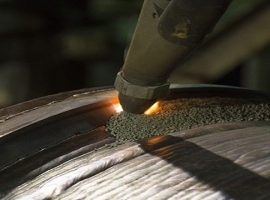
Once the MOQ threshold is met, the scope of customization possibilities opens up. These possibilities can be categorized into tiers based on increasing order volume. As your commitment grows, so does the manufacturer's ability to dedicate resources specifically to your product line.
Entry-Level OEM (Low to Moderate Volume)
For clients who meet or slightly exceed the MOQ, the most common and accessible form of customization is private labeling. This tier focuses on branding and packaging, allowing you to market a proven, high-quality product under your own name.
- Packaging and Branding: This is the primary focus at this level. You can typically specify custom-branded bags, boxes, or containers featuring your company logo, product codes, safety information, and marketing copy. The supplier will handle the printing and packing according to your design specifications.
- Standard Formulations: At this volume, you will be working with the supplier's existing, well-tested flux formulations. This is a significant advantage, as you benefit from a product that is already optimized for performance and quality-controlled. You can select from their catalog of products, such as specific grades of submerged arc welding flux hj431, and have it packaged as your own.
- Logistical Adjustments: Minor logistical customizations, such as specific pallet configurations or shipping documentation requirements, can often be accommodated.
This tier is ideal for distributors or companies entering a new market. It allows you to build brand recognition quickly without the significant investment and risk associated with developing a new product from scratch.
Mid-Tier OEM (Consistent, High Volume)
As your order volume increases and you establish a consistent purchasing history, the potential for deeper collaboration grows. A manufacturer is more willing to invest engineering time and adjust production processes for a partner demonstrating long-term potential. This tier moves beyond packaging into minor product modifications.
- Formulation Tweaks: Instead of being limited to standard catalog products, you may be able to request slight adjustments to an existing formula. This could involve modifying the basicity index to achieve a specific weld metal chemistry, altering the particle size distribution for improved arc stability in an automated process, or adjusting binders for different moisture resistance characteristics.
- Specialized Testing: You may be able to request specific quality control tests beyond the supplier's standard protocol to meet a particular industry standard or customer requirement in your region.
- Priority Production Scheduling: High-volume partners often receive preferential treatment in production scheduling, leading to more predictable lead times and better supply chain management.
This level of partnership requires close communication between your technical team and the supplier's engineers. It's a collaborative effort to fine-tune an existing product to better suit your unique application or market niche.
Full-Scale OEM & ODM (Strategic Partnership Volume)
At the highest level of commitment, the relationship evolves from a simple buyer-supplier dynamic into a true strategic partnership. This is where Original Design Manufacturing (ODM) becomes possible. Here, the Chinese flux supplier acts as your dedicated R&D and production arm to create a completely new product based on your performance requirements.
- Proprietary Formulation Development: You can work with the manufacturer's material scientists and welding engineers to develop a unique flux formula from the ground up. This is ideal for highly specialized applications, such as welding high-strength alloys, operating in extreme temperatures, or meeting new environmental regulations.
- Extensive R&D and Prototyping: The process involves significant research, multiple prototype batches, and rigorous testing cycles. A manufacturer must have substantial R&D capabilities and a willingness to dedicate significant resources to your project.
- Exclusive Rights: In many ODM agreements, the resulting formulation is exclusive to you, giving you a powerful competitive advantage in the marketplace.
This tier is reserved for the largest of clients with substantial and predictable demand. It requires a deep level of trust and integration between both companies. A supplier's ability to deliver at this level is a direct reflection of their technical expertise and production scale. With a capacity of 100 tons per day from our 1000-square-meter facility, we have the infrastructure to support even the most demanding ODM projects.
Capacity and Quality Assurance for OEM Success
Choosing a partner for OEM production goes beyond their willingness to customize. Their fundamental ability to deliver consistently high-quality products at scale is paramount. A supplier's promises of customization are meaningless if they cannot maintain quality control or meet production deadlines. This is where verifiable credentials and transparent manufacturing processes become critical trust signals.
An ISO 9001 certification, for example, is an internationally recognized standard for quality management systems. It demonstrates that the supplier has robust, repeatable processes for everything from raw material inspection to final product testing. This is non-negotiable for any serious OEM partnership. It assures you that whether you order a standard product or a custom formulation, the same rigorous quality standards are applied every time.
Furthermore, the physical infrastructure of the plant speaks volumes about their capabilities. A well-equipped facility with multiple production lines, like our own, provides redundancy and flexibility. It ensures that a large custom order for one client does not disrupt the supply for others. This capacity is what allows us to confidently serve diverse and demanding markets from Brazil to Australia and Thailand to Malaysia. When you vet a potential Chinese flux supplier, inquire about their production capacity, quality certifications, and the technology they use. This due diligence is essential for protecting your brand and ensuring a stable supply of critical welding materials.
Beyond Volume: Critical Factors for a Strong Partnership
While order volume is the primary driver of customization, it is not the only factor in a successful OEM relationship. A successful partnership depends on a foundation of clear communication, technical expertise, and reliable logistics.
- Technical Communication: Can the supplier's engineering team effectively communicate with your technical staff? Language barriers and differences in technical standards can derail a custom project. Look for a partner with experienced, English-speaking technical sales and support staff.
- Lead Times and Logistics: A reliable supplier provides clear and consistent lead times. For instance, our standard lead time is 30 days, which allows our partners to plan their inventory and sales cycles effectively. Inquire about their experience with international shipping, customs documentation, and logistics to your specific region.
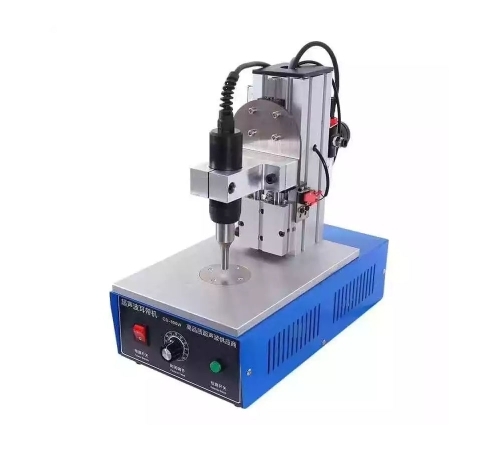
- Product Portfolio: A supplier with a broad portfolio of welding products, including various types of welding machine and consumables, often has a deeper and more comprehensive understanding of the entire welding process. This expertise can be invaluable when developing or troubleshooting a custom flux.
- Long-Term Vision: Does the supplier view you as a transactional customer or a long-term partner? A true partner is invested in your success, offering technical advice, market insights, and a collaborative approach to problem-solving.
Ultimately, your choice of a supplier is one of the most important decisions you will make. The right partner will not only manufacture your product but will also act as an extension of your own team, contributing to your growth and success in the market.
The journey into OEM and private-label welding flux is a spectrum of possibilities. By understanding how your order volume aligns with different levels of customization, you can approach negotiations with a clear and realistic strategy. Whether you are looking to brand an existing high-performance product or co-develop a groundbreaking new formula, the key is to find a manufacturing partner with the scale, expertise, and quality commitment to bring your vision to life.