
Optimizing Shipyard Welding for Hull Integrity
Optimizing Shipyard Welding Processes for Hull Joint Integrity
Shipbuilding is an industry defined by precision, durability, and stringent safety standards, where the integrity of every weld is paramount. The construction of a ship's hull, in particular, demands welding processes that can deliver robust, high-quality joints capable of withstanding extreme marine environments and dynamic stresses throughout the vessel's operational life. Selecting the appropriate welding machine and process for hull fabrication is a critical decision for shipyard planners and technical buyers, influencing not only structural strength but also production efficiency and cost-effectiveness.
The Critical Role of Shipyard Welding in Marine Construction
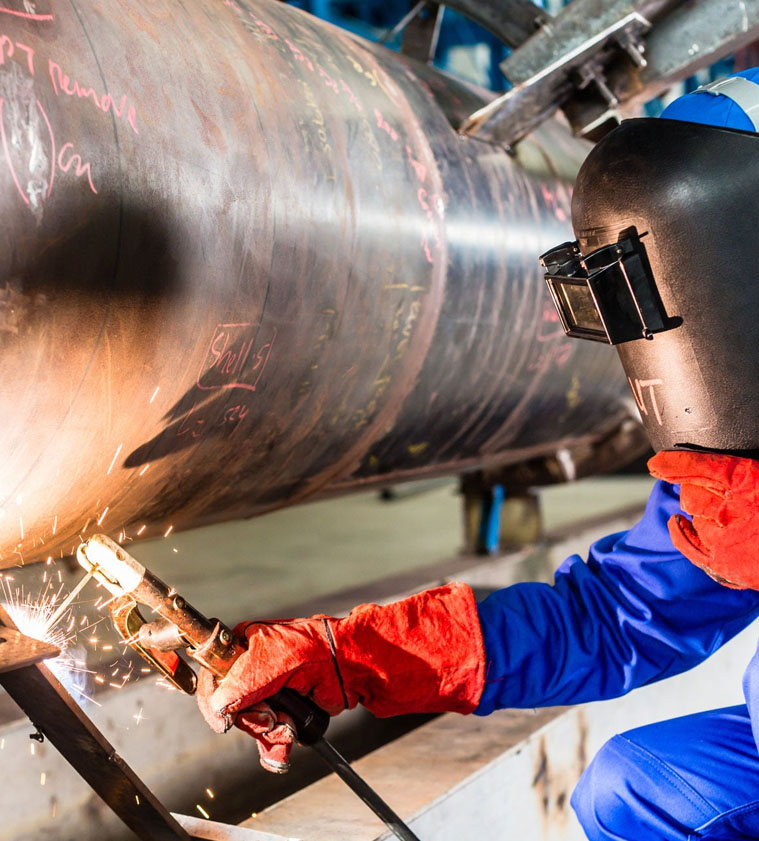
Shipyard welding is the backbone of marine construction, fusing massive steel plates and structural components into the complex, resilient forms required for modern vessels. From colossal cargo ships and oil tankers to naval destroyers and passenger liners, the quality of welded joints directly correlates with a ship's buoyancy, structural integrity, and resistance to fatigue, corrosion, and catastrophic failure. Given the immense forces exerted on a ship at sea – from wave impacts and hull flexing to internal cargo stresses – every weld must meet rigorous international classification society standards.
The challenges inherent in shipyard welding are multifaceted. Welders often operate in diverse conditions, including open-air environments susceptible to weather, confined spaces within compartments, and overhead positions. The materials typically used, primarily various grades of steel, demand specific preheating, interpass temperature control, and post-weld treatment to prevent issues like hydrogen-induced cracking or excessive distortion. Furthermore, the sheer scale of modern shipbuilding projects necessitates processes that balance high deposition rates with excellent metallurgical properties and minimal defect rates. Our commitment at Oldwelders to delivering precision-engineered welding materials and equipment ensures these critical demands are met.
Key Considerations for Selecting Shipyard Welding Processes
Choosing the optimal welding process for hull joints involves a comprehensive evaluation of several factors. Shipyard planners must weigh the specific material properties, joint configurations, production schedules, and available skilled labor against the inherent characteristics of each welding method. Understanding these interdependencies is crucial for achieving both structural integrity and operational efficiency.
Material Type and Thickness
The vast majority of ship hulls are constructed from various grades of high-strength low-alloy (HSLA) steels, often ranging from 6mm to 50mm or more in thickness. Different steel grades have varying carbon equivalents, which directly impact their weldability and susceptibility to heat-affected zone (HAZ) hardening. Processes must be selected that can effectively penetrate and fuse these thicknesses while maintaining desirable mechanical properties and avoiding defects like lack of fusion or excessive grain growth. For instance, thicker sections often benefit from higher deposition rate processes like submerged arc welding.
Joint Design and Access
Hull joints come in numerous configurations, including butt joints for plate seams, fillet welds for stiffeners, and complex full-penetration welds for critical structural connections. The accessibility of the joint also plays a significant role. Open deck sections might allow for automated processes, while internal bulkheads or double-bottom tanks often require manual or semi-automatic methods due to limited space and intricate geometries. The ability of a welding process to adapt to different joint designs and spatial constraints is a primary consideration.
Weld Quality and Inspection Requirements
All hull welds are subject to stringent quality control, often involving visual inspection, radiographic testing, ultrasonic testing, and magnetic particle inspection. The chosen welding process must consistently produce welds that meet these standards, exhibiting excellent root penetration, minimal porosity, slag inclusions, and freedom from cracking. Processes known for their reliability and consistent quality are preferred, reducing rework and inspection failures.
Production Efficiency and Cost
In a competitive global market, shipyard efficiency is paramount. The speed of a welding process, its deposition rate, and the percentage of arc-on time directly impact productivity. Automated and semi-automated processes generally offer higher efficiency compared to purely manual methods. However, the initial investment in equipment, consumable costs, labor availability, and training must also be factored into the overall cost analysis. Oldwelders understands this balance, offering solutions that optimize both performance and cost-effectiveness for our partners in markets like Brazil, Thailand, Australia, and Malaysia.
Common Shipyard Welding Processes for Hull Joints
A range of welding processes is employed in shipyard fabrication, each with distinct advantages and ideal applications. Understanding the nuances of each method is key to making informed decisions for hull construction.
Shielded Metal Arc Welding (SMAW) / Manual Metal Arc (MMA)
SMAW, often referred to as stick welding, is one of the oldest and most versatile welding processes. It utilizes a consumable electrode coated with flux to create the arc and shield the weld pool from atmospheric contamination. Its primary advantages in shipyard environments include its portability, relatively low equipment cost, and ability to be used in various positions and outdoor conditions, even with some wind. SMAW is particularly suitable for tack welding, repair work, and welding in tight, hard-to-reach areas where automation is impractical. However, it is characterized by lower deposition rates and requires frequent electrode changes, making it less efficient for long, continuous seams. Slag removal is also necessary after each pass. Our range of welding rod options ensures optimal performance for various SMAW applications.
Gas Metal Arc Welding (GMAW) / Metal Inert Gas (MIG) & Metal Active Gas (MAG)
GMAW, including MIG and MAG, is a semi-automatic or automatic process that uses a continuously fed wire electrode and a shielding gas (inert for MIG, active for MAG) to protect the weld pool. It offers high deposition rates, good penetration, and minimal slag compared to SMAW. GMAW is widely used for welding thinner to medium-thickness steel plates in shipbuilding, especially in shop floor environments where shielding gas can be effectively maintained. Its speed and ease of use contribute to higher productivity, making it a favorite for panel line fabrication. However, it is more sensitive to wind and drafts, which can dissipate the shielding gas, and requires more complex equipment than SMAW. Explore our MIG/MAG/TIG welding machine selection for advanced solutions.
Flux-Cored Arc Welding (FCAW)
FCAW is similar to GMAW but uses a tubular wire electrode filled with flux. This flux provides shielding gas and slag, offering a degree of self-shielding, although gas-shielded FCAW is also common. FCAW combines the high deposition rates of GMAW with the flexibility of SMAW, making it excellent for outdoor applications and welding thick sections. The flux provides additional deoxidizers and alloying elements, improving weld metal properties and allowing for higher travel speeds. It produces more slag than GMAW but less than SMAW. FCAW is highly favored for heavy structural work on ship hulls, including outfitting and block assembly, where its tolerance to fit-up variations and all-position capabilities are beneficial. Our specialized flux-cored wire options are designed for demanding shipyard applications.
Submerged Arc Welding (SAW)
SAW is an automatic or semi-automatic process highly valued for its extremely high deposition rates and deep penetration, particularly on thick plates. It uses a continuously fed bare wire electrode and a granular flux that completely submerds the arc, protecting it from the atmosphere and producing a smooth, uniform weld bead with excellent mechanical properties. SAW is predominantly used for long, straight seams on large plate panels, such as those found in flat bottom and deck sections of ship hulls. Its high efficiency makes it ideal for shop fabrication of large blocks. However, it is limited to flat or horizontal-fillet positions and requires specialized equipment for flux handling and recovery. The process delivers exceptional quality, making it a cornerstone for primary hull structures. Oldwelders supplies premium submerged arc welding flux HJ431 and other high-grade welding fluxes, essential for achieving superior SAW results.
Advanced Shipyard Welding Techniques and Future Trends
Beyond the conventional methods, shipyards are increasingly exploring advanced welding techniques to enhance productivity, improve weld quality, and reduce costs. These innovations often involve higher levels of automation and process control.
Robotic and Automated Welding
The integration of robotics and advanced automation in shipyard welding is transforming fabrication processes. Robotic welding systems can execute repetitive tasks with unparalleled precision and speed, particularly in panel line production for flat hull sections. These systems reduce reliance on manual labor for hazardous tasks, minimize human error, and ensure consistent weld quality. While the initial investment is significant, the long-term benefits in terms of efficiency and safety are substantial for large-scale production.
Narrow Gap Welding
Narrow gap welding techniques, often used in conjunction with GMAW, FCAW, or SAW, are designed to reduce the amount of weld metal required for thick sections. By using a much narrower groove preparation, these methods minimize heat input, distortion, and consumable consumption, leading to faster welding times and improved metallurgical properties. This is particularly advantageous for very thick hull plates where traditional wide-gap preparations would be excessively time-consuming and prone to distortion.
Laser and Hybrid Welding
Laser welding and laser-hybrid welding (combining laser with arc welding) offer extremely high travel speeds, low heat input, and narrow, deep penetration welds. These processes are gaining traction for specific applications where precision and minimal distortion are critical, such as in specialized vessel components or for joining dissimilar materials. While still more niche than traditional arc welding for primary hull structures due to cost and technical complexity, their potential for future shipbuilding applications is significant.
Partnering with Oldwelders for Shipyard Welding Excellence
At Oldwelders, we understand the rigorous demands of shipyard welding. Our comprehensive range of welding machines, welding wire, welding rods, and welding fluxes is engineered to meet the highest industry standards, ensuring the reliability and performance critical for marine applications. We are proud to be an ISO 9001 certified company, reflecting our unwavering commitment to quality management and continuous improvement in all our processes.
Our state-of-the-art manufacturing facility, covering an area of 1000 square meters, houses six advanced production lines. This robust infrastructure enables us to supply up to 100 tons of product per day, ensuring we can meet the volume requirements of major shipbuilding projects globally. For instance, our flux products are meticulously crafted from excellent raw materials such as dolomite, bauxite, cryolite, silica, and fluorine ore, which are melted at an extremely high temperature of 2000 °C to achieve superior metallurgical purity and performance. This precision in material science directly translates to the quality of hull joints.
We work closely with shipyards and marine fabricators across various target markets, including Brazil, Thailand, Australia, and Malaysia, providing tailored solutions and expert technical support. We recognize that efficient supply chain management is vital for large-scale projects; hence, we offer a typical lead time of 30 days for certain orders, with minimum order quantities starting from 1 ton, to ensure seamless project execution and timely delivery of essential welding consumables and equipment.
Choosing the right welding processes and partnering with a reliable supplier like Oldwelders is crucial for the success of any shipbuilding endeavor. Our expertise in providing high-performance welding solutions, backed by stringent quality control and substantial production capacity, empowers shipyards to achieve superior hull joint integrity, reduce operational costs, and build vessels that stand the test of time and the harshest marine environments.