
Match Steel Structure SAW Capacity to Frame Profiles | Oldwelders
Selecting the right Steel Structure SAW system is crucial for matching your fabrication capabilities to diverse project demands.
For fabrication managers overseeing large-scale structural steel projects, the efficiency and quality of welding operations are paramount. Submerged Arc Welding (SAW) stands as a cornerstone process for its high deposition rates, deep penetration, and excellent weld quality, particularly in the fabrication of heavy beams, columns, and girders. However, not all SAW systems are created equal. The critical task lies in meticulously matching the equipment's capacity—its power, physical reach, and control systems—to the specific geometric and metallurgical demands of the steel frame profiles you work with. An oversized system can lead to unnecessary capital expenditure and energy consumption, while an undersized one creates production bottlenecks, compromises weld integrity, and limits your ability to bid on more complex projects. This guide provides a detailed framework for evaluating your steel frame profile mix and aligning it with the appropriate SAW equipment and consumables to ensure optimal performance, safety, and profitability.
The Foundational Role of Submerged Arc Welding in Steel Fabrication
Submerged Arc Welding is an arc welding process that utilizes a continuously fed consumable electrode and a blanket of granular, fusible flux. The molten weld and the arc zone are protected from atmospheric contamination by being "submerged" under this flux blanket. The flux becomes conductive when molten, creating a path for the electric current between the electrode and the workpiece. As it cools, it forms a hard slag layer that must be removed after welding, but its protective qualities result in a clean, strong, and uniform weld bead, largely free from spatter and arc flash. This makes the process ideal for long, continuous welds required in fabricating structural members.
The primary advantages of SAW in this context include:
- High Deposition Rates: SAW can deposit weld metal at rates significantly higher than manual or semi-automatic processes like SMAW or GMAW, drastically reducing fabrication time for heavy sections.
- Deep Weld Penetration: The high current density of the process allows for deep, single-pass penetration, which can reduce the need for extensive joint preparation and multi-pass welds, saving both time and material.
- Exceptional Weld Quality: The flux provides excellent shielding from the atmosphere, minimizing porosity and other defects. The resulting mechanical properties are consistently high, which is critical for structural integrity.
- Automation Potential: The process is easily automated using tractors, column and boom manipulators, or gantry systems, leading to repeatable, high-precision welds and reduced operator fatigue. This is a key consideration when fabricating standardized components.
Understanding these fundamentals is the first step. The next is to deconstruct the types of profiles your facility handles to determine the precise demands they will place on your welding system.
Analyzing Steel Frame Profiles: Key Geometric and Material Considerations
The term "steel frame profile" encompasses a wide variety of shapes, each presenting unique welding challenges. A thorough analysis of your typical and projected workload is essential before specifying equipment. Consider the following factors across your project portfolio.
Common Structural Profiles and Their Welding Demands
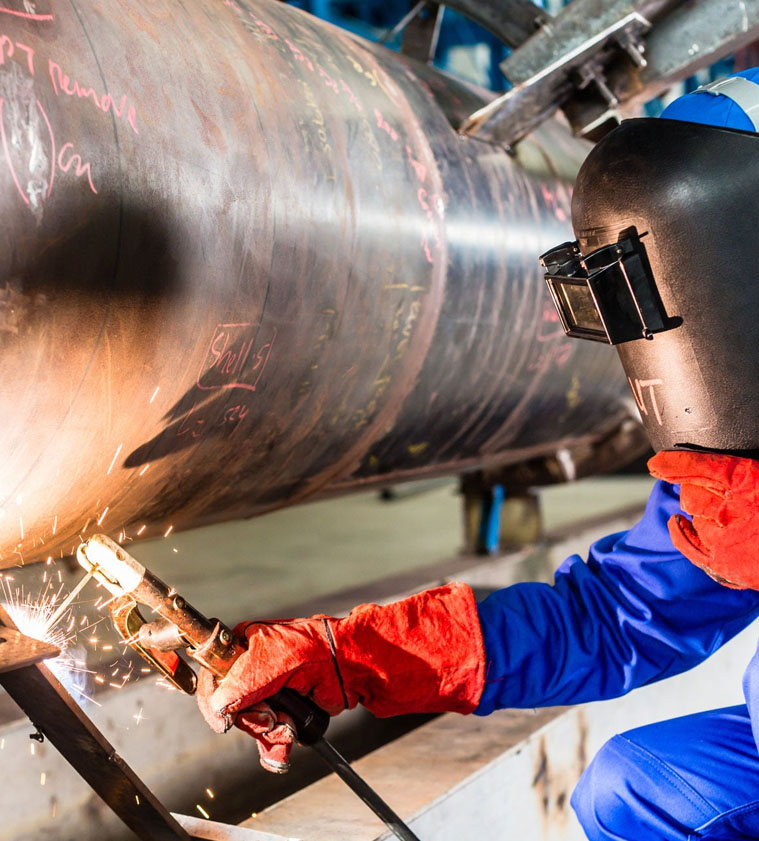
- I-Beams and H-Beams: These are the most common profiles, characterized by a central web and two parallel flanges. The primary welds are the fillet welds joining the web to the flanges. Key considerations include flange thickness and width, as well as web depth. Thicker flanges require higher amperage for adequate penetration, while deeper webs necessitate a welding head with sufficient vertical and horizontal reach.
- Box Girders and Hollow Structural Sections (HSS): Fabricated box sections require longitudinal corner welds. Access can be a challenge, and distortion control is critical. The SAW process must be carefully controlled to prevent burn-through on thinner walls while ensuring full penetration on thicker sections.
- T-Beams (Split Beams): Similar to I-beams, these require precise fillet welds. The challenge often lies in fixturing and maintaining the perpendicularity of the web to the flange during welding to manage distortion.
- Tapered and Cambered Beams: These custom profiles require a SAW system with advanced tracking capabilities. The welding head must be able to follow a non-linear path while maintaining a consistent arc length and travel speed to ensure a uniform weld.
Critical Dimensions and Material Properties
Beyond the basic shape, fabrication managers must quantify the specific parameters of their materials:
- Material Thickness: This is arguably the most important factor. Thicker materials (e.g., >12mm) are where SAW excels. Your machine's amperage capacity must be sufficient to achieve the required penetration in a single or limited number of passes. For very thick sections, tandem or multi-wire SAW setups may be necessary.
- Joint Type and Preparation: While SAW can handle square butt joints on thinner materials, thicker sections will require beveled preparations (V, X, or U grooves). Your system's ability to fill these joints efficiently depends on the wire feed speed and deposition rate.
- Material Grade: High-strength low-alloy (HSLA) steels may require specific preheat and interpass temperature controls, as well as carefully selected consumables to achieve the desired mechanical properties and avoid hydrogen-induced cracking. Your SAW controller should allow for precise parameter setting and monitoring.
Key SAW Machine Parameters to Evaluate
Once you have a clear picture of your workpiece requirements, you can evaluate the specifications of a Steel Structure SAW system. The goal is to find a machine that not only meets your current needs but also provides a degree of flexibility for future projects. At Oldwelders, we assist clients in markets from Brazil to Malaysia in specifying equipment that aligns perfectly with their operational scope.
Power Source and Amperage
The heart of any SAW system is its power source. For structural steel, constant voltage (CV) or constant current (CC) power sources are used. Amperage is the primary driver of penetration. A system for light structural work might operate in the 300-600 amp range, while heavy plate and beam fabrication will require a power source capable of delivering 1000-1500 amps or more, especially for multi-wire configurations. Ensure the power source has a duty cycle appropriate for your production tempo; a 100% duty cycle is often preferred for fully automated, high-volume applications.
Welding Head and Control System
The welding head delivers the wire and flux to the joint. Its controller is the brain, governing parameters like voltage, wire feed speed (which correlates to amperage), and travel speed. Modern digital controllers offer precise, repeatable settings and can store multiple welding procedures, which is invaluable when switching between different profiles and material thicknesses. Look for controllers with clear displays and intuitive interfaces to reduce setup time and operator error. You can explore our range of welding machines to see various control system capabilities.
Manipulation and Automation Equipment
The method of moving the welding head relative to the workpiece defines the system's productivity. Common options include:
- Tractors: A self-propelled carriage that runs along the workpiece. Ideal for long, straight welds on flat or cylindrical surfaces.
- Column and Boom Manipulators: A versatile solution offering significant vertical and horizontal reach. This is ideal for fabricating large beams and columns of varying sizes, as the head can be precisely positioned over the joint.
- Gantry Systems: A large overhead structure that moves the welding head along multiple axes. These are best suited for very large, panel-like structures or for high-volume, repetitive fabrication of beams.
The physical envelope of this equipment must be larger than the largest workpiece you anticipate fabricating.
The Decisive Role of Consumables in Weld Integrity
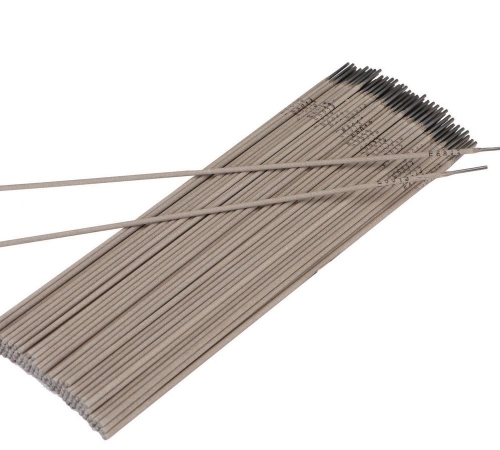
Even the most advanced Steel Structure SAW machine is ineffective without the correct consumables. The combination of welding wire and flux determines the final weld's mechanical properties, bead appearance, and slag detachability.
Selecting the Right Welding Wire
The wire's chemical composition must be compatible with the base material to achieve the required tensile strength, toughness, and ductility. Wires are classified by standards like AWS A5.17. For instance, an EM12K wire is a common choice for general structural steel, while higher-alloy wires may be needed for HSLA steels or applications requiring specific weather resistance.
Understanding Welding Flux
Flux is a complex compound that performs multiple functions: it stabilizes the arc, shields the weld pool, adds alloying elements, and shapes the bead. Fluxes are categorized by their basicity index (BI), which influences the weld metal's mechanical properties, particularly toughness.
- Acidic Fluxes: Offer excellent bead appearance and high-speed welding capability but may have lower toughness.
- Neutral Fluxes: Provide a good balance of operational characteristics and mechanical properties.
- Basic Fluxes: Produce weld metal with the best mechanical properties, especially impact toughness at low temperatures, but can be more challenging to use.
At Oldwelders, our commitment to quality is underscored by our ISO 9001 certification. Our flux products are produced from premium raw materials like dolomite, bauxite, and cryolite, which are melted at 2000 °C to ensure homogeneity and consistent performance. Choosing high-quality, properly stored specialized welding fluxes is non-negotiable for meeting the stringent codes governing structural steel fabrication.
Optimizing Your Procurement and Production Workflow
Aligning your Steel Structure SAW capabilities with your project needs extends beyond the initial equipment purchase. It involves creating a partnership with a supplier who can support your operations with reliable consumables and technical expertise. For fabrication managers in demanding markets like Thailand and Australia, supply chain reliability is a major consideration.
A supplier's production capacity is a direct indicator of their ability to handle large-volume orders and maintain consistent supply. For example, our 1000 square meter plant is equipped with six production lines, enabling us to supply up to 100 tons of high-grade welding flux per day. This capacity ensures that even for the largest infrastructure projects, your production will not be delayed by a shortage of critical essential welding materials.
Furthermore, consider procurement parameters like Minimum Order Quantity (MOQ) and lead time. A flexible MOQ, such as our standard 1 ton, allows you to procure materials on a per-project basis, managing inventory costs effectively. A predictable lead time, typically around 30 days, enables precise project planning and scheduling, preventing costly delays on the fabrication floor.
By conducting a thorough analysis of your steel frame profiles and matching them with the appropriate equipment power, automation, and high-quality consumables, you can configure a Steel Structure SAW operation that is efficient, reliable, and capable of producing welds that meet the highest industry standards. This strategic alignment is the foundation of a successful and profitable steel fabrication business.