
How to Verify Steel Structure SAW Suppliers Before Ordering
How to Thoroughly Verify Steel Structure SAW Suppliers Before Committing to an Order
Selecting the right supplier for your heavy fabrication equipment is a critical decision that impacts project timelines, build quality, and overall profitability. When sourcing equipment for Steel Structure SAW (Submerged Arc Welding), the stakes are even higher due to the process's role in creating strong, durable welds on thick materials. You have likely received several quotations, but pricing is only one part of the equation. A truly reliable partner offers more than just a competitive price; they provide verifiable quality, production capacity, and logistical expertise. This guide outlines the essential verification steps to ensure you choose a supplier that strengthens, rather than complicates, your operations.
Before issuing a purchase order, conducting thorough due diligence is not just recommended—it's essential for risk mitigation. This process involves looking beyond marketing materials and scrutinizing a potential partner's operational capabilities, quality control systems, and track record in your market.
Beyond the Quotation: Key Areas for Supplier Due Diligence
A detailed quotation is the starting point, but the information it contains is often insufficient for making a final decision. To build a complete picture of a supplier's reliability, you must investigate several key operational areas. This comprehensive approach helps you differentiate between suppliers who are merely resellers and those who are genuine manufacturers with control over their production and quality.
1. Corporate and Manufacturing Legitimacy
First, verify the company's legal status and physical presence. Request copies of their business registration and relevant export licenses. A legitimate manufacturer will readily provide this documentation. Be wary of suppliers who are hesitant or only provide vague details. Furthermore, ask for the physical address of their manufacturing plant, not just a sales office. Use online mapping tools to view the location and its surroundings. A large, industrial facility is a positive sign, whereas an address pointing to a small office building may indicate a trading company rather than a manufacturer.
2. Production and Quality Control Documentation
Ask for evidence of their manufacturing processes. This could include production line videos, photos of their factory floor, or a virtual tour. Inquire about their quality control procedures at each stage of production—from raw material inspection to final product testing. A professional supplier will have a documented Quality Management System (QMS) and should be able to explain how they ensure consistency and adherence to specifications.
3. References and Case Studies
While confidentiality agreements may limit what a supplier can share, they should be able to provide anonymized case studies or references from customers in non-competing industries or regions. Speaking with a current customer can provide invaluable, unbiased insights into the supplier's communication, product quality, and after-sales support.
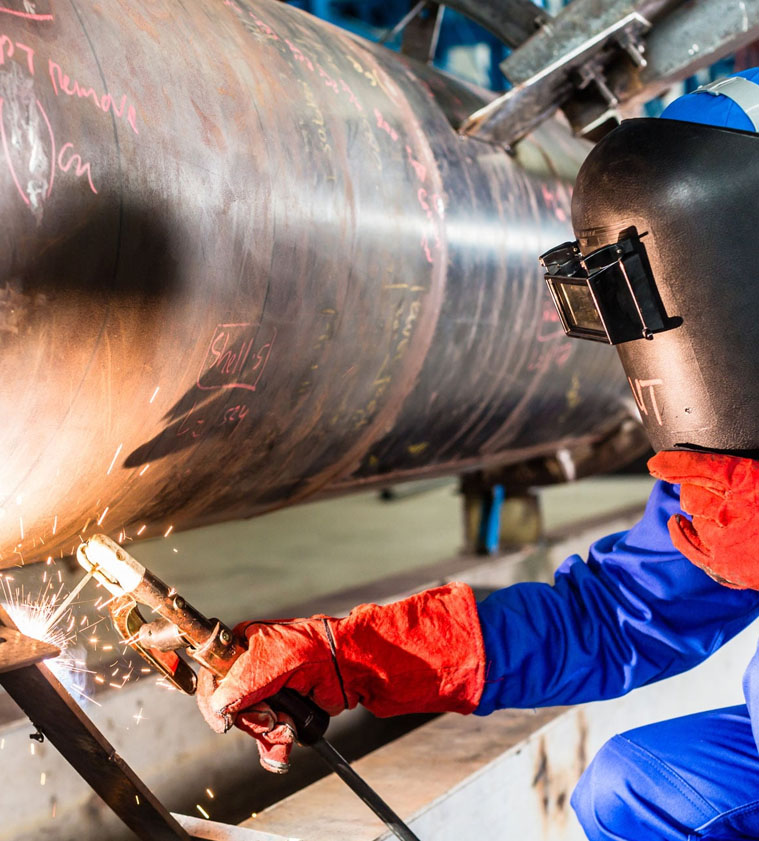
Assessing Manufacturing Capabilities and Production Scale
A supplier's manufacturing capability is a direct indicator of their ability to handle your order volume and meet deadlines. A small workshop cannot offer the same reliability and scalability as a large, well-equipped factory. When evaluating a supplier's production capacity for Steel Structure SAW consumables and equipment, consider the following:
Plant Size and Infrastructure
Inquire about the size of their production facility. For example, a plant covering 1000 square meters with multiple production lines signifies a significant investment in infrastructure. This scale is crucial for ensuring consistent output and avoiding bottlenecks. Oldwelders, for instance, operates a facility of this size with six production lines, enabling a substantial supply capacity. This level of infrastructure is essential for fulfilling large-scale industrial orders without compromising on delivery schedules.
Production Output and Technology
Ask for specific figures on production capacity. A clear metric, such as the ability to supply 100 tons of welding consumables per day, demonstrates a capacity to serve demanding industrial clients. Also, inquire about the technology they use. For welding flux production, the process is critical. High-quality fluxes are produced by melting raw materials like excellent dolomite, bauxite, and silica at extremely high temperatures, often around 2000 °C. A supplier who can detail their raw material sourcing and high-temperature melting process is likely a specialist manufacturer with deep technical expertise, not just an assembler or reseller. This ensures the chemical composition and physical properties of the welding fluxes are consistent and reliable.
Minimum Order Quantity (MOQ) and Lead Time
Clarify the supplier's standard terms. A typical Minimum Order Quantity (MOQ) for bulk welding materials might be around 1 ton. Understanding this helps in planning your procurement cycles. Equally important is the lead time. For international shipments, a standard lead time of approximately 30 days is common. A reliable supplier will provide a clear and realistic timeline from order confirmation to dispatch, factoring in production schedules and logistics.
Evaluating Quality Management Systems and Certifications
Consistent product quality is non-negotiable in structural steel fabrication. A single bad batch of welding wire or flux can lead to weld defects, costly rework, and potentially catastrophic structural failures. This is why verifying a supplier's commitment to quality is paramount.
The Importance of ISO 9001 Certification
One of the most important credentials to look for is ISO 9001 certification. This international standard is not just a piece of paper; it is proof that the supplier has implemented a rigorous Quality Management System (QMS). An ISO 9001 certified company, such as Oldwelders, is audited by a third party to ensure they consistently meet customer and regulatory requirements. This includes processes for:
- Controlling document and record keeping.
- Managing raw material procurement and inspection.
- Monitoring and controlling the production process.
- Calibrating and maintaining equipment, including the welding machine itself.
- Handling non-conforming products to prevent them from reaching the customer.
- Implementing corrective and preventive actions to continuously improve.
Request a copy of their ISO 9001 certificate and verify its validity with the issuing certification body. This simple step provides significant assurance of the supplier's commitment to quality.
Product-Specific Certifications and Testing
Beyond a general QMS, inquire about product-specific testing and certifications. For welding consumables, this could include batch test certificates showing the chemical analysis and mechanical properties of the finished product. For a Steel Structure SAW application, you need to be certain that the wire and flux combination will produce welds that meet the required standards (e.g., AWS, EN). A reputable supplier will provide detailed technical data sheets (TDS) and material safety data sheets (MSDS) for all their products.

Logistical Competence and International Export Experience
A great product is useless if it cannot be delivered to your facility on time and in good condition. For international procurement, a supplier's logistical expertise is as important as their manufacturing prowess. When vetting potential partners, pay close attention to their export experience and processes.
Proven Track Record in Global Markets
An experienced exporter will have a deep understanding of international trade complexities, including documentation, customs procedures, and packaging requirements for sea freight. Ask for a list of countries they regularly export to. A supplier with an established presence in diverse markets such as Brazil, Thailand, Australia, and Malaysia demonstrates the capability to navigate different regulatory environments and logistical challenges. This experience translates into smoother transactions and a lower risk of delays for your shipment.
Packaging and Handling
Discuss their packaging standards for international shipping. Welding consumables, especially fluxes, must be protected from moisture to maintain their performance characteristics. A professional supplier will use robust, moisture-proof packaging designed to withstand the rigors of a long sea journey. Poor packaging can lead to damaged or compromised products, rendering them unusable upon arrival.
Shipping and Incoterms
Confirm which Incoterms (e.g., FOB, CIF) they typically work with. This defines the responsibilities of the buyer and seller regarding shipping, insurance, and risk transfer. A supplier who is flexible and knowledgeable about different Incoterms can help you structure the purchase in a way that best suits your company's logistical and financial preferences. They should also have established relationships with reliable freight forwarders to ensure competitive shipping rates and dependable transit times. Choosing the right automatic welding machine is only half the battle; ensuring it and its consumables arrive safely is the other.
Conclusion: Partnering with a Reliable Welding Supplier
Verifying a supplier for Steel Structure SAW equipment and consumables goes far beyond comparing prices on a quotation. It requires a systematic evaluation of their manufacturing capabilities, quality control systems, and international logistics experience. By taking the time to assess their production scale, confirm certifications like ISO 9001, and verify their export track record, you can mitigate risks and forge a partnership with a supplier who contributes to your project's success.
A reliable partner is transparent about their operations, can provide evidence of their capacity and quality, and has a proven history of serving international clients. Investing this effort in due diligence upfront will pay dividends in the form of consistent product quality, on-time deliveries, and a secure supply chain for your critical welding operations.