
Cut Costs on Bulk Welding Supplies with MOQ Planning
Discover How Strategic MOQ Planning Can Lower Your Costs for Bulk Welding Supplies
For industrial buyers, purchasing managers, and operations directors, managing the procurement of welding consumables is a critical balancing act. The sticker price of welding wire, rods, or fluxes is only one part of the equation. The true challenge lies in optimizing the total landed cost—the sum of all expenses incurred to get a product from the factory floor to your production line. A key, yet often overlooked, strategy for achieving this optimization is effective Minimum Order Quantity (MOQ) planning. By aligning your purchasing cycles with a supplier's MOQ, you can unlock significant cost savings, streamline logistics, and ensure a more stable supply chain. This is particularly true when sourcing bulk welding supplies from a high-capacity international manufacturer.
Understanding and leveraging a supplier's MOQ isn't just about buying more; it's about buying smarter. It requires a shift from a purely transactional mindset to a strategic partnership, where your forecasting and inventory management work in concert with your supplier's production and shipping capabilities. This approach minimizes per-unit shipping costs, reduces administrative overhead, and builds a more resilient operational framework.
Deconstructing the True Landed Cost of Welding Consumables
To appreciate the benefits of MOQ planning, one must first understand all the components that constitute the true landed cost. Many procurement departments focus heavily on the per-kilogram or per-ton price, but this narrow view can lead to inefficient spending. A comprehensive cost analysis includes several other critical factors.
Key Components of Landed Cost:
- Product Cost: This is the baseline price quoted by the manufacturer. Meeting or exceeding the MOQ, such as our standard 1-ton minimum for most consumables, often grants access to more favorable volume-based pricing tiers.
- Shipping and Freight: This is one of the most significant variables. Shipping a full container load (FCL) is almost always more cost-effective per unit than shipping less-than-container-load (LCL). Ordering in quantities that optimize container space—a natural outcome of MOQ planning—drastically reduces this expense.
- Customs and Duties: Tariffs, taxes, and brokerage fees are applied to international shipments. These fees often have fixed components, meaning the administrative cost is the same whether you ship 100 kg or 1 ton. Consolidating orders into larger, less frequent shipments reduces the per-unit impact of these fixed costs.
- Insurance: Freight insurance is typically calculated as a percentage of the shipment's value. While a larger order has a higher insured value, consolidating shipments reduces the number of individual policies and associated administrative work.
- Handling and Port Fees: These are charges at both the port of origin and destination for loading, unloading, and document processing. Like customs fees, they often have fixed minimums, making larger shipments more economical.
- Inventory and Warehousing Costs: This includes the cost of capital tied up in inventory and the physical space required to store it. While larger orders increase storage needs, the savings from reduced shipping and administrative costs often outweigh this, especially with proper demand forecasting.
By analyzing these components collectively, the financial benefit of ordering in larger, planned quantities becomes clear. A slightly higher initial outlay for a full MOQ shipment can result in a substantially lower total landed cost per unit.
The Strategic Advantage of Meeting Supplier MOQs
Meeting an MOQ is more than a supplier requirement; it's a gateway to operational efficiency. For a manufacturer, MOQs ensure that production runs are efficient and that logistical processes are standardized. For the buyer, they offer a clear path to cost reduction and supply chain stability. At Oldwelders, our 1-ton MOQ is designed to align our production capabilities with the logistical realities of international freight, creating mutual benefits.
Unlocking Economies of Scale
The most direct benefit is financial. Manufacturers can offer better pricing on larger orders because they achieve economies of scale in their own operations. This includes bulk purchasing of raw materials—such as the premium dolomite, bauxite, and cryolite we use for our fluxes—and optimizing the output of our six production lines. These savings are passed on to the customer who commits to a volume that makes such efficiencies possible.
Streamlining Logistics and Administration
Consider the administrative workload associated with procurement. Each order requires a purchase order, invoice processing, payment execution, shipment tracking, and customs clearance. Placing twelve small orders a year instead of three or four large ones triples the administrative burden. By planning your purchases to meet the MOQ, you consolidate these tasks, freeing up your team's time and reducing the potential for errors. This is especially impactful for international clients we serve in markets like Brazil, Thailand, and Australia, where cross-border paperwork is extensive.
Ensuring Supply Chain Predictability
Frequent, smaller orders can create a fragile supply chain that is susceptible to disruption. A sudden spike in demand or a minor shipping delay can lead to a stockout and costly production downtime. When you order bulk welding supplies, you create a buffer of safety stock. This insulates your operations from short-term volatility. Partnering with a manufacturer with a proven track record and substantial production capacity—our plant can supply 100 tons a day—further enhances this predictability, ensuring we can meet your large-volume needs consistently.
Key Factors for Effective MOQ and Inventory Planning
Successfully leveraging MOQs requires careful internal planning. It's not about simply buying more; it's about buying the right amount at the right time. This involves a deep understanding of your own operational needs and a transparent relationship with your supplier.
Accurate Demand Forecasting
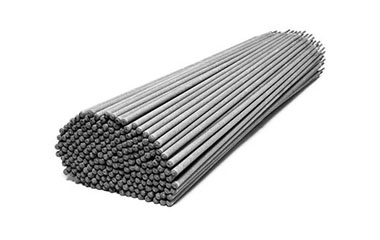
The foundation of any effective inventory strategy is accurate forecasting. Analyze historical consumption data, consider upcoming projects, and account for any market seasonality. The goal is to predict your need for various welding materials with enough accuracy to commit to a multi-month supply without risking excessive overstock. A reliable forecast allows you to confidently place a 1-ton order for a specific product like our AWS E6013 welding electrodes, knowing it will be consumed within a reasonable timeframe.
Balancing Inventory Models
While a Just-in-Time (JIT) inventory model is attractive for its low carrying costs, it can be risky for critical consumables sourced internationally. A more resilient approach is a hybrid model that incorporates a level of safety stock. Your MOQ-based purchase can serve as this safety stock, which is then drawn down over a planned period. This balances the cost-saving benefits of bulk purchasing with the operational security of having materials on hand.
Assessing Storage and Handling Capacity
Before committing to larger order volumes, evaluate your warehousing capabilities. Do you have the physical space to safely and properly store pallets of welding wire or fluxes? Proper storage is crucial for maintaining product integrity. Welding consumables must be kept dry and in stable temperature conditions to prevent moisture absorption, which can compromise weld quality. Ensure your facility can handle the volume before placing the order.
How Supplier Capacity and Quality Assurance Bolster Your Strategy
Your ability to confidently plan for bulk purchases is directly tied to the reliability and capability of your supplier. A supplier's production capacity, quality management systems, and logistical expertise are not just line items on a brochure; they are foundational pillars that support your entire procurement strategy.
As an ISO 9001 certified manufacturer, we adhere to stringent quality control protocols at every stage. This certification is your assurance that every batch of welding consumable meets international standards for performance and consistency. Our process begins with sourcing excellent raw materials like dolomite, bauxite, cryolite, and silica, which are then melted at 2000 °C to create superior welding fluxes. This commitment to quality means you can trust that the first kilogram of a 1-ton order will perform identically to the last.
Furthermore, our substantial infrastructure—a 1000 square meter plant with six production lines capable of supplying 100 tons daily—provides the capacity to handle large, recurring orders without bottlenecks. This capacity is crucial for buyers who need a dependable source for their bulk welding supplies. It means we can accommodate your growth and scale with your needs, all while maintaining a consistent lead time, typically around 30 days. When you partner with a manufacturer of this scale, you are not just buying a product; you are securing a stable and predictable link in your supply chain. Whether you need a standard flux-cored wire or a specialized consumable, our production lines are equipped to deliver.
Partner with a Manufacturer Built for Scale and Quality
Effectively managing the procurement of bulk welding supplies is a strategic function that directly impacts your bottom line and operational uptime. By shifting focus from the per-unit price to the total landed cost and embracing MOQ-based planning, you can achieve significant savings and build a more resilient supply chain. This strategy, however, is only as strong as the supplier you choose.
At Oldwelders, we are structured to support industrial-scale procurement. Our ISO 9001 certification, high-capacity production facility, and transparent business practices provide the reliability you need. With a clear 1-ton MOQ and a typical 30-day lead time, we give you the concrete parameters required for effective long-term planning. Our experience in exporting to demanding markets from Malaysia to Brazil demonstrates our capability to handle complex international logistics, ensuring your order arrives on time and on budget. When you are ready to move beyond simple transactions and build a strategic sourcing partnership, we are here to deliver the quality, capacity, and value you require.