
Choosing the Right Automation for Wind Tower Welding
Selecting the Optimal Automation for Wind Tower Welding
The global demand for wind energy is driving innovation and scale in manufacturing. For fabrication managers and engineering buyers, this translates into a critical need for efficient, reliable, and high-quality production lines. A cornerstone of this production is the process of wind tower welding, where automation is no longer a luxury but a necessity for meeting throughput targets and stringent quality standards. Choosing the right automation system is a significant capital investment that directly impacts project timelines, operational costs, and the structural integrity of the final product.
This guide provides a comprehensive framework for evaluating and selecting automation solutions. We will explore the key welding processes, crucial system specifications, and the vital role that high-performance consumables play in achieving flawless, repeatable welds. As an ISO 9001 certified supplier with extensive experience in global markets, we understand the technical demands of this specialized industry.
Key Welding Processes in Wind Tower Fabrication
A wind tower is typically constructed from several large cylindrical or conical steel sections, known as "cans," which are welded together. Automation is applied to three primary types of welds, each presenting unique challenges and requiring specific equipment configurations.
Longitudinal Seam Welding
The first step in forming a tower section is rolling a large steel plate into a cylinder and welding the longitudinal seam. This process is typically handled by a "seamer" or a column and boom manipulator. Submerged Arc Welding (SAW) is the universally preferred method due to its high deposition rates and deep penetration capabilities, which are essential for the thick plates used in tower construction (often exceeding 40mm).
An automated longitudinal seam system typically includes:
- A powerful welding head (often tandem or multi-wire SAW).
- A robust column and boom for precise movement along the seam.
- A flux handling system for recovery and recycling.
- Advanced seam tracking (either tactile or laser-based) to ensure the arc stays perfectly in the joint.
Circumferential Seam Welding
Once individual cans are formed, they are joined together with circumferential or "girth" welds. This is arguably the most critical and time-consuming part of tower fabrication. The automation for this process involves a set of turning rolls (or rotators) that rotate the large, heavy sections at a controlled speed beneath a stationary welding head, which is also mounted on a column and boom.
The key to successful circumferential welding is maintaining perfect alignment and consistent travel speed, as even minor deviations can lead to defects in these critical load-bearing joints. Multi-wire SAW processes are common here as well, allowing for single-pass welding from both the inside (ID) and outside (OD) to maximize efficiency and quality.
Flange and Door Frame Welding
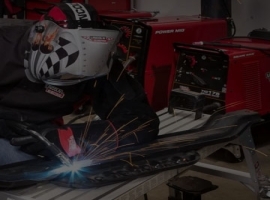
At the top and bottom of each tower section, thick flanges are welded on to allow the sections to be bolted together during on-site erection. Additionally, an access door frame must be welded into the base section. These are complex, non-linear welds that often require more sophisticated automation, such as welding manipulators or robotic arms capable of following the contours of the flange or frame. While SAW is still used, Flux-Cored Arc Welding (FCAW) may also be employed for its flexibility in out-of-position welds.
Evaluating Automation Systems for Your Production Line
Specifying an automated welding line requires a detailed analysis of your plant's specific operational goals and physical constraints. A system that is perfect for one facility may be inefficient for another. Consider these core factors before finalizing your capital equipment specifications.
Throughput and Cycle Time Requirements
Your primary consideration should be your target production rate. How many towers or sections do you need to produce per week or month? This will dictate the level of automation and the welding process required. High-throughput facilities will benefit from tandem or multi-wire SAW systems that offer the highest possible deposition rates. Calculate your required weld metal per hour and work backward to determine the necessary amperage, wire feed speed, and number of arcs. Don't forget to factor in setup time, material handling, and post-weld inspection into your total cycle time calculations.
Tower Section Dimensions and Material Specifications
The physical size of your tower sections will determine the specifications of your material handling equipment. Consider the maximum diameter, length, and weight of the cans you will be producing. This dictates the required capacity of your turning rolls and the reach and height of your column and boom manipulators. Furthermore, the material thickness and type of steel (e.g., S355, S420) will define the welding parameters, joint preparation, and preheating requirements. Thicker materials demand higher-amperage power sources and robust systems capable of handling significant heat input without distortion.
Integration and Footprint
An automated welding line does not exist in a vacuum. It must be integrated into your existing workflow, from plate cutting and rolling to post-weld finishing and coating. Evaluate how the new system will fit within your plant's physical footprint. Consider the space required for column and boom travel, material staging areas, and access for maintenance. Ensure the control systems can be integrated with your plant's production monitoring software for seamless data collection and quality assurance.
The Critical Role of Consumables in Automated Welding
The most advanced automatic welding machine is only as good as the consumables running through it. In high-stakes applications like wind tower welding, consistency and quality in your welding wire and flux are non-negotiable. Inconsistent consumables can lead to weld defects, process instability, and costly rework, undermining the entire purpose of automation.
As a specialized manufacturer, we understand that reliability is paramount. Our plant, covering 1000 square meters with six production lines, has a daily supply capacity of 100 tons, ensuring we can meet the demands of large-scale fabrication projects. We produce our welding fluxes from excellent raw materials, including dolomite, bauxite, and cryolite, which are melted at an extreme temperature of 2000°C. This meticulous process removes impurities and guarantees a homogenous, high-performance flux that delivers stable arcs, excellent slag detachability, and a smooth weld bead profile—all essential for automated systems.
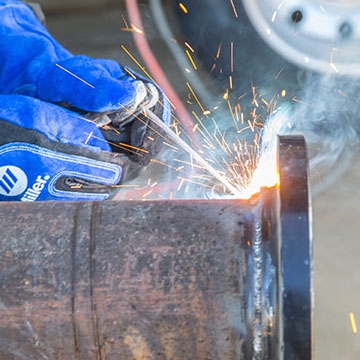
For Submerged Arc Welding, the combination of wire and flux determines the mechanical properties of the weld. It is crucial to select a wire-flux combination that matches the base material's strength, toughness, and chemical composition. For example, our specialized submerged arc welding flux hj431 is designed to provide exceptional performance in multi-pass welding on structural steels, making it an ideal choice for the thick sections found in tower manufacturing.
Key Technologies and Features to Consider
Modern automation systems come with a host of features designed to improve quality, increase productivity, and reduce operator dependency. When comparing options, pay close attention to the following technologies.
Advanced SAW Process Control
Look for systems that offer precise control over all welding parameters, including voltage, amperage, travel speed, and wire feed speed. Digital control systems provide superior accuracy and repeatability compared to older analog models. For multi-wire systems, the ability to independently control the parameters for the lead and trail arcs is crucial for optimizing penetration and bead shape at high speeds.
Seam Tracking and Vision Systems
Manual guidance is impractical and unreliable in automated wind tower welding. A robust seam tracking system is essential. Tactile (probe-based) trackers are a reliable and cost-effective option. However, for greater precision and flexibility, consider laser-based vision systems. These non-contact systems can track the joint in real-time and even adjust welding parameters based on variations in the joint gap or bevel, ensuring perfect weld placement on every pass.
Data Monitoring and Quality Control
In an era of Industry 4.0, data is king. A modern automation system should provide comprehensive data logging for every weld. This includes recording all key parameters throughout the welding process. This data is invaluable for quality assurance, allowing for full traceability of each weld joint. It also provides critical insights for process optimization and troubleshooting, helping you identify trends and prevent defects before they occur.
Partnering with a Reliable Consumables Supplier
Your relationship with your consumables supplier is as important as your relationship with your equipment vendor. A reliable supply chain is the backbone of continuous production. Delays in receiving welding wire or flux can bring a multi-million dollar production line to a standstill.
When choosing a partner, look for a manufacturer with a proven track record, robust quality systems, and the capacity to handle your volume. With our ISO 9001 certification and experience supplying demanding industrial markets in Brazil, Thailand, Australia, and Malaysia, we have demonstrated our commitment to quality and logistical excellence. Our standard 30-day lead time and flexible 1-ton minimum order quantity provide the predictability and scalability that large project fabricators require. A strong partnership ensures you not only receive high-quality welding materials but also gain access to technical support and expertise to help you optimize your automated wind tower welding processes.
By carefully considering your production requirements, evaluating system technologies, and selecting a dependable consumables partner, you can confidently invest in an automation solution that will deliver quality, efficiency, and a strong return on investment for years to come.