
Calculate Welding Cable Landed Cost by Copper Weight
Understanding How to Calculate Welding Cable Landed Cost by Copper Weight
For B2B buyers in the global market, particularly those involved in importing industrial supplies, the precision of cost calculation is paramount. When sourcing welding materials like welding cable, simply looking at the per-unit price can be misleading. A comprehensive understanding of the "landed cost" is crucial for competitive pricing and profitable operations. This guide is designed for import buyers evaluating quotes from welding cable manufacturers, focusing on how to accurately determine the total cost by primarily considering the copper weight and other critical factors.
Welding cables are fundamental components in various industrial applications, from manufacturing to construction. Their performance directly impacts operational efficiency and safety. Therefore, understanding the true cost involves not just the raw material and manufacturing, but also logistics, duties, and quality assurance. At Oldwelders, we recognize the need for transparency and knowledge in these complex transactions, ensuring our partners receive both high-quality products and clear costing insights.
The Fundamentals of Welding Cable Costing for Import Buyers
The landed cost of any imported product refers to the total cost to get the product from the manufacturer's door to the buyer's warehouse. For welding cable, this calculation can be intricate due to fluctuating commodity prices, varying shipping methods, and diverse international trade regulations. Ignoring any component can lead to significant discrepancies in your financial projections and ultimately impact your profitability.
Why Copper Weight is Paramount in Cost Calculation
Copper is the primary conductor in welding cables, and its market price is the single largest determinant of the cable's raw material cost. High-quality welding cable relies heavily on pure copper to ensure optimal conductivity, flexibility, and durability for demanding industrial environments. Therefore, understanding the exact weight of copper within a given length and gauge of cable is the first and most critical step in evaluating a supplier's pricing.
The gauge of a welding cable (e.g., AWG or mm²) directly correlates to its cross-sectional area, which in turn dictates the amount of copper used per unit length. A heavier gauge cable, designed for higher amperage and longer runs, will naturally contain more copper and thus incur a higher material cost. Buyers must be diligent in verifying the copper content specified by manufacturers to ensure they are comparing equivalent products and paying a fair price for the precious metal.
Deconstructing the Landed Cost of Welding Cable
To achieve a precise landed cost, import buyers must account for every expense incurred from the point of origin to the final destination. This comprehensive approach ensures no hidden costs surprise you post-purchase. The main components typically include:
- Ex-Works (EXW) Price: The cost of the welding cable at the manufacturer's factory gate, covering raw materials (primarily copper), manufacturing labor, and overheads.
- Inland Transportation (Origin): The cost to move the cable from the factory to the port of loading.
- Loading Charges: Fees associated with loading the cargo onto the vessel or aircraft.
- Ocean/Air Freight: The primary cost of shipping the goods internationally. This varies greatly based on volume, weight, destination, and urgency.
- Insurance: Coverage for loss or damage to the goods during transit.
- Unloading Charges (Destination): Fees at the port of discharge.
- Customs Duties and Taxes: Tariffs, Value Added Tax (VAT), or Goods and Services Tax (GST) imposed by the importing country. These can vary significantly for target markets such as Brazil, Thailand, Australia, and Malaysia, necessitating careful research.
- Customs Brokerage Fees: Charges for professional services to clear goods through customs.
- Inland Transportation (Destination): The cost to move the cable from the port of discharge to your final warehouse.
The Role of Cable Specifications in Cost
Beyond copper, other specifications significantly influence the overall cost. The type of insulation material (e.g., PVC, EPDM, Neoprene, or rubber) affects flexibility, resistance to abrasion, chemicals, and extreme temperatures, each coming with a different price point. The overall length, spooling requirements, and specific certifications also contribute to the final manufacturing cost. Oldwelders offers a range of high-quality welding machine solutions and related consumables, acknowledging that cable specifications must perfectly match the application requirements.
Calculating Copper Weight: A Practical Approach
Accurately calculating the copper weight within a welding cable is fundamental to validating its cost. The density of copper is a known constant, approximately 8.96 grams per cubic centimeter (g/cm³). Therefore, if you can determine the volume of copper in a given length of cable, you can calculate its weight.
Step-by-Step Copper Weight Calculation:
- Determine the Cable's Cross-Sectional Area: This is usually provided in square millimeters (mm²) or by its AWG (American Wire Gauge) equivalent. For example, a 70 mm² cable has a cross-sectional area of 70 mm².
- Convert Units (if necessary): If your cable length is in meters and area in mm², convert mm² to cm² (1 mm² = 0.01 cm²).
- Calculate Copper Volume: Multiply the cross-sectional area by the length of the cable.
Volume (cm³) = Cross-sectional Area (cm²) × Length (cm)
For instance, for a 100-meter (10,000 cm) length of 70 mm² (0.7 cm²) cable:
Volume = 0.7 cm² × 10,000 cm = 7,000 cm³ - Calculate Copper Weight: Multiply the volume by the density of copper.
Weight (grams) = Volume (cm³) × Density (g/cm³)
Weight = 7,000 cm³ × 8.96 g/cm³ = 62,720 grams = 62.72 kg
This calculation provides a robust baseline for the copper material cost. Always request manufacturers to provide detailed specifications, including the exact copper cross-sectional area and material composition, to perform this calculation accurately.
Beyond Copper: Other Significant Cost Contributors
While copper dominates the material cost, several other elements contribute significantly to the landed price of welding cable.
Insulation Material Costs
The quality and type of insulation are crucial for safety and performance. EPDM (Ethylene Propylene Diene Monomer) and Neoprene, for example, offer superior flexibility and resistance to heat, oil, and abrasion compared to standard PVC, making them more expensive but also more durable and suitable for harsh welding environments. The choice of insulation material directly impacts the cable's longevity and suitability for specific applications, thus influencing both its initial cost and long-term value.
Manufacturing Processes and Scale
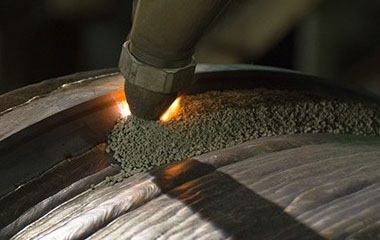
The efficiency and scale of a manufacturer's operations play a vital role. Companies with advanced machinery, rigorous quality control, and substantial production capacity can often offer more competitive pricing. At Oldwelders, our plant covers an area of 1000 square meters and has six production lines, which can supply 100 tons a day. This extensive capacity allows us to leverage economies of scale, providing high-quality solid wire, flux-cored wire, and welding cables at competitive prices for our B2B clients.
Logistics and Shipping
The chosen Incoterms (International Commercial Terms) significantly affect who bears the cost and risk of transportation. FOB (Free On Board) transfers responsibility once goods are loaded onto the vessel, while CIF (Cost, Insurance, and Freight) means the seller covers these until the destination port. Understanding these terms is crucial when comparing quotes. Freight costs depend on the shipping method (sea freight for bulk, air freight for urgency), distance, and fuel surcharges. For buyers in distant markets like Brazil or Australia, these costs can form a substantial portion of the landed price.
Import Duties and Taxes
Each country has its own tariff codes and duty rates for various products. Researching these specific rates for welding cable in your target market is essential. For instance, import duties in Malaysia or Thailand might differ considerably from those in Australia or Brazil. Engaging a customs broker is often advisable to navigate these complexities and ensure compliance, avoiding costly delays or penalties.
Quality Assurance and Compliance
Ensuring the welding cable meets international standards (e.g., CE, RoHS, CSA, UL) and country-specific regulations is non-negotiable for safety and performance. The cost of rigorous testing, certifications, and maintaining quality management systems is embedded in the product price. Oldwelders' commitment to quality is underscored by our ISO 9001 certification. This internationally recognized standard ensures that our manufacturing processes, from the initial sourcing of raw materials for our welding fluxes—such as excellent dolomite, bauxite, cryolite, silica, fluorine ore melted at 2000 °C—to the final inspection of our welding cables, adhere to the highest quality benchmarks. This commitment provides peace of mind for our global partners.
Evaluating Supplier Quotes for Welding Cable
Receiving multiple quotes is standard practice, but evaluating them effectively requires a discerning eye. Don't just look at the bottom line; delve into the details.
Transparency in Pricing and Specifications
A reputable supplier will provide a transparent breakdown of costs. This includes the base price, packaging, and any additional charges. They should also clearly state the welding cable's specifications: copper purity, cross-sectional area, insulation type, and compliance with relevant standards. If a quote seems unusually low, it might indicate compromises in copper content, insulation quality, or a lack of crucial certifications, which could lead to higher long-term costs or safety issues.
Understanding Lead Times and MOQs
Lead time refers to the duration between order placement and shipment. For bulk orders of welding cable, efficient lead times are crucial for inventory management. Oldwelders aims for efficient order fulfillment, with typical lead times of 30 days for bulk orders. This allows our partners to plan their procurement effectively. Additionally, understanding the Minimum Order Quantity (MOQ) is important. While our flux products have a minimum order quantity of 1 ton, this reflects our capacity to handle substantial B2B orders across our product range, including welding cables, ensuring that we can meet the demands of large-scale industrial buyers.
The Importance of Quality and Reliability
The true cost of a welding cable extends beyond its purchase price to include its performance, durability, and safety. Substandard cables can lead to frequent replacements, increased energy consumption due equipment malfunction, and even serious safety hazards. Therefore, prioritizing quality and reliability from a trusted manufacturer like Oldwelders is an investment that pays dividends in operational efficiency and safety. Our ISO 9001 certification and stringent internal quality controls ensure that every product, be it a welding electrode or a specialized welding cable, meets the highest industry standards before it reaches your facility.
Oldwelders' Commitment to Value and Quality in Welding Solutions
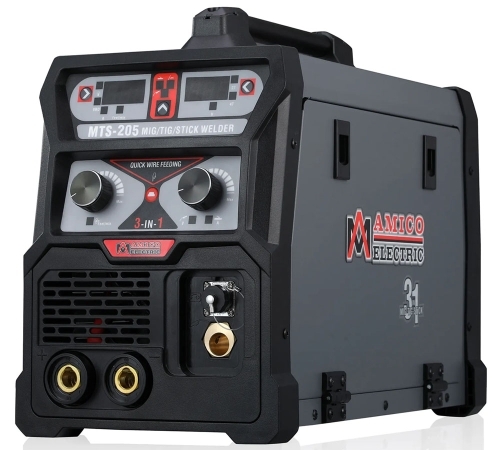
As a leading B2B provider, Oldwelders understands the intricacies of the global welding market. We are dedicated to empowering our partners with not only superior welding products but also the knowledge to make informed procurement decisions. Our comprehensive product range includes not only welding cable but also welding machines, welding wires, welding rods, and welding fluxes, all manufactured to the highest standards.
Our operational excellence, supported by ISO 9001 certification, a 1000 square meter plant with six production lines capable of supplying 100 tons a day, and an efficient 30-day lead time for bulk orders, positions us as a reliable partner for businesses worldwide. Whether you are operating in Brazil, Thailand, Australia, or Malaysia, Oldwelders is equipped to meet your demands for quality, reliability, and competitive value in all your welding material needs.
By focusing on transparent pricing, robust quality assurance, and efficient logistics, we strive to simplify your procurement process and contribute to your business's success. Partner with Oldwelders to ensure your welding operations are powered by the best, delivered with clarity and confidence.