
Basic Welding Rods: When They Beat Cellulosic Types
Understanding When a Basic Welding Rod Outperforms Cellulosic Electrodes
For welding coordinators and engineers, selecting the right shielded metal arc welding (SMAW) electrode is a critical decision that directly impacts weld quality, structural integrity, and project costs. While cellulosic electrodes like E6010 have a long-standing reputation for pipeline and penetration-focused applications, the superior mechanical properties and low-hydrogen nature of a basic welding rod make it the mandatory choice for a wide range of critical structural and high-pressure work. Understanding the fundamental differences in their flux coatings and resulting weld characteristics is key to developing robust and reliable welding procedures.
This technical comparison moves beyond introductory guides to provide a job-condition analysis, focusing on the factors that drive the choice between these two essential electrode families. From mitigating hydrogen-induced cracking in high-strength steels to ensuring consistent performance in demanding environments, we will explore the scenarios where a low-hydrogen, basic-coated electrode is not just preferable, but essential for safety and compliance.
Hydrogen Control: The Primary Advantage of Basic Electrodes
The single most important reason to specify a basic, or low-hydrogen, electrode is to control the amount of diffusible hydrogen introduced into the weld metal. Hydrogen is the primary cause of hydrogen-induced cracking (HIC), also known as cold cracking or delayed cracking. This defect is a significant risk in welding high-strength, low-alloy (HSLA) steels, thick sections, and highly restrained joints.
Cellulosic electrode coatings (designated by the '1' in the third digit, as in E6010/E6011) contain a high percentage of organic material, primarily cellulose. During welding, this cellulose burns and decomposes, creating a gaseous shield of carbon dioxide and hydrogen. While this produces a forceful, deeply penetrating arc, it also introduces large quantities of hydrogen into the weld pool. If this hydrogen doesn't escape as the metal cools, it becomes trapped in the grain structure. Under stress, these trapped hydrogen atoms can migrate to discontinuities and cause microscopic cracks that can propagate over time, leading to catastrophic failure, sometimes hours or days after welding is complete.
In contrast, the basic welding rod (designated by '5', '6', or '8' in the third digit, as in E7018) has a flux coating rich in calcium carbonate, calcium fluoride, and other mineral compounds. These materials contain very little hydrogen. The resulting arc is softer, and the gaseous shield has a low hydrogen content. This minimizes the amount of diffusible hydrogen absorbed by the weld metal, drastically reducing the risk of HIC. For this reason, welding codes like AWS D1.1 (Structural Welding Code – Steel) mandate the use of low-hydrogen processes for many applications involving thicker materials or higher-strength steels.
Handling and Storage Requirements
This low-hydrogen characteristic comes with a critical logistical requirement: moisture control. The coatings of basic electrodes are hygroscopic, meaning they readily absorb moisture from the atmosphere. Moisture (H₂O) is a direct source of hydrogen. To maintain their low-hydrogen status, these electrodes must be stored in a controlled environment. Typically, they are packaged in hermetically sealed containers. Once opened, they must be stored in a heated holding oven at a specific temperature (e.g., 120-150°C or 250-300°F) until use. If exposed to the atmosphere for too long, they must be re-baked at a higher temperature to drive out the absorbed moisture. This strict handling protocol is a crucial part of the quality assurance process when working with a basic welding rod.
Weld Deposit Characteristics and Mechanical Properties
The differences in flux composition directly translate to vastly different weld deposit properties. The choice between cellulosic and basic electrodes often comes down to the required ductility, toughness, and overall finish of the final weldment.
A basic welding rod produces a weld deposit with exceptional mechanical properties. The slag system, formed from the mineral-based flux, effectively refines the molten weld metal, removing impurities like sulfur and phosphorus. The result is a high-purity weld that exhibits excellent ductility and superior impact toughness, even at low temperatures. This makes E7018 and similar electrodes the standard for applications subject to dynamic loading, seismic activity, or low-temperature service, such as bridges, offshore structures, heavy equipment manufacturing, and pressure vessels. The weld bead is smooth and uniform with fine ripples, presenting a clean, professional appearance with minimal spatter.
Our commitment to quality is reflected in our ISO 9001 certified manufacturing process, which ensures every batch of electrodes delivers consistent and reliable mechanical properties. This level of quality control is essential for clients in demanding markets from Brazil to Australia who rely on predictable performance for their critical projects.
Cellulosic electrodes, on the other hand, produce a much more fluid and less refined weld puddle. The forceful arc is excellent for achieving deep penetration, especially on root passes in pipe welding. However, the resulting weld deposit has lower ductility and toughness compared to a low-hydrogen deposit. The rapid freezing of the slag makes it ideal for out-of-position welding, but the arc is harsh and produces significant spatter, requiring more extensive post-weld cleaning. While its mechanical properties are adequate for many lower-strength carbon steels, it is unsuitable for applications requiring high toughness and resistance to brittle fracture.
Operability, Positional Use, and Surface Conditions
The "feel" of an electrode and its suitability for different joint configurations and surface conditions are practical considerations that heavily influence selection on the shop floor or in the field.
Arc Characteristics and Technique
Welders often describe the cellulosic E6010 arc as "digging" or "driving." It requires a specific "whip and pause" technique where the electrode is moved in and out of the puddle to control heat and penetration. This makes it a favorite for open-root pipe welding in the 5G and 6G positions, as the forceful arc can ensure complete root fusion from one side. It is, however, a more difficult electrode for beginners to master.
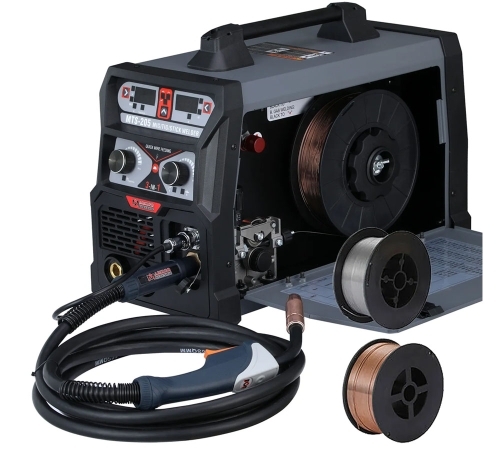
The arc of a basic welding rod like E7018 is much softer and smoother. It is typically used with a drag technique or a slight weave, maintaining tight arc length. The heavy slag covering provides excellent shielding and helps shape the bead, making it relatively easy to use in all positions, including vertical-up and overhead. The slag is also designed to be easily removable, often peeling off in large sections, which improves productivity by reducing inter-pass and final cleaning time. This predictable behavior makes it a versatile choice for a wide variety of structural joints, from fillets to grooves. For complex projects, pairing these rods with a reliable arc welding machine ensures stable current delivery and optimal performance.
Tolerance for Surface Contaminants
This is one area where cellulosic electrodes have a distinct advantage. The aggressive, digging arc of an E6010 or E6011 can cut through moderate amounts of rust, mill scale, oil, and paint. This makes them highly effective for repair work and field fabrication where achieving a perfectly clean surface is impractical. The deoxidizers in the flux help manage impurities, producing an acceptable weld even on poorly prepared surfaces.
Basic electrodes demand much greater cleanliness. Because their primary function is to produce a high-purity weld, any contaminants on the base metal—such as rust (hydrated iron oxide), moisture, or hydrocarbons—can introduce defects and compromise the low-hydrogen properties of the deposit. The base material should be ground or otherwise cleaned to bright, bare metal before welding. While this adds a preparation step, it is non-negotiable for achieving the specified quality and mechanical properties required in code-level work.
Sourcing a Reliable Supply of Welding Consumables
For large-scale industrial projects, ensuring a consistent and high-quality supply of welding consumables is as important as the welding procedure itself. A disruption in the supply chain or a batch of inconsistent material can lead to costly delays and rework. Partnering with a manufacturer that has a proven production capacity and robust quality control system is paramount.
At Oldwelders, our 1000-square-meter plant is equipped with six production lines, giving us the capacity to supply up to 100 tons of welding materials per day. This scale allows us to serve large-volume industrial clients in markets from Thailand to Malaysia without compromising on lead times. We control quality from the very beginning, using excellent raw materials like dolomite, bauxite, and silica for our welding fluxes, which are melted at 2000°C to ensure purity and consistency.
Whether your project requires a standard E7018 basic welding rod or a more specialized consumable, our extensive range of welding materials provides a reliable solution. With a standard lead time of 30 days and a minimum order quantity of 1 ton, we are structured to support the needs of serious B2B clients who prioritize quality and supply chain stability.
In summary, while cellulosic electrodes hold a vital place in welding, particularly for pipe roots and work on contaminated surfaces, the basic welding rod is the undisputed choice for critical applications. When the procedure demands low hydrogen input, superior ductility and toughness, and code-compliant mechanical properties for structural steel and high-strength alloys, the performance of a low-hydrogen electrode is essential for ensuring the safety and longevity of the final weldment.