
A Buyer's Guide to Sourcing Steel Pipe SAW for Line-Pipe
How to Effectively Source Steel Pipe SAW for Critical Line-Pipe Orders
For procurement teams managing large-scale industrial projects, sourcing large-diameter line-pipe is a critical task with zero margin for error. The structural integrity, longevity, and safety of pipelines used in oil, gas, water, and construction industries depend heavily on the quality of the pipe itself. A key factor in this quality is the manufacturing process, particularly the welding method. Submerged Arc Welding (SAW) is the industry standard for producing robust, high-quality longitudinal and spiral seam pipes. This guide provides a comprehensive framework for sourcing Steel Pipe SAW, helping you validate specifications and build a robust Request for Quotation (RFQ) before approaching mills and suppliers.
Understanding the nuances of the SAW process and knowing which questions to ask potential suppliers will empower your team to secure materials that meet stringent project requirements, minimize risk, and ensure long-term operational success.
Understanding the Fundamentals of the Submerged Arc Welding Process
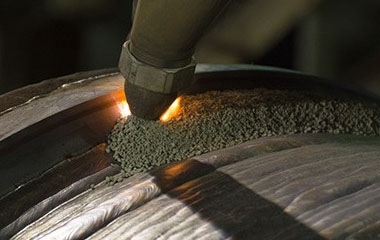
Before specifying a product, it's essential to understand how it's made. Submerged Arc Welding is an automated process favored for its high deposition rates, deep weld penetration, and exceptional weld quality, making it ideal for the thick walls of large-diameter pipes. The process involves forming an arc between a continuously fed consumable electrode and the workpiece. The "submerged" aspect is key: the arc is shielded by a blanket of granular, fusible material known as flux. This flux melts to protect the weld pool from atmospheric contamination, purifies the molten metal, and shapes the final weld bead.
The quality of the final weld is directly dependent on the synergy between the welding wire and the flux. The choice of these welding materials dictates the mechanical properties of the weld, such as strength, toughness, and corrosion resistance.
At Oldwelders, we recognize the critical role of consumables. Our own production facility for welding fluxes spans 1000 square meters and operates six production lines capable of supplying 100 tons per day. We utilize excellent raw materials like dolomite, bauxite, and cryolite, which are melted at 2000°C to ensure the highest purity and performance. This commitment to quality in the consumables is what pipe manufacturers must replicate to produce reliable SAW pipes.
Key Specifications for Your Steel Pipe SAW RFQ
A detailed and precise RFQ is your primary tool for ensuring you receive accurate quotes for products that meet your engineering team's exact requirements. Ambiguity leads to unqualified bids, project delays, and potential material failures. Your RFQ for submerged arc welded pipe should be exhaustive, covering the following critical areas.
Material Grade and Standards Compliance
This is the foundation of your specification. Clearly state the required steel grade and the standard it must comply with. For line-pipe, this is typically an API (American Petroleum Institute) standard, with API 5L being the most common. Specify the grade within that standard (e.g., API 5L X52, X65, X70), which dictates the steel's yield strength. Additionally, include requirements for chemical composition and mechanical properties like tensile strength and toughness (Charpy V-notch testing values).
Dimensional Tolerances
Precision is non-negotiable. Your RFQ must detail acceptable tolerances for all dimensions:
- Outside Diameter (OD): Specify the nominal OD and the permissible variance (e.g., ±0.5%).
- Wall Thickness (WT): Define the nominal wall thickness and the acceptable negative tolerance. This is crucial for pressure containment calculations.
- Length: State the required pipe length (e.g., Single Random Length, Double Random Length) and any tolerance.
- Straightness: Specify the maximum allowable deviation from a straight line over the pipe's length.
- Out-of-Roundness: Define the maximum ovality permitted for the pipe ends and body.
Weld Seam Configuration and Type
There are two primary types of SAW pipes, and your application will determine which is appropriate:
- LSAW (Longitudinal Submerged Arc Welded): Made from steel plates that are bent into a cylinder and welded along a single longitudinal seam. LSAW pipes are often preferred for their precise dimensional accuracy and are common in high-pressure applications.
- SSAW (Spiral Submerged Arc Welded): Also known as HSAW (Helical), these pipes are made by coiling a steel strip into a spiral shape and welding the edges together. SSAW allows for the production of very large diameters and can be more cost-effective, but may have different stress characteristics compared to LSAW.
Your RFQ should explicitly state which type is required for your project.
Non-Destructive Testing (NDT) and Inspection
To guarantee weld integrity and pipe quality, a rigorous NDT protocol is mandatory. Your RFQ should specify the required inspection methods, the extent of the inspection (e.g., 100% of weld seam), and the acceptance criteria based on relevant standards.
- Ultrasonic Testing (UT): Used to detect internal and surface-level flaws in the weld and pipe body.
- Radiographic Testing (RT) / X-ray: Provides a visual image of the weld's internal structure to identify defects like porosity, slag inclusions, or lack of fusion.
- Hydrostatic Testing: Each pipe is filled with water and pressurized to a specific level to test for leaks and confirm its strength. Specify the test pressure and duration.
- Magnetic Particle Inspection (MPI): Used to detect surface and near-surface discontinuities on the pipe ends.
Evaluating Supplier Capabilities for High-Volume Orders
Once you receive bids, vetting the suppliers is as important as vetting the product specifications. A low price from an unqualified manufacturer can lead to catastrophic project failures. Your evaluation should focus on proof of quality, capacity, and reliability.
First, verify their quality management systems. A current ISO 9001 certification is a fundamental requirement, indicating that the supplier has established and follows internationally recognized processes for quality control. Do not just take their word for it; ask for a copy of the certificate.
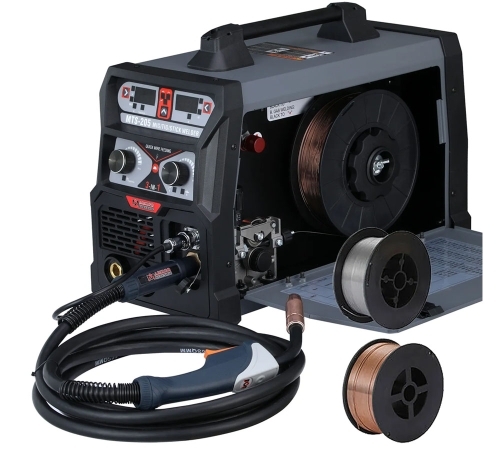
Next, assess their production capacity and technical capabilities. A supplier must be able to meet your project's volume and timeline. Inquire about their production output (tons per month), typical lead times, and the technology they employ. For instance, a modern facility will use a fully automatic welding machine setup to ensure consistency and efficiency in the SAW process. Ask for their standard lead time—for reference, Oldwelders maintains a 30-day lead time for many of our consumables, and your pipe supplier should be able to provide similar clarity. Also, confirm their Minimum Order Quantity (MOQ); our own MOQ is 1 ton, which is a common benchmark for industrial suppliers.
Finally, dig into their raw material sourcing and internal quality control. A pipe is only as good as the steel and welding consumables used to make it. Ask where they source their steel coils or plates and what quality checks are performed upon receipt. A reputable manufacturer will have a transparent supply chain and robust internal testing protocols that go beyond the final NDT inspections.
Logistics and Supply Chain Considerations for Global Projects
Sourcing Steel Pipe SAW for major projects often involves a global supply chain. The logistical challenges of transporting large, heavy, and often coated pipes require a supplier with proven experience in international shipping and project management. Your due diligence should extend to their supply chain capabilities, especially if your project is located in a region with specific import regulations or challenging terrain.
When evaluating suppliers, inquire about their experience delivering to your project's region or to areas with similar logistical profiles. For example, Oldwelders has extensive experience supporting clients in diverse markets such as Brazil, Thailand, Australia, and Malaysia. A supplier familiar with these regions will already understand the customs procedures, transportation infrastructure, and documentation requirements, significantly reducing the risk of costly delays. Discuss the following with potential suppliers:
- Packaging and Protection: How will the pipes be protected during transit to prevent damage to the pipe body, bevels, and any external coatings?
- Shipping and Freight: Do they have established relationships with freight forwarders specializing in oversized cargo? Can they provide a clear shipping schedule and tracking?
- Documentation: Can they provide a complete set of shipping and quality documents, including Mill Test Certificates (MTCs), inspection reports, and certificates of origin, in a timely manner?
A supplier who treats logistics as an afterthought is a significant liability. A strong logistics partner ensures your materials arrive on-site, on time, and in perfect condition, ready for installation.
By developing a comprehensive RFQ and conducting a thorough evaluation of supplier capabilities, procurement teams can confidently source high-quality submerged arc welded pipe. This diligent approach protects the integrity of your project, ensures compliance with safety and engineering standards, and ultimately contributes to a successful outcome.