
A Buyer's Guide to Cutting Freight Costs on Bulk Welding Supplies
A Buyer's Guide to Accurately Calculating and Cutting Costs on Bulk Welding Supplies
For importers and regional distributors, sourcing bulk welding supplies is a constant exercise in balancing quality, price, and logistics. You receive quotes from various suppliers, both domestic and overseas, and the initial per-unit price seems like the most important variable. However, experienced buyers know that the number on the quote is only the beginning of the story. The true cost—the landed cost—is what ultimately determines your profit margins, and freight is the most significant and volatile component of that calculation. Failing to account for its complexities can turn a seemingly profitable order into a financial liability.
Simply comparing the advertised price of a welding rod or a spool of wire is insufficient. A lower unit cost from an overseas manufacturer can be easily erased by inefficient shipping, unexpected customs fees, or improper documentation. This guide is designed for procurement professionals who need to move beyond simple price comparisons and develop a robust framework for evaluating the total delivered cost of their orders. As a global supplier with experience shipping to demanding markets like Brazil, Thailand, Australia, and Malaysia, we understand the critical importance of mastering logistics. Understanding these principles is key to securing a reliable and profitable supply chain.
Beyond the Unit Price: Deconstructing Your Supplier's Quote
The first step in controlling freight costs is to understand exactly what your supplier's quote includes. The terms of sale, often defined by Incoterms (International Commercial Terms), dictate where the seller's responsibility ends and the buyer's begins. A low product price might be enticing, but it could also mean you are responsible for a larger portion of the shipping journey.
Common Terms of Sale and Their Implications
- EXW (Ex Works): The seller makes the goods available at their premises. The buyer is responsible for all costs and risks from that point forward, including loading the goods onto a truck, export clearance, and all subsequent transport. This term gives you maximum control but also maximum responsibility.
- FOB (Free On Board): This is a common term in international trade. The seller is responsible for all costs and risks until the goods are loaded on board the vessel nominated by the buyer at the named port of shipment. Once the goods are on the ship, the risk and cost transfer to you. You are responsible for the main sea or air freight, insurance, and all import-related costs.
- CIF (Cost, Insurance, and Freight): The seller arranges and pays for the cost, insurance, and freight to transport the goods to a named destination port. However, the risk transfers to the buyer once the goods are loaded on board the vessel. While this seems convenient, the seller chooses the carrier and insurer, which may not be the most cost-effective or highest-quality option.
When comparing quotes, ensure you are comparing them on a like-for-like basis (e.g., two FOB quotes). An FOB quote will naturally have a lower price than a CIF quote from the same supplier because it excludes the main freight and insurance costs. Understanding these terms is foundational to building an accurate landed cost model for your bulk welding supplies.
The Hidden Factors That Inflate Your Freight Costs
The base freight rate is just one part of the equation. Several less-obvious factors can significantly increase your shipping expenses, especially when dealing with a diverse range of products like welding consumables.
Dimensional Weight vs. Actual Weight
Freight carriers charge based on whichever is greater: the actual weight of a shipment or its dimensional (or volumetric) weight. Dimensional weight is a calculation of a shipment's density. A large, light box can take up significant space in a container or aircraft, so carriers charge for that space. This is particularly relevant when ordering a mix of products. For example, a pallet loaded with dense AWS E6013 welding electrodes will likely be billed on actual weight. However, an order containing bulky but lighter items like certain welding accessories or packaging materials might be billed on dimensional weight, leading to a surprisingly high cost if not planned for.
A strategic supplier will work with you to optimize packaging, minimizing empty space and ensuring pallets are packed as densely as possible to avoid unnecessary dimensional weight charges.
The Challenge of Mixed-SKU Palletization
Distributors rarely order just one product. A typical order might include several types of welding wire, rods, and welding fluxes. How these items are combined onto pallets has a major impact on cost and safety.
- Weight Distribution: Improperly stacking heavy items (like solid wire) on top of more fragile ones can lead to product damage in transit. A good supplier understands how to build stable, well-balanced pallets.
- Container Optimization: The goal is to maximize the use of space within a 20-foot or 40-foot shipping container. An experienced manufacturer can help plan your order to create a "perfect fit," combining different product types and packaging sizes to fill the container, thereby lowering the per-unit shipping cost. This is where a supplier's high production capacity becomes an advantage; they can consolidate large, diverse orders efficiently.
- Hazardous Materials: While most common welding consumables are not classified as hazardous for transport, some specialized fluxes or chemicals might be. These require special documentation, handling, and packaging, all of which add to the cost and complexity of the shipment. Always clarify the classification of all products with your supplier.
A Practical Formula for Calculating True Landed Cost
To accurately compare quotes from different suppliers, you must calculate the total landed cost per unit. This formula provides a clear picture of what you will actually pay to get each item into your warehouse.
The Landed Cost Formula:
(Product Cost) + (Shipping & Freight) + (Customs, Duties & Taxes) + (Insurance) + (Local Handling & Fees) = Total Landed Cost
Then, to find your true per-unit cost:
Total Landed Cost / Total Number of Units = True Cost Per Unit
Breaking Down the Components:
- Product Cost: This is the price from your supplier's quote (e.g., the FOB price).
- Shipping & Freight: This includes the main ocean or air freight, plus any origin charges (trucking to the port, documentation fees) and destination charges (port fees, terminal handling).
- Customs, Duties & Taxes: These are government-levied fees. Duties are based on the product's HS (Harmonized System) code and the value of the goods. This can be a significant percentage and varies widely by country.
- Insurance: This covers loss or damage during transit. While sometimes included in CIF terms, it's often wise to arrange your own policy for better coverage.
- Local Handling & Fees: This includes customs brokerage fees, trucking from the destination port to your warehouse, and any unloading costs.
By applying this formula to every quote, you can see how a supplier with a 10% lower unit price might actually be more expensive once all logistical costs are factored in. This data-driven approach removes guesswork and empowers you to make the most profitable procurement decisions for your bulk welding supplies.
Partnering with a Manufacturer That Understands Global Logistics
Cutting freight costs on bulk welding supplies isn't just about finding the cheapest carrier; it's about working with a manufacturing partner who is invested in your success. A reliable supplier acts as an extension of your logistics team, providing the transparency, efficiency, and quality control needed to protect your margins.
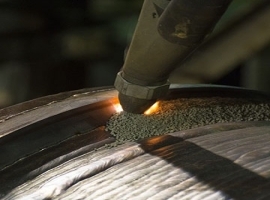
At Oldwelders, we have built our operations around the needs of international B2B buyers. As an ISO 9001 certified company, our processes are standardized for quality and consistency, from raw material sourcing to final packaging. Our commitment to quality starts with our raw materials—we use excellent dolomite, bauxite, and other ores, which are melted at 2000 °C to produce superior flux products like our submerged arc welding flux hj431.
Our operational scale is a direct benefit to our clients' logistics. Our 1000-square-meter plant is equipped with six production lines, capable of supplying up to 100 tons of welding materials per day. This high capacity ensures we can meet large order volumes and consolidate shipments efficiently, which is crucial for optimizing container loads and reducing per-unit freight costs. With a standard lead time of 30 days and a manageable Minimum Order Quantity (MOQ) of 1 ton, we provide the predictability and flexibility that distributors need to manage their inventory and cash flow effectively.
By partnering with a manufacturer that possesses deep expertise in both production and global shipping, you transform logistics from a cost center into a competitive advantage. You gain a partner who can help you plan orders, optimize packaging, and navigate the complexities of international trade, ensuring your products arrive on time and on budget.
Ultimately, securing the best value in bulk welding supplies requires looking beyond the price tag. By rigorously calculating your landed cost and choosing a supplier with proven logistical expertise, you can build a resilient, profitable supply chain that supports your business growth for years to come.