
Welding Slag Inclusions: Causes Between Passes
Welding Slag Inclusions: Causes Between Passes
For welding supervisors and quality control professionals, understanding and mitigating defects is paramount to ensuring structural integrity and operational efficiency. Among the most common and problematic defects encountered in multi-pass welding operations are welding slag inclusions. These non-metallic entrapped particles can significantly compromise the mechanical properties of a weld, leading to costly rework, project delays, and potential failures. This article delves into the primary causes of welding slag inclusions that occur specifically between weld passes, offering insights into prevention strategies to maintain weld quality.
Understanding Welding Slag and Its Role in Welding
Welding slag is a glassy, non-metallic byproduct that forms on the surface of weld metal during various arc welding processes, particularly Shielded Metal Arc Welding (SMAW), Flux-Cored Arc Welding (FCAW), and Submerged Arc Welding (SAW). It is primarily composed of flux materials from the electrode coating or flux core, combined with oxidized elements from the base metal and filler metal. Far from being merely a waste product, the formation of proper slag is crucial for several reasons:
- Arc Shielding: During welding, the flux vaporizes and creates a protective gas shield around the molten weld pool, preventing atmospheric contamination from oxygen and nitrogen.
- Deoxidation and Alloying: Fluxes contain deoxidizers that react with impurities in the molten metal, floating them to the surface where they become part of the slag. Alloying elements can also be introduced into the weld metal from the flux.
- Bead Shape and Support: The molten slag helps to shape the weld bead, especially in out-of-position welding, and slows down the cooling rate of the weld metal, which can improve its metallurgical properties by allowing gases to escape before solidification.
- Thermal Insulation: The solidified slag layer provides a thermal blanket, slowing the cooling rate of the weld, which can reduce hydrogen cracking and improve ductility.
While beneficial, when this protective layer becomes entrapped within the solidified weld metal, it transforms from an asset into a detrimental defect. These entrapped particles, known as inclusions, act as stress concentrators, reducing the weld's strength, toughness, and fatigue resistance. The challenge intensifies in multi-pass welding, where the opportunity for these inclusions to form or be trapped between successive layers is significantly higher.
Primary Causes of Welding Slag Inclusions Between Passes
The occurrence of inclusions between weld passes is often a multifaceted issue, stemming from a combination of operational lapses and material characteristics. Identifying these root causes is the first step toward effective prevention.
Inadequate Cleaning Between Passes
Perhaps the most prevalent cause of inclusions is insufficient or improper cleaning of the previously deposited weld bead before laying down the next pass. Each weld pass leaves a layer of solidified slag on its surface. If this layer is not thoroughly removed, it will be melted by the subsequent weld pass and can become entrapped in the new weld metal as it solidifies. This is especially true in groove welds or fillet welds with complex geometries where access for cleaning might be challenging.
- Incomplete Slag Removal: Simply chipping away the visible slag might not be enough. Fine particles or tightly adhering slag residues can remain in crevices, toe lines, or along the fusion faces.
- Improper Tools: Using dull chipping hammers, worn wire brushes, or inadequate grinding tools can leave behind traces of slag that are then incorporated into the next pass. Power wire brushing or grinding is often necessary to ensure a clean surface, particularly with certain types of welding fluxes that produce tenacious slag.
- Joint Geometry: Deep and narrow grooves or tight corners can make interpass cleaning difficult, leading to hidden slag pockets that are easily overlooked.
Improper Welding Technique
Even with meticulous cleaning, poor welding technique can introduce inclusions. The way a welder manipulates the electrode or welding gun directly impacts the flow of molten metal and slag.
- Excessive Travel Speed: If the travel speed is too fast, the molten weld pool may solidify before the slag has a chance to float to the surface. This "outrunning the puddle" effect is a common cause of inclusions.
- Insufficient Travel Speed: Conversely, very slow travel speed can lead to an excessively large weld pool, making it difficult to control the molten slag and often resulting in poor penetration or burn-through.
- Incorrect Electrode Manipulation: Improper weaving patterns, maintaining too long an arc length, or incorrect electrode angles can cause the molten slag to flow ahead of the weld pool or become trapped within it. For example, a steep push angle in some processes can push the slag into the molten puddle.
- Insufficient Heat Input: Low current or voltage settings can result in a sluggish weld pool that doesn't stay molten long enough for the slag to rise to the surface, especially with thicker materials or larger welds.
Material and Consumable Selection
The choice and condition of welding materials also play a significant role. Substandard or improperly stored consumables can exacerbate the problem of inclusions.
- Flux Characteristics: Different welding fluxes have varying slag detachability properties. Some fluxes produce a heavy, easily removable slag, while others yield a tenacious, glassy slag that is harder to remove. For instance, specific formulations like submerged arc welding flux hj431 are engineered for optimal performance and slag removal.
- Electrode Type: The type of electrode coating (e.g., rutile, basic, cellulosic) influences slag volume and fluidity. For example, rutile-based electrodes often produce a more fluid slag that can be prone to inclusions if not managed correctly.
- Base Metal Contamination: Rust, scale, paint, oil, or excessive mill scale on the base metal or previous weld passes can react with the molten metal and flux, creating additional non-metallic compounds that contribute to inclusions. Thorough pre-weld cleaning is just as important as interpass cleaning.
Environmental and Equipment Factors Contributing to Inclusions
Beyond direct technique and material choices, external conditions and the state of welding equipment can also indirectly foster the development of inclusions.
Joint Design and Accessibility
The geometry of the weld joint itself can significantly influence the ease of slag removal and the likelihood of entrapment. Narrow grooves, especially those with steep sidewalls or deep roots, create confined spaces where slag can become trapped. Such designs make it challenging for welders to achieve thorough interpass cleaning with standard tools, increasing the risk that remnants will be incorporated into subsequent passes. Similarly, poor joint fit-up can create irregular gaps where slag accumulates and becomes difficult to dislodge. Careful consideration of joint design during fabrication planning can help mitigate these issues, favoring designs that allow for better accessibility and more effective cleaning.
Equipment Malfunctions
Reliable welding machine operation is critical for consistent weld quality. Malfunctioning equipment can lead to inconsistent arc stability or inadequate heat input, which in turn can contribute to inclusions. For example:
- Inconsistent Power Output: Fluctuations in voltage or current from the arc welding machine can lead to an unstable weld pool, making it difficult for slag to float to the surface before solidification.
- Wire Feeder Issues: In processes like FCAW, an erratic wire feed speed can cause variations in arc length and heat input, disturbing the molten pool and potentially trapping slag.
- Grounding Problems: Poor grounding can lead to arc instability, making it harder for the welder to maintain a consistent puddle and control slag flow.
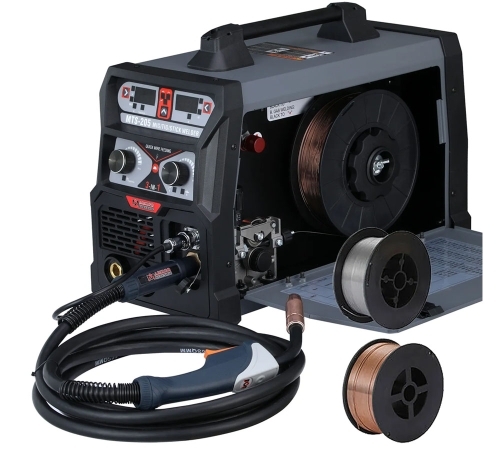
Regular maintenance and calibration of all welding equipment, including power sources, wire feeders, and torches, are essential to prevent these issues. Companies like Oldwelders supply robust welding machine solutions designed for consistent performance, helping to minimize equipment-related defects.
Environmental Conditions
While less direct, environmental factors can also play a role in promoting inclusions.
- Drafts and Wind: In processes that rely on gas shielding (like FCAW with supplemental gas), strong drafts can disrupt the protective gas shield, leading to atmospheric contamination and increased oxidation, which can form more slag-like products.
- Temperature: Extremely cold ambient temperatures can increase the cooling rate of the weld pool. A faster cooling rate reduces the time available for slag to float to the surface, increasing the likelihood of entrapment. Preheating in cold conditions can help counteract this effect.
While some environmental factors are beyond immediate control, implementing appropriate shielding, windbreaks, or preheating procedures can help mitigate their impact on weld quality.
Preventing Welding Slag Inclusions: Best Practices for Quality Assurance
Preventing inclusions requires a comprehensive approach that integrates diligent procedures, skilled operators, and high-quality materials. Adopting a proactive stance is far more cost-effective than dealing with post-weld repairs.
Meticulous Interpass Cleaning Protocols
Establishing and strictly adhering to detailed cleaning protocols between each weld pass is fundamental. This includes:
- Standard Operating Procedures (SOPs): Develop clear written SOPs for interpass cleaning, specifying the tools and techniques required for different joint types and welding processes.
- Appropriate Tooling: Ensure welders have access to and use effective cleaning tools, such as chipping hammers, needle scalers, power wire brushes (cup or wheel brushes), and grinders. The choice of tool should match the tenacity of the slag produced by the specific electrode or flux.
- Visual Inspection: After cleaning, each pass should undergo a thorough visual inspection to confirm complete slag removal, especially in hard-to-reach areas and along the weld toes. A flashlight can help reveal hidden residues.
- Training: Regular training emphasizing the importance of interpass cleaning and demonstrating correct techniques can significantly reduce occurrences of these inclusions.
Optimized Welding Parameters and Techniques
Proper parameter selection and skilled application are critical to achieving defect-free welds:
- Parameter Selection: Always refer to welding procedure specifications (WPS) for appropriate current, voltage, travel speed, and electrode stick-out. These parameters are designed to ensure an adequately fluid weld pool and sufficient time for slag to separate.
- Welder Training and Certification: Ensure all welders are properly trained and certified for the specific welding processes and positions they are performing. Continuous education and feedback loops help refine technique and address common defect causes.
- Electrode Angle and Manipulation: Train welders to use the correct electrode angle and manipulation technique to keep the molten slag behind the weld pool, allowing it to float to the surface. For example, a slight drag angle often helps to achieve better slag control.
- Arc Length Control: Maintaining a consistent and appropriate arc length is vital for stable arc and proper puddle fluidity.
Quality Consumables and Materials Management
The foundation of a quality weld is built upon quality materials. Choosing reliable suppliers and managing consumables correctly are non-negotiable.
- High-Quality Welding Materials: Partner with reputable suppliers like Oldwelders, known for providing high-quality welding materials, including solid wire, flux-cored wire, and welding fluxes. Our commitment to quality is underscored by our ISO 9001 certification, ensuring that our products meet stringent international standards.
- Proper Storage and Handling: Store electrodes and fluxes in dry, temperature-controlled environments to prevent moisture absorption, which can lead to porosity and other defects. Oldwelders' raw materials for flux products, such as excellent dolomite, bauxite, cryolite, silica, and fluorine ore, are melted at 2000 °C to ensure their purity and performance, demonstrating our dedication to superior product quality from the very start.
- Base Metal Preparation: Always ensure the base metal is clean and free from rust, scale, oil, or other contaminants prior to welding.
The Impact of Welding Slag Inclusions on Weld Integrity and Business Operations
The consequences of undetected inclusions can be severe, extending beyond mere aesthetic concerns to impact structural integrity and, ultimately, business profitability. Inclusions act as discontinuities within the weld metal, disrupting the continuous metallic matrix and creating stress concentration points. This significantly reduces the weld's load-bearing capacity, making it susceptible to premature failure under static, dynamic, or fatigue loading conditions. Such defects can lead to:
- Reduced Mechanical Properties: Lower tensile strength, yield strength, impact toughness, and ductility.
- Increased Risk of Failure: Especially critical in applications where reliability is paramount, such as pressure vessels, pipelines, and structural components.
- Costly Rework and Repairs: Identifying inclusions often requires non-destructive testing (NDT), followed by grinding out the defective area and re-welding. This process is time-consuming, labor-intensive, and incurs significant material costs.
- Delayed Project Schedules: Rework can push back project completion dates, leading to penalties and loss of client trust.
- Reputational Damage: Consistent quality issues can harm a company's reputation, affecting future contracts and client relationships.
For businesses operating in demanding markets such as Brazil, Thailand, Australia, and Malaysia, ensuring high weld quality is not just a technical requirement but a competitive necessity. Partnering with a supplier like Oldwelders, which maintains a plant covering an area of 1000 square meters with six production lines capable of supplying 100 tons a day, ensures access to consistently high-quality welding consumables. Our minimum order quantity for flux products is 1 ton, demonstrating our readiness to support industrial-scale operations with reliable solutions, delivered within a typical lead time of 30 days for efficient project planning.
Conclusion
Welding slag inclusions between passes are a preventable defect, yet they remain a persistent challenge in multi-pass welding. Their presence compromises the mechanical integrity of welds and leads to significant operational inefficiencies and financial burdens. By understanding the root causes—inadequate interpass cleaning, improper welding techniques, and suboptimal material selection—welding supervisors can implement effective preventive measures.
Prioritizing meticulous interpass cleaning, optimizing welding parameters, ensuring proper welder training, and utilizing high-quality welding consumables are critical steps toward achieving defect-free welds. Oldwelders is committed to supporting your quality objectives with our ISO 9001 certified manufacturing processes and extensive range of reliable welding machines, wires, rods, and welding fluxes. By focusing on stringent quality control at every stage, from material selection to execution, businesses can minimize inclusions, enhance weld integrity, and ensure the long-term success of their projects.