
Welding Consumables RFQ: Specs Buyers Miss | Oldwelders
Optimizing Your RFQ for Welding Consumables: Key Specifications Buyers Often Overlook
For B2B procurement teams, the process of sourcing welding materials is a critical undertaking that directly impacts production quality, operational efficiency, and overall project costs. While fundamental requirements for welding wire, welding rod, and welding fluxes are often well-defined, many Request for Quotation (RFQ) documents inadvertently omit crucial specifications. These oversights can lead to costly mismatches, delayed projects, and compromised final product integrity. This guide aims to illuminate the often-missed details that can significantly enhance your welding consumables RFQ, ensuring you secure the right products from reliable suppliers.
Understanding the Spectrum of Welding Consumables for Your RFQ
Before delving into granular specifications, it is vital to clearly define the specific types of welding consumables required. The broad category of welding materials encompasses a diverse range of products, each designed for particular applications and welding processes. A comprehensive RFQ begins with an unambiguous declaration of the product category. Are you primarily sourcing welding wire, welding rods, or welding fluxes? Specifying this upfront prevents misinterpretations and ensures suppliers can accurately respond with their relevant product lines.
Welding Wire: Beyond Alloy and Diameter
When requesting quotations for welding wire, buyers typically specify alloy composition (e.g., carbon steel, stainless steel, aluminum), wire diameter, and sometimes standard classifications like AWS or EN. However, often overlooked details can significantly impact performance:
- Spool Type and Size: Specify the exact spool type (e.g., plastic, metal, basket) and weight (e.g., 5kg, 15kg, 250kg drum). Compatibility with existing welding machine wire feeders is paramount.
- Wire Surface Finish: A clean, smooth wire surface is crucial for consistent arc stability and feedability, especially for high-speed automated processes. Oxide layers or surface contaminants can lead to porosity and poor weld quality.
- Cast and Helix: These geometric properties describe how the wire uncoils from the spool. Incorrect cast and helix can cause erratic feeding, bird-nesting, and inconsistent arc placement. Provide target ranges or acceptable deviations.
- Tensile Strength of Wire: While related to alloy, specifying the desired tensile strength range for the *wire itself* (before welding) can be important for certain applications, particularly for solid wire.
- Packaging and Moisture Protection: For moisture-sensitive wires, specify vacuum-sealed packaging, desiccant packs, or specific storage requirements to maintain integrity during transit and storage.
Welding Rod (Electrodes): Coating and Moisture Management
For welding rods, or coated electrodes, specifications commonly include core wire composition, coating type (e.g., rutile, basic, cellulosic), and diameter. Critical omissions often involve:
- Moisture Content and Re-baking Requirements: Basic electrodes (AWS E7018 equivalent) are highly susceptible to moisture absorption, which can cause hydrogen-induced cracking. Your RFQ should clearly state maximum allowable moisture content and, if applicable, re-baking procedures and temperatures for delivery.
- Coating Concentricity: An uneven coating can lead to erratic arc behavior and inconsistent slag removal. While difficult to quantify precisely, requesting adherence to industry standards for concentricity is advisable.
- Arc Characteristics: Describe desired arc characteristics (e.g., smooth arc, good penetration, easy slag removal) for the specific application. This guides suppliers in recommending the most suitable electrode.
- Packaging: Vacuum-sealed containers or hermetically sealed tins are often preferred for critical applications to minimize moisture exposure.
Welding Fluxes: Beyond Chemical Composition
When sourcing welding fluxes, especially for submerged arc welding, the chemical composition is a primary concern. However, other physical properties are equally vital:
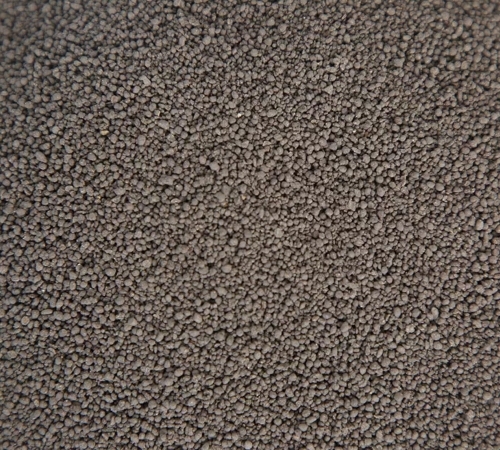
- Grain Size Distribution: The particle size and distribution of the flux significantly affect flowability, slag removal, and overall weld bead appearance. Specify a desired range or adherence to relevant standards for granular fluxes such as submerged arc welding flux hj431.
- Bulk Density: This impacts the amount of flux consumed per unit length of weld, directly affecting cost and process efficiency.
- Moisture Absorption Rate: Like electrodes, fluxes can absorb moisture, leading to hydrogen-related defects. Specify maximum allowable moisture content and packaging to mitigate this risk.
- Flux Basicity Index: This chemical property is crucial for understanding the metallurgical effects of the flux on the weld metal, influencing toughness and crack resistance.
- Melt Temperature and Viscosity: For specialized applications, understanding the flux's behavior at welding temperatures is critical for optimal slag detachment and bead profile. At Oldwelders, we focus on superior performance, using excellent dolomite, bauxite, cryolite, silica, fluorine ore, and other raw materials for our flux products, melted at 2000 °C to ensure optimal properties for our B2B partners.
Supplier Capabilities and Quality Assurance: Non-Negotiables for Your RFQ
Beyond the product itself, the capabilities and quality systems of your potential supplier are paramount. An RFQ that neglects these aspects risks partnering with an unreliable provider. Incorporate these non-negotiable elements:
Certifications and Quality Management Systems
Request proof of relevant industry certifications. As an ISO 9001 certified manufacturer, Oldwelders adheres to rigorous quality management standards, ensuring consistent product quality and process reliability. This certification is a fundamental trust signal, indicating a commitment to continuous improvement and customer satisfaction. Suppliers should be able to provide documentation for their quality control processes, including traceability of raw materials and finished products.
Production Capacity and Lead Times
For large-scale B2B operations, consistent supply is critical. Your RFQ should inquire about a supplier's production capacity. Oldwelders operates a state-of-the-art plant covering an area of 1000 square meters, equipped with six production lines. This robust infrastructure allows us to supply up to 100 tons of product daily, ensuring we can meet substantial order volumes. Additionally, specify your required lead times. While project timelines vary, Oldwelders generally aims for efficient processing, with typical lead times around 30 days for many orders, depending on customization and volume.
Minimum Order Quantity (MOQ)
Clearly state your anticipated order volumes and ask about the supplier's MOQ. Understanding this upfront prevents delays and ensures feasibility. Oldwelders typically maintains an MOQ of 1 ton for various welding consumables, accommodating diverse procurement needs from our B2B clientele.
Research and Development Capabilities
For evolving welding applications, a supplier with strong R&D capabilities can be a valuable partner. Inquire about their ability to develop custom solutions or provide technical support for novel challenges. This foresight can prevent future sourcing bottlenecks.
Logistics, Lead Times, and After-Sales Support
The journey of welding consumables from manufacturer to your facility involves more than just production. Effective logistics and comprehensive after-sales support are crucial components of a successful long-term partnership.
Packaging and Shipping Specifications
Detail your specific packaging requirements. For international shipments, consider factors like palletization, containerization, and protection against environmental factors. Specify any labeling requirements, such as batch numbers, manufacturing dates, and expiration dates. Oldwelders understands the nuances of global supply chains and has established distribution networks serving key markets including Brazil, Thailand, Australia, and Malaysia, ensuring reliable delivery of welding fluxes and other essential materials.
Warranty and Returns Policy
A clear warranty policy protects your investment. Request details on product warranties, including duration and coverage for defects. Understand the supplier's process for handling returns or claims for non-conforming products. Our commitment to quality extends to our warranty terms, typically offering 30 days for specific product issues, ensuring peace of mind for our customers.
Technical Support and Training
Beyond initial purchase, access to technical support can be invaluable. Inquire about the availability of technical assistance for troubleshooting, application guidance, or product optimization. Some suppliers may offer training programs for your welding technicians, enhancing their proficiency and maximizing the performance of the consumables. This level of partnership extends the value beyond the product itself, fostering a more informed and efficient operational environment.
Conclusion: Building a Robust RFQ for Long-Term Value
Crafting a comprehensive RFQ for welding equipment and consumables requires meticulous attention to detail, extending far beyond basic product specifications. By incorporating often-overlooked technical parameters, thoroughly vetting supplier capabilities, and detailing logistics and support requirements, B2B buyers can significantly enhance the efficacy of their procurement process. This proactive approach minimizes risks, optimizes operational efficiency, and ensures a consistent supply of high-quality materials. Partnering with a knowledgeable and capable manufacturer like Oldwelders, with our ISO 9001 certification, substantial production capacity, and global reach, empowers your business to achieve superior welding outcomes consistently.