
Understanding the Crushing Process for Rock Size Reduction
Understanding the Complete Crushing Process for Rock Size Reduction
In the heavy industries of mining, construction, and aggregate production, the ability to transform massive, run-of-mine rock into precisely sized material is fundamental. This transformation is achieved through a carefully engineered series of steps known as the comminution circuit, with the crushing process at its core. It is a multi-stage operation designed to systematically reduce the size of large rocks into smaller, more manageable, and uniform particles. Understanding the mechanics and stages of this process is critical for optimizing operational efficiency, ensuring product quality, and managing the immense wear and tear on the heavy machinery involved. From quarrying raw materials for cement to producing aggregates for infrastructure projects across Brazil and Australia, a well-executed crushing circuit is the bedrock of productivity.
This guide provides a comprehensive overview of the different stages, the types of equipment used, and the underlying principles of rock size reduction. We will explore how each phase contributes to the final product specification and, crucially, how the relentless nature of this work demands robust maintenance and repair strategies. For any operation, minimizing downtime is paramount, and that begins with understanding the forces at play and the solutions required to keep equipment running at peak performance.
The Primary Crushing Stage: The First Point of Impact
The journey of rock size reduction begins at the primary crushing stage. This is where the largest boulders, directly from the blasting or excavation site, are first broken down. The goal here is not precision but sheer force—to reduce the material to a size that can be handled by downstream equipment like conveyors and secondary crushers. The machinery used in this phase is massive, robust, and designed to withstand extreme impact and compressive forces.
Jaw Crushers
The most common type of primary crusher is the jaw crusher. It operates on a simple principle of compression. The machine consists of a fixed jaw and a moving jaw, which form a V-shaped crushing chamber. An eccentric shaft creates a reciprocating motion in the moving jaw, which advances and retreats, compressing the rock against the fixed jaw. As the rock is squeezed, it fractures and breaks. Gravity then pulls the smaller pieces further down the chamber, where they are compressed again in the next cycle. This continues until the particles are small enough to pass through the opening at the bottom of the jaw, known as the closed-side setting.
Gyratory Crushers
For very high-capacity operations, such as large-scale mines, gyratory crushers are often the preferred choice. A gyratory crusher has a cone-shaped crushing head (mantle) that gyrates eccentrically inside a fixed, concave bowl (concave or bowl liner). As the mantle moves, the gap between it and the bowl liner opens and closes, crushing the rock through compression. Due to their design, gyratory crushers can accept feed from multiple directions and typically offer a higher throughput than jaw crushers of a similar size. The continuous crushing action also results in a more uniform product.
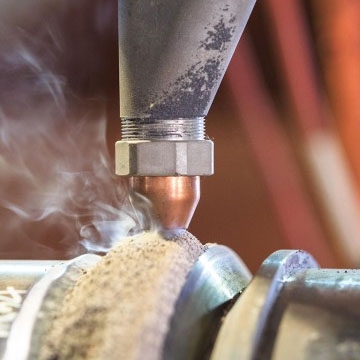
The wear parts in both jaw and gyratory crushers, typically made of high-manganese steel, endure incredible abrasive and impact wear. Their maintenance is a critical operational task, often requiring specialized build-up and hardfacing procedures using high-quality welding materials to restore profiles and extend service life.
Secondary Crushing: Refining the Material for Further Processing
Once the rock has passed through the primary stage, it is transported to the secondary crushing circuit. The material is now a more manageable size, typically under 6-8 inches (15-20 cm). The objective of the secondary stage is to further reduce the particle size and begin shaping the product to meet specific gradation requirements. The equipment used here is designed for higher speeds and less extreme impact than primary crushers.
Cone Crushers
Cone crushers are the most common machine in the secondary stage and are functionally similar to gyratory crushers, but with a less steep crushing chamber and a higher rotational speed. The rock is fed into the top of the crusher and is compressed between a rotating mantle and a fixed bowl liner. The high speed results in a more efficient reduction and produces a more cubical product, which is often a desired characteristic for concrete and asphalt aggregates. The setting of a cone crusher can be adjusted to control the output size precisely, making it a versatile part of the crushing process.
Impact Crushers
Impact crushers, including Horizontal Shaft Impactors (HSIs) and Vertical Shaft Impactors (VSIs), operate on a different principle. Instead of using compression, they utilize high-speed impact to shatter the rock. In an HSI, material is fed into a chamber where high-speed rotating bars (blow bars) mounted on a rotor strike the rock, breaking it and accelerating it into stationary plates (breaker plates). This sequence of impacts causes the rock to fracture along its natural cleavage lines, often resulting in a superior, cubical-shaped product. VSIs are typically used in later crushing stages but can be applied here depending on the material properties and desired output.
The high-velocity nature of impact crushing leads to significant wear on blow bars and breaker plates. The reliability of repairs and the quality of consumables used are non-negotiable. Partnering with an ISO 9001 certified supplier ensures that the welding products used for these critical repairs meet stringent quality standards, providing consistent and dependable performance for operations in demanding markets like Thailand and Malaysia.
Tertiary and Quaternary Crushing: Achieving Final Product Specifications
The final stages of the crushing process are tertiary and, in some cases, quaternary crushing. The goal here is ultimate precision: to produce the final, specified product sizes required by the end-user. This could be finely graded aggregates for concrete, manufactured sand, or specific fractions for industrial applications. The equipment in this phase is designed for fine reduction and shaping.
Fine Cone Crushers
Specialized cone crushers, often called "short head" cone crushers, are frequently used in the tertiary stage. They feature a flatter crushing cavity and higher speeds than secondary cone crushers, allowing them to efficiently crush smaller feed sizes down to the final specification. They are instrumental in producing tightly graded products and reducing the amount of oversized material that needs to be recirculated through the crushing circuit.
Vertical Shaft Impactors (VSIs)
VSIs are the workhorses of the tertiary and quaternary stages, especially for producing high-quality manufactured sand and premium cubical aggregates. In a VSI, material is fed into the center of a high-speed rotor. Centrifugal force throws the particles outwards at high velocity, causing them to collide with stationary anvils in the crushing chamber (rock-on-anvil) or with a bed of other rock material (rock-on-rock). This high-energy impact is extremely effective at shaping particles, removing flaky or elongated pieces, and achieving the final desired size. The rock-on-rock method is particularly effective at minimizing wear on the machine's components when processing highly abrasive materials.
The precision required in this final stage is analogous to the manufacturing of high-grade industrial consumables. For example, our own production of welding fluxes begins with excellent raw materials like dolomite, bauxite, and silica. These are melted at extremely high temperatures of 2000°C in a meticulously controlled environment to ensure the final product has the exact chemical composition and physical properties required for flawless welding performance. Similarly, the final stage of the crushing process relies on precise control to create a product that meets exact market specifications.
The Critical Role of Maintenance in a Demanding Crushing Process
No discussion of the crushing process is complete without addressing the immense importance of maintenance. The continuous impact, abrasion, and high stress placed on crushing equipment mean that wear is a constant and significant operational factor. Jaw plates, mantles, bowl liners, and blow bars are all consumable wear parts that must be regularly monitored, repaired, or replaced. Unplanned downtime due to equipment failure can halt an entire operation, leading to substantial financial losses.
A proactive maintenance strategy is essential. This involves:
- Regular Inspections: Visually inspecting wear parts for signs of damage or advanced wear, and using measurement tools to track wear rates.
- Wear Part Management: Maintaining a sufficient inventory of spare wear parts to ensure quick replacements when needed.
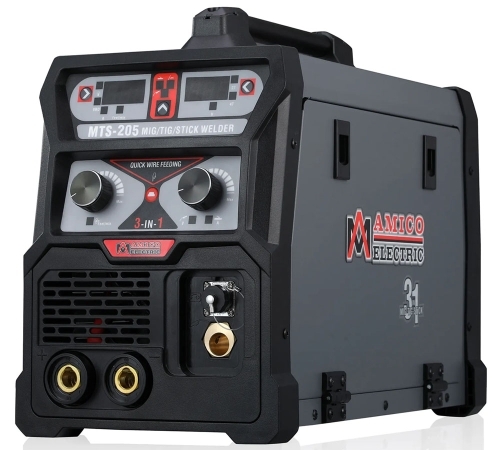
- Hardfacing and Build-Up Welding: For many wear components, replacement is not the only option. Specialized welding procedures can be used to rebuild worn surfaces and apply a hard, wear-resistant overlay (hardfacing). This can dramatically extend the service life of expensive components, significantly reducing operational costs. Using the correct welding consumables, such as a specialized submerged arc welding flux hj431, is critical for achieving a durable and effective repair on heavy-section manganese steel.
For large-scale mining and quarrying operations, a reliable supply chain for maintenance consumables is as important as the equipment itself. At Oldwelders, our plant, covering 1000 square meters with six production lines, has the capacity to supply 100 tons of welding products per day. This ensures that our partners can depend on a consistent and timely supply of high-quality materials to keep their maintenance schedules on track and their crushing circuits running efficiently. With a minimum order quantity of just 1 ton and a lead time of 30 days, we are structured to support the dynamic needs of heavy industry globally.
In conclusion, the crushing process is a sophisticated, multi-stage system that is foundational to modern industry. From the brute force of the primary jaw crusher to the fine-tuning precision of a tertiary VSI, each stage plays a vital role in producing the materials that build our world. However, the true key to a successful and profitable operation lies not just in the equipment, but in the robust maintenance strategies that support it. By understanding the forces at play and partnering with reliable suppliers for essential repair and maintenance products, operators can maximize uptime, optimize performance, and ensure the long-term success of their endeavors.