
Understanding How Welding Rod Codes Reveal Weld Performance
Understanding How Welding Rod Codes Reveal Weld Performance
For fabrication buyers and welding distributors, selecting the correct welding materials is paramount for ensuring structural integrity, operational efficiency, and cost-effectiveness. The humble welding rod, often referred to as a stick electrode, is at the heart of many welding processes. Its seemingly complex alphanumeric code holds a wealth of information crucial for predicting its performance in diverse applications. Deciphering these codes correctly transforms a procurement decision into a strategic advantage, directly impacting weld quality and project success.
At Oldwelders, we understand that technical selection goes beyond basic product categories. Our adherence to ISO 9001 standards ensures consistent quality across our entire product range, from welding machine offerings to our comprehensive selection of consumables. We assist businesses in target markets such as Brazil, Thailand, Australia, and Malaysia in making informed choices that align with their specific operational demands.
The Foundation of Welding Electrode Classification Systems
The American Welding Society (AWS) classification system is the global standard for identifying covered electrodes, providing a standardized method to communicate critical performance characteristics. Each digit and letter in the code of a stick electrode provides specific details about its tensile strength, welding position capabilities, type of coating, and suitable welding current. Understanding this system is fundamental for any professional involved in specifying or stocking welding consumables.
This systematic approach ensures that regardless of the manufacturer, an E7018 electrode, for instance, will consistently offer predictable properties and performance. This predictability is vital for maintaining quality control in manufacturing processes and for compliance with various industry standards. Without this classification, selecting the right electrode would be a trial-and-error process, leading to inconsistent results and potential structural failures.
Deciphering the AWS Welding Rod Designation
Let's break down the typical AWS classification for a covered electrode, using the common format EXXXX or EXXXXX. While the exact meaning can vary slightly depending on the specific standard (e.g., AWS A5.1 for carbon steel electrodes), the general structure remains consistent.
The 'E' Prefix: Electrode Identification
The initial 'E' always stands for "electrode." This signifies that the product is a covered electrode designed for shielded metal arc welding (SMAW), commonly known as stick welding. This simple letter immediately tells you the general process for which the consumable is intended.
Tensile Strength: The First Two or Three Digits
The first two or three digits following the 'E' indicate the minimum tensile strength of the deposited weld metal, in thousands of pounds per square inch (psi). For example:
- E60XX: The weld metal will have a minimum tensile strength of 60,000 psi.
- E70XX: The weld metal will have a minimum tensile strength of 70,000 psi.
- E110XX: The weld metal will have a minimum tensile strength of 110,000 psi.
This is a critical parameter for structural applications, as it directly relates to the load-bearing capacity of the welded joint. Fabricators must match this strength to the base material and the design requirements of the structure.
Welding Position: The Third (or Fourth) Digit
The third digit (or fourth digit for five-digit classifications) specifies the positions in which the electrode can be used:
- EXX1X: All positions (flat, horizontal, vertical, overhead). These electrodes are versatile and suitable for a wide range of fabrication tasks.
- EXX2X: Flat and horizontal fillet positions only. These are typically high-deposition electrodes, ideal for applications where the workpiece can be positioned for flat welding.
- EXX3X: Flat position only. Less common for general structural work but can be used for specific applications requiring high deposition rates in the flat position.
- EXX4X: Flat, horizontal, overhead, and vertical down. These offer more versatility than EXX2X or EXX3X but are not "all-position" in the classic sense as vertical-up is often preferred for strength.
Selecting the correct position capability is essential for welder productivity and ensuring consistent weld quality, especially when dealing with complex geometries or field repairs.
Current Type and Coating Composition: The Last Digit
The final digit in the AWS classification provides information about the type of welding current (AC, DC+, DC-) and the type of coating on the electrode. The coating significantly influences arc stability, penetration, slag characteristics, and the mechanical properties of the weld metal. Here are some common examples:
- EXXX0: High cellulose sodium. Deep penetration, excellent for out-of-position work (vertical up/down), DC+ current. Example: E6010.
- EXXX1: High cellulose potassium. Good penetration, AC or DC+ current, good for all positions, often used for dirty or rusty metal. Example: E6011.
- EXXX2: High titania sodium. Flat and horizontal fillets, AC or DC- current, smooth bead. Example: E6012.
- EXXX3: High titania potassium. All positions, AC or DC current, smooth, easy-to-remove slag. Often considered a general-purpose electrode. Example: AWS E6013 Welding Electrodes.
- EXXX4: Iron powder, titania. High deposition rates, AC or DC current, flat, horizontal, overhead, and vertical down. Example: E7014.
- EXXX5: Low hydrogen sodium. DC+ current, excellent mechanical properties, good impact strength, requires careful storage to prevent moisture pick-up. Example: E7015.
- EXXX6: Low hydrogen potassium. AC or DC+ current, similar mechanical properties to E7015 but with AC capability. Example: E7016.
- EXXX8: Low hydrogen iron powder. AC or DC+ current, high deposition rates, excellent mechanical properties, good for heavy sections. Example: E7018.
The choice of coating affects not only the electrical characteristics but also the metallurgical properties of the weld, such as ductility, toughness, and resistance to cracking. For instance, low-hydrogen electrodes (ending in 5, 6, 8) are critical for welding high-strength steels or thick sections where hydrogen-induced cracking is a concern.
Key Welding Rod Types and Their Performance Characteristics
Understanding the AWS codes allows for a direct correlation between the designation and expected weld performance. Let's look at some common examples relevant for procurement decisions.
E6010 and E6011: Penetration and Versatility
These electrodes are known for their deep, penetrating arc, making them ideal for root passes and welding through rust, paint, or dirt. E6010 is DC+ only, favored for its strong, digging arc and excellent puddle control in all positions. E6011 offers similar characteristics but can be used with AC current, providing versatility for workshops with limited DC power sources. Both are excellent for general fabrication and repair work where good fusion and penetration are critical.
E6013: General Purpose and Ease of Use
The E6013 electrode is a popular choice for general-purpose welding, favored for its smooth arc, minimal spatter, and easy slag removal. It can be used with AC or DC currents and is suitable for all positions, though it typically offers shallower penetration than 6010/6011. This makes it excellent for light fabrication, sheet metal, and situations where cosmetic appearance is important. Its user-friendliness makes it a staple for many workshops, including those in our target markets of Brazil and Malaysia.
E7018: High Strength and Low Hydrogen
Often referred to as "low hydrogen" electrodes, E7018 electrodes are engineered for high-strength applications where ductility and impact toughness are paramount. They produce welds with excellent mechanical properties and are resistant to hydrogen-induced cracking, which is crucial when welding thicker sections, high-carbon steels, or structures subjected to dynamic loading. E7018 can be used with AC or DC+ current and is suitable for all positions. However, it requires proper storage in heated ovens to prevent moisture absorption, which can compromise its low-hydrogen properties.
For demanding structural projects or critical component fabrication, the E7018 electrode is often the preferred choice, offering superior performance in challenging environments. Our commitment to supplying high-quality welding consumables ensures that even with a minimum order quantity of just 1 ton, clients receive products that meet stringent performance criteria.
Ensuring Quality and Supply in Your Welding Rod Procurement
Beyond understanding the codes, reliable procurement hinges on consistent quality and dependable supply. Oldwelders is equipped to meet these demands. Our modern plant, covering an area of 1000 square meters and featuring six production lines, boasts a daily capacity of 100 tons. This robust infrastructure ensures that we can supply significant volumes of electrode products, including various types of welding rod, to our global partners.
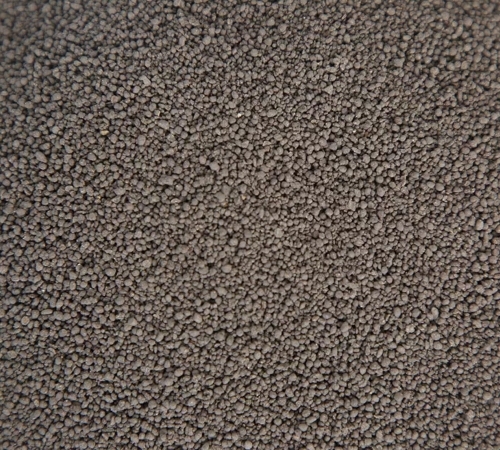
Our commitment to quality extends to the very foundation of our products. For instance, the raw materials for our welding fluxes are meticulously sourced from excellent dolomite, bauxite, cryolite, silica, and fluorine ore, which are then melted at 2000 °C to achieve superior product integrity and performance. This rigorous material selection and processing directly contribute to the consistent quality of our welding consumables.
When you partner with Oldwelders, you benefit from our efficient logistics and production capabilities, designed to keep your operations running smoothly. We strive for reliability, with typical lead times structured to support your project timelines effectively.
Strategic Selection for Optimal Welding Rod Performance
Choosing the right welding rod is a multifaceted decision that involves more than just matching tensile strength. It requires a holistic understanding of the application, environmental conditions, welder skill, and equipment capabilities. Consider the following factors:
- Base Metal Type: The composition of the material being welded will dictate the required strength and metallurgical compatibility of the filler metal.
- Joint Design and Position: Complex joint designs or out-of-position welding will necessitate electrodes with specific positional capabilities and arc characteristics.
- Service Conditions: Applications involving dynamic loads, low temperatures, or corrosive environments will require electrodes with superior toughness, impact strength, or corrosion resistance.
- Welding Current and Equipment: Ensure the selected electrode is compatible with your available arc welding machine, whether it's AC, DC+, or DC-.
- Cost-Effectiveness: While performance is key, balancing it with cost is crucial for procurement. High-deposition electrodes might be more expensive per pound but could reduce overall labor costs on large projects.
- Storage Requirements: Low-hydrogen electrodes require strict moisture control, which adds to storage costs and logistics.
By systematically evaluating these factors against the precise information embedded in the AWS welding rod codes, buyers and distributors can make informed decisions that optimize weld performance, minimize rework, and enhance overall project profitability. Leveraging a knowledgeable supplier like Oldwelders ensures access to a wide range of quality products and expert support to navigate these choices.
Conclusion
The seemingly cryptic codes on a welding rod are, in fact, a powerful language that speaks volumes about its capabilities and ideal applications. For fabrication buyers and welding distributors, mastering this language is not just a technicality; it is a critical skill for strategic procurement. By understanding how tensile strength, welding position, current type, and coating composition are encoded, professionals can confidently select electrodes that guarantee specific weld performance, contributing directly to the quality and longevity of fabricated structures.
Oldwelders is committed to providing not only a comprehensive range of high-quality welding consumables and equipment but also the knowledge to make the best possible selections. Our robust production capacity, quality assurance, and global reach ensure that your operational needs are met with precision and reliability.
===META===