
Submerged Arc Flux: Fused vs. Agglomerated Explained
Choosing the Right Submerged Arc Flux: A Guide to Fused and Agglomerated Types
Submerged Arc Welding (SAW) is a high-deposition, high-efficiency process favored for heavy fabrication in industries like shipbuilding, pressure vessel manufacturing, and structural steel. Central to its success is the granular flux that shields the arc, shapes the weld bead, and influences the final weld metal chemistry. However, not all fluxes are created equal. The choice between the two primary types—fused and agglomerated—has significant implications for weld quality, operational efficiency, and overall project cost.
For procurement managers and fabrication engineers, understanding the fundamental differences between these flux classifications is critical for making an informed purchasing decision. This guide provides a detailed comparison, answering the most common questions to help you select the optimal flux for your specific procedural requirements. As an ISO 9001 certified manufacturer serving demanding industrial markets in Brazil, Thailand, Australia, and Malaysia, we understand the importance of matching the right consumable to the application for consistent, reliable results.
What is Fused Flux and How is it Made?
Fused flux, also known as melted flux, is manufactured through a high-temperature fusion process. It is the original type of flux developed for the SAW process and is known for its exceptional stability and consistency. The production method is intensive but results in a product with several distinct and valuable characteristics.
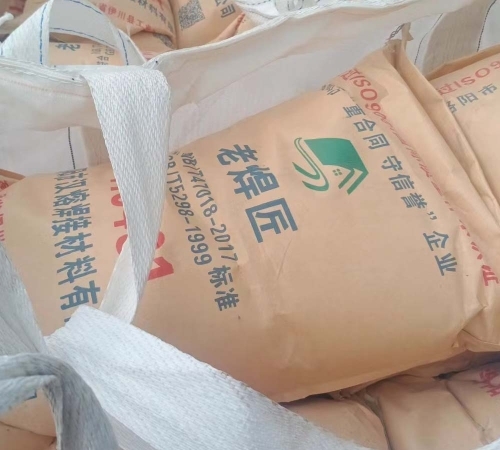
The manufacturing process begins with the precise selection and mixing of high-purity, anhydrous raw materials. At Oldwelders, we utilize excellent quality ores such as dolomite, bauxite, cryolite, silica, and fluorine ore. These components are charged into an electric arc furnace and melted at extreme temperatures, typically around 2000 °C. This complete fusion ensures that all constituents are thoroughly combined into a homogenous, glass-like molten liquid. This process eliminates any carbonates or moisture-containing compounds, driving off gases and ensuring a chemically uniform product.
After melting, the molten material is either poured onto a chilled plate to solidify into a slab or quenched with water to create small granules. The resulting solid, glassy material is then mechanically crushed, screened, and graded to achieve the specific particle size distribution required for different welding applications. Because every particle is a chemically identical piece of the original melt, fused fluxes offer unparalleled compositional uniformity from granule to granule.
Key Characteristics of Fused Flux:
- Chemical Homogeneity: Every particle has the same chemical composition, ensuring consistent arc behavior and weld metal properties.
- Non-Hygroscopic: The glassy, non-porous nature of the particles makes them highly resistant to moisture absorption. This simplifies storage and handling, reducing the need for frequent re-baking.
- Excellent Recyclability: Due to its hardness and low moisture pickup, unused fused flux can be recovered and reused multiple times with minimal degradation in performance, improving cost-efficiency.
- Stable Arc Performance: The uniform particle size and composition contribute to a very stable and predictable arc, which is ideal for high-speed, automated welding operations.
- Limited Alloying Capability: The high-temperature manufacturing process burns off most deoxidizers (like silicon and manganese) and any added alloying elements. Therefore, fused fluxes are generally neutral or only slightly active, and the final weld metal chemistry is primarily determined by the welding wire and base material.
What is Agglomerated Flux and How is it Made?
Agglomerated flux, also referred to as bonded flux, is produced through a ceramic bonding process at much lower temperatures than fused flux. This manufacturing method allows for a far greater degree of chemical flexibility, making it the most versatile and widely used type of flux today.
The process starts with finely ground powders of various minerals, ferroalloys, and deoxidizing agents. Unlike fused flux, these ingredients are not melted. Instead, they are dry-mixed to achieve a precise recipe. A liquid binder, typically a silicate solution like sodium or potassium silicate, is then added to the dry mix. This mixture is pelletized or granulated into small particles of a desired size.
These "green" granules are then baked in a rotary kiln at a relatively low temperature, usually between 400 °C and 800 °C. This baking process is sufficient to drive off water from the binder and create a durable, ceramic bond that holds the powder constituents together. It is not hot enough, however, to cause significant chemical reactions or burn off the metallic deoxidizers and alloying elements. This is the key advantage of the agglomeration process: it allows for the inclusion of a wide range of ingredients that would not survive the fusion process.
Key Characteristics of Agglomerated Flux:
- Chemical Versatility: Deoxidizers (Si, Mn), alloying elements (Cr, Mo, Ni), and arc stabilizers can be easily added to the mix. This allows agglomerated fluxes to be tailored to specific applications, compensating for element loss or adding alloys to achieve desired mechanical properties in the weld metal.
- Improved Slag Detachability: Formulations can be adjusted to create a slag system that detaches easily, even in deep grooves or on complex fillet welds, reducing post-weld cleaning time.
- Lower Density: Agglomerated fluxes are less dense than fused fluxes, meaning less flux is consumed per unit length of weld, which can offer a cost advantage.
- Hygroscopic Nature: The ceramic bond creates a more porous particle structure, making agglomerated fluxes susceptible to moisture absorption from the atmosphere. Proper storage in dry conditions and re-baking according to manufacturer specifications are critical to prevent hydrogen-induced cracking.
- Lower Current Capacity: Generally, agglomerated fluxes are used at slightly lower current levels compared to their fused counterparts.
Key Performance Differences: Fused vs. Agglomerated
The differences in manufacturing directly translate to distinct performance characteristics during welding. Understanding these is essential for selecting the right flux and optimizing your welding procedure.
Weld Bead Appearance and Slag Detachability
Agglomerated fluxes typically offer a superior weld bead appearance with smoother ripples and better tie-in at the toes of the weld. Formulators can fine-tune the ingredients to control the slag's freezing range and viscosity, leading to excellent self-detaching properties. This is a significant advantage in multi-pass welding, as it minimizes the time and effort required for interpass cleaning.
Fused fluxes produce a very clean weld, but the slag can sometimes be more adherent, especially in tight joint configurations. The resulting bead is often shinier and more convex compared to the flatter profile achieved with many agglomerated fluxes.
Alloying Element Transfer
This is arguably the most significant difference. Agglomerated fluxes are the clear choice when the welding procedure requires the addition of alloying elements through the flux. They can be designed to be "active," meaning they intentionally add silicon and manganese to the weld pool to improve deoxidation and strength. They can also be "alloying" fluxes, transferring elements like chromium, molybdenum, or nickel to create high-strength or creep-resistant weld deposits without the need for an expensive alloyed wire. Our range of welding materials includes options for various alloying requirements.
Fused fluxes are almost always "neutral" in nature. They play a minimal role in the final chemistry of the weld, which is almost entirely dictated by the base metal and the chosen electrode wire. This makes them highly predictable but less versatile for applications requiring specific mechanical properties not achievable with the wire alone.
Moisture Absorption and Hydrogen Control
For applications where low-hydrogen performance is critical, such as welding high-strength steels, the choice of flux and its handling are paramount. Fused fluxes, due to their glassy, non-porous structure, are inherently resistant to picking up moisture. This makes them a reliable choice for minimizing the risk of hydrogen-induced cracking.
Agglomerated fluxes, being porous, are hygroscopic and will absorb atmospheric moisture over time. This necessitates strict adherence to storage and re-baking procedures. While a properly baked agglomerated flux can deliver excellent low-hydrogen results, improper handling can introduce unacceptable levels of diffusible hydrogen into the weld. A specific basic agglomerated flux, like a submerged arc welding flux hj431, is designed for applications where toughness is a key requirement.
Which Flux Type is Right for Your Application?
The final decision depends entirely on the specific demands of the job, including the base material, welding position, required mechanical properties, and operational conditions.
Common Applications for Fused Flux:
- High-Speed Single-Pass Welds: Ideal for applications like spiral pipe or beam fabrication where consistency and a stable arc at high travel speeds are essential.
- General Purpose Fabrication: When welding standard carbon steels with a mild steel wire, where no special alloying is needed.
- Environments with Poor Handling Controls: In job sites where humidity is high or proper flux oven control is difficult, the moisture resistance of fused flux provides an added layer of safety.
- Applications with High Flux Recycling: The durability and stability of fused flux make it cost-effective in operations that reclaim and reuse a large percentage of their flux.
Common Applications for Agglomerated Flux:
- Multi-Pass Welding: The superior slag detachability saves significant time and labor in heavy-section welds on pressure vessels or thick structural components.
- High-Toughness Applications: Basic agglomerated fluxes are formulated to produce weld metal with excellent impact toughness, making them essential for offshore structures, shipbuilding, and cryogenic applications.
- Alloy Steel Welding: When welding chrome-moly steels or other alloys, agglomerated fluxes are used to compensate for element burnout and ensure the final weld deposit meets stringent mechanical and chemical specifications. A compatible flux-cored wire might also be part of the complete welding procedure.
- Specific Weld Bead Profiles: They offer greater control over the final bead shape, which can be critical for aesthetic or functional reasons.
Sourcing and Quality Considerations for Your SAW Flux
Regardless of the type you choose, partnering with a reliable manufacturer is key to achieving consistent results. At Oldwelders, our 1000-square-meter facility is equipped with six production lines capable of supplying up to 100 tons of high-quality flux per day. This capacity ensures we can meet large-volume orders with a standard lead time of 30 days and a minimum order quantity of just 1 ton, providing a reliable supply chain for your critical operations.
Our commitment to quality is confirmed by our ISO 9001 certification. By controlling the entire manufacturing process, from the sourcing of premium raw materials to the final particle size grading, we deliver a product that performs predictably and reliably, batch after batch. When evaluating a supplier for your welding consumables, always consider their production capacity, quality management systems, and their ability to provide consistent products that meet your project's technical specifications.