
Sintering Process: Powder Metallurgy vs SLS Explained
Exploring the Sintering Process in Modern Manufacturing Techniques
The creation of high-performance components from powdered materials is a cornerstone of modern industrial manufacturing. At the heart of many such processes lies the sintering process, a fundamental thermal treatment that transforms loose particles into solid, coherent structures. While the core principle remains consistent – using heat to bond particles without fully melting them – its application varies significantly across different manufacturing paradigms. This article delves into two prominent methods: traditional powder metallurgy and the advanced additive manufacturing technique known as Selective Laser Sintering (SLS). Understanding the nuances of each approach is critical for manufacturers evaluating the optimal production route for their specific material and design requirements.
Understanding the Sintering Process Fundamentals
Sintering is a heat treatment applied to a powder compact or a loose powder mass to increase its strength and density. This process occurs at temperatures below the melting point of the primary constituent material. The driving force behind sintering is the reduction of surface energy. Powder particles, with their high surface area, are inherently unstable. When heated, atoms at the particle surfaces gain sufficient energy to diffuse across particle boundaries, forming necks and eventually coalescing into a denser, stronger structure. This atomic diffusion leads to a reduction in porosity and an increase in mechanical properties such.
Key parameters influencing the sintering process include temperature, time, and atmosphere. The sintering temperature must be high enough to activate atomic diffusion but low enough to prevent significant melting, which would lead to uncontrolled shape distortion. Sintering time allows for sufficient diffusion to occur, ensuring adequate densification and neck growth. The atmosphere within the furnace or chamber is also crucial; it can be inert, reducing, or vacuum, depending on the material and desired properties, to prevent oxidation or other undesirable reactions. This careful control ensures the integrity and performance of the final sintered product.
Sintering in Traditional Powder Metallurgy
Traditional powder metallurgy (PM) is a well-established manufacturing route for producing complex metal components with high precision and excellent material utilization. The process typically involves several distinct stages. First, finely divided metal powders are produced through various methods, such as atomization or chemical reduction. These powders are then mixed with binders, lubricants, or other alloying elements to achieve the desired composition and processing characteristics.
The next crucial step is compaction, where the powder mixture is pressed under high pressure in a die to form a "green body." This green body has sufficient strength for handling but is still highly porous. The green body is then subjected to the sintering process in a controlled atmosphere furnace, heated to a temperature below the melting point of the main constituent. During this furnace-based sintering, the material particles bond together, reducing porosity and increasing density and strength. Post-sintering operations, such as sizing, machining, or heat treatment, may follow to achieve final dimensions and properties.
The advantages of traditional powder metallurgy are numerous, including the ability to produce complex shapes with minimal material waste, excellent dimensional control, and the capacity for mass production of consistent parts. It is particularly cost-effective for high-volume manufacturing of components that are difficult or expensive to produce by other methods. For instance, parts like gears, bearings, connecting rods for automotive applications, and specialized filters are commonly made using this method. Oldwelders understands the critical need for material quality in such demanding applications, a commitment reflected in the rigorous selection of raw materials for our welding materials, ensuring optimal performance and reliability for our B2B partners.
Selective Laser Sintering (SLS) The Additive Approach
Selective Laser Sintering (SLS) represents a groundbreaking application of the sintering principle within the realm of additive manufacturing, commonly known as 3D printing. Unlike traditional powder metallurgy, SLS builds parts layer-by-layer directly from a digital design, offering unparalleled design freedom and customization capabilities. This method is particularly valued for rapid prototyping, short-run production, and manufacturing highly complex geometries that would be impossible or prohibitively expensive to create with conventional techniques.
The SLS process begins with a thin layer of powdered material – typically polymers, but also metals, ceramics, and composites – being spread onto a build platform. A high-power laser then selectively scans the cross-section of the component, heating the powder particles to their sintering temperature. As the laser passes, the localized heat causes the powder particles to fuse together, forming a solid layer. Once a layer is complete, the build platform lowers slightly, a new layer of powder is spread, and the process repeats until the entire part is constructed. The unsintered powder surrounding the part acts as a natural support structure, eliminating the need for additional support materials and allowing for incredibly intricate designs.

Key advantages of SLS include its ability to produce highly complex geometries without tooling, rapid iteration of designs, and the capacity for on-demand manufacturing. It excels in applications requiring custom parts, such as medical implants, aerospace components, and functional prototypes. While the surface finish of SLS parts may require post-processing for aesthetic or functional reasons, the structural integrity and mechanical properties are generally excellent. The localized nature of the sintering process in SLS allows for precise control over specific areas, enabling tailored material properties within a single component.
Comparing Powder Metallurgy and SLS Sintering Processes
While both powder metallurgy and Selective Laser Sintering leverage the fundamental principles of the sintering process, their execution, applications, and suitability for different manufacturing scenarios diverge significantly. Understanding these distinctions is crucial for manufacturers making informed decisions about their production strategies.
The primary difference lies in the method of heat application and the overall manufacturing philosophy. Traditional powder metallurgy is a subtractive-like process in the sense that a die defines the final shape, followed by bulk sintering in a furnace. SLS, conversely, is an additive process where a laser selectively fuses powder layer by layer. This leads to distinct advantages and disadvantages for each method, as highlighted in the comparison table below:
| Feature | Powder Metallurgy (PM) Sintering | Selective Laser Sintering (SLS) |
|---|---|---|
| Process Mechanism | Bulk heating in a furnace after compaction | Localized laser heating, layer by layer |
| Production Scale | High-volume mass production | Low-to-medium volume, custom, rapid prototyping |
| Tooling Requirements | Expensive dies and molds required | No physical tooling; digital design files |
| Design Freedom | Limited by die geometry, some complexity possible | Very high, complex internal geometries possible |
| Material Usage | Pre-alloyed powders, wide range of metals/ceramics | Specific SLS-compatible powders (polymers, some metals) |
| Cost per Part | Lower for high volumes due to economies of scale | Higher, especially for single parts or small batches |
| Post-Processing | Often requires machining, heat treatment, sizing | Minimal for structural parts, surface finishing for aesthetics |
| Lead Time | Longer initial setup (tooling), then fast production | Faster for prototypes and small batches, no tooling lead time |
Manufacturers must consider several factors when choosing between these two powerful sintering processes. For large-scale production of standardized metal parts where tooling costs can be amortized over millions of units, traditional powder metallurgy often presents the most economical and efficient solution. However, when design complexity is paramount, customization is required, or rapid iteration is a priority, SLS offers an unparalleled advantage. Oldwelders, for instance, supports diverse manufacturing needs by providing essential welding machine solutions that cater to various production scales and material requirements, understanding that the right equipment is as crucial as the right material processing technique.
The Critical Role of Sintering in Industrial Material Production
Regardless of whether it's applied in a vast furnace for mass production or by a focused laser for intricate components, the sintering process remains a linchpin in the creation of advanced materials. Its ability to impart strength, density, and specific functional properties to powdered raw materials is indispensable across countless industries. The quality and consistency of the sintering process directly translate into the performance, durability, and reliability of the final products.
For B2B partners, understanding the intricacies of material processing, including sintering, underscores a commitment to quality and innovation. At Oldwelders, our dedication to excellence in material science is reflected in our operations. We adhere to stringent quality management systems, evidenced by our ISO 9001 certification, ensuring that every product, from welding wires to advanced welding fluxes, meets the highest international standards. This commitment mirrors the precision and control required in any high-quality sintering application.
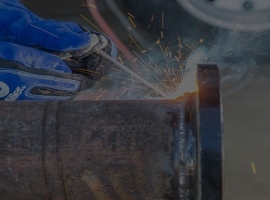
Our capacity to deliver high-quality products on a global scale is robust. Our state-of-the-art plant covers an expansive area of 1000 square meters and is equipped with six production lines, allowing us to supply up to 100 tons a day. This scalable capacity ensures we can meet the demands of our diverse clientele in target markets such as Brazil, Thailand, Australia, and Malaysia, providing reliable supply chains and consistent product quality. Our expertise in materials is further highlighted by the selection of excellent raw materials for our welding fluxes, including dolomite, bauxite, cryolite, silica, and fluorine ore, which are melted at precise temperatures of 2000 °C to guarantee superior performance.
As industries continue to push the boundaries of material performance and design complexity, the evolution and refinement of sintering techniques will remain a critical area of focus. Innovations in powder characteristics, process control, and hybrid manufacturing approaches promise even greater capabilities for creating components with tailored properties and unprecedented geometries.
Conclusion
The sintering process, whether through traditional powder metallurgy or advanced Selective Laser Sintering, stands as a testament to humanity's ability to engineer materials with precision. Powder metallurgy offers an established, cost-effective route for mass production of robust components, leveraging the efficiency of furnace-based sintering. In contrast, SLS provides unmatched design freedom and customization, harnessing the power of lasers for additive manufacturing. For manufacturers, the choice between these methods hinges on a careful evaluation of production volume, part complexity, material requirements, and economic considerations. Oldwelders remains committed to supporting industrial advancements by providing high-quality welding solutions, built on a deep understanding of material science and manufacturing processes, ensuring our partners achieve their production goals with confidence and efficiency.