
Setting Root-Pass Heat for Pipeline Welding
Optimizing Root-Pass Heat Settings for Critical Pipeline Welding Projects
The integrity of a pipeline hinges significantly on the quality of its root pass. For welding supervisors and field engineers, standardizing precise procedures before full-scale production is paramount. The root pass, being the foundational weld, dictates the overall strength, durability, and leak-proof characteristics of a welded joint in pipeline welding. Improper heat input at this stage can lead to costly defects, rework, and potential structural failures. This guide delves into the critical factors and practical steps involved in setting optimal root-pass heat, ensuring robust and reliable welds for demanding applications.
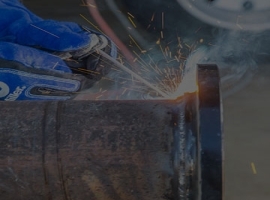
Understanding the Importance of the Root Pass
The root pass is the first weld bead deposited into the joint, directly contacting the base metal surfaces. Its primary function is to achieve complete penetration and fusion across the root of the joint, providing a solid foundation for subsequent filler and cap passes. A well-executed root pass prevents burn-through, lack of penetration, and internal porosity, which are common issues that can compromise the entire weld's structural integrity.
For high-pressure or critical service pipelines, any defect in the root pass can act as a stress concentrator, potentially leading to fatigue cracks or catastrophic failure under operational loads. Therefore, mastering the setting of root-pass heat is not merely a technical detail but a fundamental requirement for ensuring the long-term safety and performance of pipeline infrastructure. Oldwelders understands this critical need, offering a comprehensive range of welding materials and equipment designed to meet the rigorous demands of such applications.
Key Factors Influencing Root-Pass Heat Settings
Achieving the ideal root-pass heat involves balancing several interrelated variables. Each factor plays a crucial role in determining the appropriate amperage, voltage, and travel speed for a given pipeline welding scenario.
Material Type and Thickness
The type of pipe material (e.g., carbon steel, stainless steel, alloy steels) and its wall thickness significantly influence heat input requirements. Thicker materials generally require higher heat to achieve adequate penetration, while thinner materials are more susceptible to burn-through if heat input is excessive. Different alloys also have varying thermal conductivities and sensitivities to heat, dictating the need for specific preheat and interpass temperature controls.
Welding Process Selection
The chosen welding process – shielded metal arc welding (SMAW), gas metal arc welding (GMAW), gas tungsten arc welding (GTAW), or flux-cored arc welding (FCAW) – fundamentally impacts how heat is delivered and controlled. Each process has distinct characteristics:
- SMAW (Stick Welding): Often favored for its portability and ability to handle gaps, using electrodes like E6010 for deep penetration root passes or E7018 for tougher, low-hydrogen requirements. Heat control relies heavily on electrode selection, amperage, and welder technique.
- GMAW/FCAW (MIG/Flux-Cored): Offers higher deposition rates and continuous wire feed. Heat input is controlled via voltage, wire feed speed (which dictates amperage), and travel speed. These processes are increasingly used for mechanized pipeline welding.
- GTAW (TIG Welding): Provides precise heat control and high-quality, clean welds, often used for critical root passes in stainless steel or exotic alloys where purity is paramount. Amperage is the primary heat control, along with arc length.
Joint Design and Preparation
The joint geometry, including the bevel angle, root opening (gap), and root face (land), profoundly influences the required heat. A wider root opening or smaller root face typically demands lower heat to prevent burn-through but might require more filler metal. Conversely, a tight root opening or larger root face may necessitate higher heat to ensure complete penetration. Accurate fit-up and consistent joint preparation are essential for repeatable, high-quality root passes. Oldwelders provides premium welding fluxes and rods that complement various joint designs, ensuring optimal performance.
Electrode/Wire Type and Diameter
The diameter and type of welding electrode or wire directly relate to the current carrying capacity and penetration characteristics. Smaller diameter electrodes/wires generally use lower current and are suitable for controlling penetration in tight root openings. Fast-freeze electrodes (e.g., E6010) are designed for deep penetration and rapid solidification, making them ideal for vertical-down root passes in pipeline applications. For processes like GMAW, the wire type (solid or flux-cored) also affects penetration and bead profile.
Welding Position
The position of the weld (e.g., 5G, 6G for pipes) significantly affects heat transfer and molten puddle control. Vertical-up welding typically requires lower amperage and precise technique to prevent the molten puddle from sagging. Vertical-down welding, common for high-production pipeline welding, utilizes higher travel speeds and specific electrode types (like E6010) to achieve fast-freezing root passes, demanding careful heat management to avoid lack of fusion or burn-through.
Preheat Requirements
Preheating the pipe material before welding is often required, particularly for thicker sections, high-carbon steels, or low-alloy steels. Preheat slows the cooling rate of the weld, reducing hydrogen-induced cracking and improving the mechanical properties of the heat-affected zone. Proper preheat temperature, combined with interpass temperature control, is an integral part of managing the overall heat input and ensuring a sound root pass.
Practical Steps for Setting Root-Pass Heat
The process of setting root-pass heat is iterative and requires meticulous attention to detail, beginning with equipment selection and culminating in rigorous testing.
1. Select the Appropriate Welding Machine and Consumables
Begin by choosing a reliable arc welding machine capable of delivering stable and consistent output for the chosen process. For SMAW, an inverter-based machine offers excellent arc control. For GMAW/FCAW, a machine with precise voltage and wire feed speed controls is crucial. Oldwelders offers a range of high-performance welding machine solutions, including advanced automatic welding machine systems, suitable for demanding pipeline applications. Pair the machine with high-quality welding electrodes, solid wire, or flux-cored wire, selecting the type and diameter best suited for the material and joint design.
2. Establish Initial Amperage/Voltage Settings
Consult welding procedure specifications (WPS) or manufacturer recommendations for initial amperage (for SMAW/GTAW) or voltage and wire feed speed (for GMAW/FCAW) ranges. These provide a starting point based on electrode/wire diameter, material thickness, and welding position. For example, an E6010 electrode for a vertical-down root pass might start in the 80-120 amp range, depending on the pipe wall thickness and specific electrode properties.
3. Account for Travel Speed
Travel speed is inversely proportional to heat input. A slower travel speed increases heat input per unit length, leading to deeper penetration but also a higher risk of burn-through. Conversely, a faster travel speed reduces heat input, potentially causing lack of penetration. The welder must maintain a consistent travel speed to ensure uniform heat distribution and bead profile. This requires significant skill and practice, especially in manual pipeline welding.
4. Optimize Arc Length/Stickout
SMAW/GTAW: Arc length directly affects voltage and heat concentration. A shorter arc generally results in a more concentrated, hotter arc, promoting deeper penetration. A longer arc spreads the heat over a wider area, reducing penetration. GMAW/FCAW: Stickout (the distance from the contact tip to the workpiece) influences resistance heating of the wire and thus the overall heat input. A longer stickout increases resistance heating, leading to higher wire temperature and sometimes less stable arc characteristics. Optimizing stickout is crucial for consistent heat delivery.
5. Consider Backing Gas (for GTAW/GMAW)
For GTAW and some GMAW root passes, especially in stainless steel or alloys, an inert backing gas (e.g., argon) is essential. This protects the backside of the weld from atmospheric contamination, preventing oxidation and ensuring a clean, sound root bead. The flow rate of the backing gas must be carefully controlled to prevent turbulence or insufficient coverage, either of which can compromise weld quality.
6. Conduct Trial Welds and Visual Inspection
Before beginning production welding, perform trial welds on scrap material identical to the production pipe. This allows for fine-tuning of parameters. Visually inspect the root pass for:
- Full Penetration: The root bead should be visible and consistent on the inside of the pipe.
- No Burn-Through: Absence of excessive melt-through or holes.
- Smooth Transition: The weld should blend smoothly with the parent material.
- Absence of Defects: No porosity, undercut, or excessive reinforcement.
Adjust amperage, voltage, travel speed, and other parameters incrementally based on observations. This iterative process is vital for establishing a robust welding procedure specification (WPS).
Trust in Oldwelders' Quality and Capacity
Oldwelders is committed to providing high-quality solutions for the most demanding electrode and welding endeavors. Our dedication to quality is underscored by our ISO 9001 certification, ensuring that our products and processes consistently meet international standards. With a manufacturing plant covering an area of 1000 square meters and six production lines, we boast a daily supply capacity of 100 tons. The raw materials used in our flux products, such as the submerged arc welding flux HJ431, are excellent dolomite, bauxite, cryolite, silica, and fluorine ore, melted at 2000 °C to guarantee superior performance. Our minimum order quantity typically starts from 1 ton for bulk materials, catering to the needs of large-scale industrial projects.
Advanced Considerations and Troubleshooting
Beyond the basic parameters, several advanced considerations can further refine root-pass heat settings and aid in troubleshooting common issues.
Heat Input Calculation
For critical applications, engineers often calculate the precise heat input (joules/inch or J/mm) using the formula: Heat Input = (Voltage x Amperage x 60) / (Travel Speed x 1000). This allows for quantitative control and documentation of the welding process, ensuring consistency across multiple welds and adherence to specific metallurgical requirements.
Automated Pipeline Welding Systems
Modern automatic welding machine systems and orbital welding equipment for pipeline welding offer unprecedented precision and repeatability in heat input control. These systems can program and maintain exact parameters, significantly reducing human error and improving overall weld quality, especially for long-distance pipelines where consistency is paramount.
Common Root Pass Issues and Adjustments
- Burn-Through: Indicated by excessive molten metal dropping through the root. Reduce amperage/voltage, increase travel speed, or decrease root opening/increase root face.
- Lack of Penetration: The root bead is not visible or is inconsistent on the backside. Increase amperage/voltage, decrease travel speed, or reduce root face.
- Undercut: A groove melted into the base metal adjacent to the weld toe. Reduce amperage, adjust travel speed, or change electrode angle.
- Excessive Reinforcement: Too much weld metal on the root face. Increase travel speed, reduce amperage/voltage, or adjust electrode manipulation.
- Porosity: Gas pockets within the weld metal. Check shielding gas flow, clean base metal, ensure proper electrode drying, or adjust parameters to prevent too rapid freezing.
Maintaining Weld Quality
Consistent quality control throughout the welding process is essential. This includes regular calibration of welding machine, proper storage and handling of consumables like AWS E6013 welding electrodes, and continuous training for welders. Non-destructive testing (NDT) methods such as radiography or ultrasonic testing are often employed to verify the integrity of root passes in critical pipeline constructions.
Conclusion
Setting the correct root-pass heat is a cornerstone of successful pipeline welding. It demands a thorough understanding of material science, welding processes, joint design, and the interplay of various welding parameters. For welding supervisors and field engineers, developing and adhering to precise welding procedures is crucial for ensuring the long-term reliability and safety of pipeline infrastructure. Oldwelders is a trusted partner in this endeavor, providing high-quality welding machine, welding wire, welding rod, and welding fluxes that meet the stringent demands of the industry. We proudly serve diverse markets, including Brazil, Thailand, Australia, and Malaysia, contributing to robust and durable welding solutions worldwide.