
Set Submerged Arc Flux Depth to Stop Arc Instability
Learn How to Set Submerged Arc Flux Depth and Stop Arc Instability
In automated Submerged Arc Welding (SAW), a stable arc is the foundation of a high-quality, productive weld. When the arc becomes unstable, it leads to a cascade of costly problems, from inconsistent penetration and poor bead appearance to defects like porosity and spatter. While operators often look to electrical parameters or travel speed first, a frequently overlooked variable is the depth of the granular flux bed. Properly controlling your submerged arc flux depth is one of the most direct and effective ways to maintain arc stability and ensure repeatable, code-compliant welds.
For production supervisors and welding operators troubleshooting an unstable SAW process, understanding the physics behind the flux burden is critical. This guide provides a practical, symptom-based approach to diagnosing and correcting issues related to flux depth. As an ISO 9001 certified manufacturer, Oldwelders produces high-performance welding consumables designed for demanding industrial applications. We understand that consistent consumable quality is just as important as proper procedure, and this article will help you optimize both.
Understanding Why Flux Depth Governs Arc Stability
The entire principle of Submerged Arc Welding rests on the arc being completely covered—or submerged—by a layer of granular flux. This flux blanket performs several essential functions simultaneously: it shields the molten weld pool from atmospheric contamination, provides deoxidizers and alloying elements, shapes the weld bead, and insulates the weld to slow the cooling rate. The depth of this flux bed directly influences the electrical characteristics and physical environment of the arc. An incorrect depth, either too shallow or too deep, disrupts this delicate balance.
The Consequences of Insufficient Flux Depth
When the flux bed is too shallow, it fails to perform its primary shielding function. The most immediate and obvious symptom is arc flash. The intense ultraviolet light of the arc becomes visible through the thin layer of flux, which indicates that the arc is not fully contained. This exposure to the atmosphere allows nitrogen and oxygen to enter the molten weld pool, leading to significant problems:
- Porosity: Nitrogen, in particular, becomes trapped as the metal solidifies, creating gas pores or "pockmarks" that weaken the weld joint.
- Excessive Spatter: Without a sufficient flux burden to contain the molten metal transfer, spatter is ejected from the weld zone, creating a messy work area and requiring extensive post-weld cleaning.
- Poor Bead Appearance: The weld bead will often be wide, flat, and irregular, with a rough surface finish due to atmospheric attack and arc instability.
The Problems with Excessive Flux Depth
Conversely, a flux bed that is too deep can be just as problematic, though the symptoms are different. An overly thick layer of flux physically constricts the arc plasma column. This constriction increases the arc voltage and focuses the energy into a smaller area.
- Narrow, Peaked Bead Profile: The constricted arc "digs" into the base material, often producing a deep but very narrow weld bead. This high, ropy bead profile can be undesirable and may not meet procedural specifications.
- Difficult Slag Removal: The shape of the weld bead and the cooling conditions created by the deep flux can lead to slag that is difficult or impossible to remove cleanly. This significantly increases post-weld labor costs.
- Arc Wander: In some cases, an excessively deep flux bed can cause the arc to wander or deflect from the intended weld path, leading to missed joints or inconsistent fusion.
Achieving the optimal flux depth ensures the arc has adequate shielding without being physically restricted, allowing it to operate in a stable, efficient state. This is why using a flux with consistent particle sizing is crucial for maintaining a uniform bed, a standard we uphold through our rigorous ISO 9001 certified quality control processes.
Diagnosing Arc Instability: A Symptom-Based Guide
When troubleshooting a live SAW process, observing the symptoms can quickly point you toward the root cause. If you suspect flux depth is the issue, compare what you are seeing on the production line with these common indicators.
Symptom: Visible Arc Flashes, Popping Sounds, and Heavy Spatter
Diagnosis: The flux depth is too shallow.
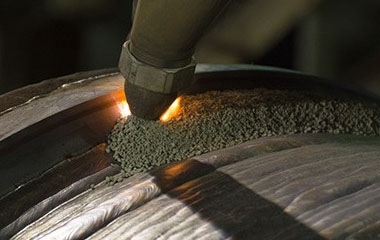
This is the most straightforward symptom to identify. If you can see the arc, the flux bed is not doing its job. The popping or crackling sound will be loud and erratic, unlike the smooth, consistent buzzing of a stable submerged arc. The resulting weld will be wide, poorly formed, and surrounded by spatter. Solution: Increase the flux burden. Adjust the gate on your flux hopper or slow the travel speed slightly to allow more flux to be deposited ahead of the arc. The goal is to create a mound of flux that completely covers the arc at all times, with no visible light escaping.
Symptom: A Narrow, Humped Bead with Slag Pockets
Diagnosis: The flux depth is too deep.
This weld bead will look like it was made with too high of a voltage. It will be narrow and convex, with a "ropy" appearance. When you try to remove the slag, it may stick tenaciously, especially along the toes of the weld. You might have to chip it away aggressively, risking damage to the weld surface. Solution: Reduce the flux burden. Slightly close the gate on your flux hopper to decrease the flow rate. The ideal depth is just enough to cover the arc plus a small margin of safety. There is no benefit to piling on excessive flux.
Symptom: Inconsistent Bead Width and Random Porosity
Diagnosis: Uneven flux distribution or inconsistent depth.
If the bead profile changes along the length of the weld, or if you find sporadic porosity, the flux coverage may be inconsistent. This can happen if the flux delivery nozzle is too far from the workpiece, allowing flux to bounce, or if the hopper delivery is intermittent. Solution: Check your entire flux delivery system. Ensure the nozzle is positioned correctly, typically 1-2 inches above the plate. Verify that the hopper has sufficient flux and that there are no clogs preventing a smooth, continuous flow. Using a high-quality, free-flowing flux like our submerged arc welding flux hj431 can help prevent blockages and ensure consistent deposition.
How to Set and Maintain the Correct Flux Depth
Setting the flux depth is a procedural step that should be established and monitored just like voltage or travel speed. While exact depth varies with the application, a general rule of thumb is a bed depth of 25-35 mm (1 to 1.5 inches).
- Establish a Visual Baseline: Before starting the arc, observe the pile of flux deposited by your system. It should form a consistent mound that completely covers the wire and the weld joint. There should be no bare spots.
- Listen to the Arc: A properly submerged arc has a characteristic quiet, smooth buzzing or humming sound. A loud, crackling, and popping sound indicates the flux cover is too light. A complete absence of sound might suggest the arc has extinguished or the flux is too deep.
- Observe the Slag "Freeze Line": During welding, watch the molten slag pool behind the electrode. It should solidify (freeze) at a consistent distance behind the electrode. An erratic or shifting freeze line can indicate an unstable arc, often linked to inconsistent flux coverage.
- Inspect the Slag After Cooling: The slag cap on a well-executed SAW weld should be uniform and ideally self-detaching or easily removed with a light tap from a chipping hammer. If you need a grinder or excessive force to remove it, your parameters, including flux depth, are likely incorrect.
- Account for Joint Type: For fillet welds, gravity will cause the flux to slump. You may need a higher flow rate or specialized flux dams/rings to maintain adequate coverage over the joint root.
Maintaining this consistency is vital for large-scale projects. At Oldwelders, our 1000-square-meter plant is equipped with six production lines, capable of supplying up to 100 tons of flux per day. This capacity ensures that our partners in demanding markets like Brazil, Australia, and Malaysia receive a continuous supply of virgin, high-purity flux, eliminating the process variability that can come from inconsistent or over-recycled consumables.
Other Factors That Influence Arc Stability
While flux depth is a primary driver of stability, it works in concert with other welding parameters. If you have optimized your flux bed and still experience issues, investigate these related variables.
Electrical Stick-Out (ESO) or CTWD
The Contact-Tip-to-Work-Distance (CTWD) is a critical parameter in SAW. A longer stick-out preheats the wire, increasing the deposition rate but also affecting arc characteristics. An inconsistent stick-out will cause fluctuations in amperage and lead to an unstable arc. Ensure your wire straightener and feed system are functioning correctly to maintain a constant ESO.
Voltage and Amperage
Arc voltage is directly related to arc length. Higher voltages create a longer arc, which can be more prone to instability if not properly contained by the flux burden. Amperage controls the melting rate and penetration. These parameters must be balanced with travel speed and flux type for a stable process.
Base Material Cleanliness
SAW fluxes are robust, but they cannot overcome gross contamination. Heavy rust, mill scale, oil, grease, or moisture on the base material will release gases during welding, causing severe arc instability and porosity, regardless of how perfect your flux coverage is. To combat this, our fluxes are produced from excellent raw materials like dolomite, bauxite, and silica, which are melted at 2000°C to drive off impurities and create a chemically consistent product that provides maximum deoxidation and cleaning action.
Quality of Consumables
The final piece of the puzzle is the quality and compatibility of your wire and flux. Using a high-quality electrode wire with a consistent diameter and clean surface finish is essential. Pairing it with the correct type of submerged arc flux for the material and application ensures the proper chemical reactions occur in the weld pool. Oldwelders provides a complete range of certified welding materials, including both wire and flux, designed to work together as a system. Whether you need a simple welding machine or a fully automated solution, pairing it with the right consumables is the key to success.
By taking a systematic approach and understanding the pivotal role of the flux bed, operators can quickly diagnose and resolve arc instability. Mastering control over your submerged arc flux depth transforms it from a potential source of problems into a powerful tool for improving weld quality, consistency, and productivity.