
Selecting the Right Welding Rod for AC/DC Power & Joint Position
Selecting the Optimal Welding Rod for AC/DC Power Sources and Joint Positions Ensures Peak Performance.
For professional contractors and maintenance teams, the precision of a weld begins long before the arc strikes. It starts with the diligent selection of the appropriate filler material. Choosing the correct electrode or welding rod is paramount for achieving high-quality, durable, and safe welds, especially when considering the nuances of alternating current (AC) versus direct current (DC) power sources and the varying demands of different joint positions. An informed decision not only enhances the structural integrity of your work but also improves operational efficiency and reduces rework.
This comprehensive guide delves into the critical factors influencing welding rod selection, helping you match the right product to your equipment and project specifications. We will explore the characteristics of AC and DC welding, decipher the intricacies of electrode classification, and examine how joint positions dictate your choice of filler material. Understanding these elements is key to unlocking the full potential of your welding operations.
Understanding AC and DC Welding Power Sources
The type of power source available on your welding machine profoundly impacts the performance of a given electrode. Both AC and DC welding currents have distinct characteristics that make them suitable for different applications and compatible with specific types of electrodes.
Direct Current (DC) Welding
DC welding provides a consistent, steady arc, which many welders find easier to control, especially for out-of-position work. There are two primary polarities within DC welding:
- Direct Current Electrode Positive (DCEP) or Reverse Polarity (DC+): In DCEP, the electrode is connected to the positive terminal and the workpiece to the negative terminal. This configuration concentrates about two-thirds of the heat on the electrode and one-third on the workpiece. DCEP offers deep penetration, a stable arc, and is ideal for welding thicker materials and for applications requiring strong, durable welds. Many low-hydrogen electrodes perform best with DCEP.
- Direct Current Electrode Negative (DCEN) or Straight Polarity (DC-): With DCEN, the electrode is connected to the negative terminal and the workpiece to the positive. This distributes about two-thirds of the heat to the workpiece and one-third to the electrode, resulting in faster melt-off rates and shallower penetration. DCEN is often preferred for welding thinner materials or for applications where heat input needs to be minimized, such as surfacing or overlay applications. Some electrodes, like E6010, can be used with DCEN for specific effects, although DCEP is more common for general purpose.
The consistent direction of current flow in DC welding generally results in a smoother arc and less spatter compared to AC. However, DC welding can be susceptible to "arc blow," a phenomenon where magnetic forces in the workpiece deflect the arc, making it difficult to control, particularly in corners or at the end of a weld.
Alternating Current (AC) Welding
AC welding involves a current that rapidly reverses direction, typically 60 times per second in most regions. This constant reversal significantly reduces or eliminates arc blow, making AC a preferred choice for welding in situations where magnetic interference is an issue. The arc in AC welding typically has a broader, less focused heat pattern compared to DC. While AC can sometimes be more challenging to strike and maintain for certain electrodes, modern AC welders and electrode formulations have greatly improved usability.
- Advantages of AC: Excellent for mitigating arc blow, often more economical for certain types of welding machine, and suitable for some general-purpose electrodes.
- Disadvantages of AC: Can be harder to strike an arc with some electrodes, may produce more spatter, and offers less control over penetration compared to DC.
Understanding these fundamental differences is the first step in selecting a welding materials match that will perform optimally with your available power source.
Deciphering Welding Rod Classifications for Optimal Selection
The American Welding Society (AWS) classification system provides a standardized method for identifying the characteristics and applications of various electrodes. For the welding rod, this classification typically starts with an "E" followed by four or five digits. Each part of this designation provides crucial information:
- E: Indicates an electrode for arc welding.
- First two or three digits (e.g., E60XX, E70XX): Represent the minimum tensile strength in thousands of pounds per square inch (psi). For example, E60XX means 60,000 psi, while E70XX means 70,000 psi.
- Third or Fourth digit (e.g., EXX1X, EXX2X): Indicates the welding positions for which the electrode is suitable.
- 1: All positions (flat, horizontal, vertical, overhead)
- 2: Flat and horizontal positions only
- 4: Flat, horizontal, vertical down, and overhead positions (less common for structural)
- Last two digits (e.g., EXXX0, EXXX1, EXXX8): Provide information about the type of current (AC/DC), type of flux coating, and penetration characteristics. This is where AC/DC compatibility is explicitly stated.
Let's examine some common welding rod types and their power source compatibility:
- E6010 (Cellulosic, Deep Penetration): This is a fast-freeze, deep-penetrating electrode primarily used with DCEP (DC+). It's excellent for welding through rust, paint, or dirt, making it a favorite for pipeline work and general fabrication where joint preparation isn't perfect. It provides a strong, tough weld and is suitable for all positions.
- E6011 (Cellulosic, Deep Penetration, AC Compatible): Similar to E6010 in penetration and fast-freeze characteristics, but designed to operate effectively with both AC and DCEP (DC+). This versatility makes the E6011 a popular choice for repair work and general fabrication where an AC power source is the only option or preferred. It's also an all-position electrode.
- E6013 (Rutile, General Purpose): A versatile, all-position electrode that can be used with both AC and DC (DCEP or DCEN). It produces a smooth, stable arc, minimal spatter, and a finely rippled bead with shallow penetration. E6013 is excellent for welding thin materials, sheet metal, and for applications requiring good cosmetic appearance. It's often chosen for light fabrication and repair. Oldwelders offers high-quality aws e6013 welding electrodes designed for consistent performance.
- E7018 (Low Hydrogen, High Strength): This "low-hydrogen" electrode is renowned for producing high-quality, crack-resistant welds with excellent mechanical properties. It primarily operates with DCEP (DC+) but can be used with AC on some machines. E7018 is an all-position electrode (except vertical down) and is ideal for critical applications such as structural steel, pressure vessels, and heavy equipment fabrication where weld integrity is paramount. The low-hydrogen coating prevents hydrogen embrittlement.
- E7024 (Iron Powder, High Deposition): An iron-powder electrode designed for high deposition rates in the flat and horizontal positions. It can be used with both AC and DC (DCEP or DCEN). E7024 produces a very smooth, stable arc with minimal spatter and a large, smooth bead. It's not suitable for out-of-position welding but excels in applications where speed and high fill rates are required for long, flat or horizontal welds.
By carefully reviewing the AWS classification, you can quickly identify the tensile strength, suitable positions, current type, and other performance characteristics of any welding rod, ensuring it aligns perfectly with your project's demands.
Mastering Joint Positions and Their Impact on Electrode Choice
The position in which a weld is made significantly influences the choice of electrode. Gravity plays a major role, affecting the molten puddle and dictating how the filler metal flows. Electrodes are designed with specific flux coatings and arc characteristics to manage the molten metal in various orientations. Understanding the standard welding positions is crucial for optimal electrode selection:
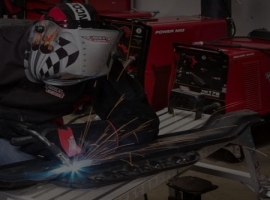
- Flat Position (1G / 1F): This is the easiest position to weld. The workpiece is placed so that the weld is performed on the upper side of the joint, and the filler metal is deposited downwards. Most electrodes can be used in the flat position, including high-deposition electrodes like E7024 which are generally restricted to flat and horizontal.
- Horizontal Position (2G / 2F): In this position, the weld axis is horizontal, and the weld metal is deposited against a vertical surface. Gravity tends to pull the molten puddle downwards, requiring electrodes with good wetting action and faster freezing rates to prevent sag. Many electrodes rated for "all positions" (like E6010, E6011, E6013, E7018) perform well here, as do some flat/horizontal-specific electrodes.
- Vertical Position (3G / 3F): Welding in the vertical position presents a significant challenge due to gravity. The molten puddle wants to run downwards. Welders typically use either a vertical-up (3G-up) or vertical-down (3G-down) technique.
- Vertical-Up: Requires electrodes with a fast-freezing slag to support the molten metal. E6010, E6011, and E7018 are excellent choices for vertical-up welding, providing good penetration and strength.
- Vertical-Down: Used for thinner materials or where speed is more critical than deep penetration. E6010 and E6011 can be used vertical-down, but E6013 is also a popular choice for its smooth, controlled bead.
- Overhead Position (4G / 4F): This is often considered the most difficult position, as the welder works from underneath the joint, fighting gravity to keep the molten metal from dropping. Electrodes for overhead welding must have very fast-freezing characteristics and a manageable puddle. E6010, E6011, E6013, and E7018 are all suitable for overhead work, with E7018 being preferred for critical applications requiring high strength.
When selecting your filler material, always refer to the third or fourth digit of the AWS classification to ensure it is rated for the specific joint position required. Using an electrode not designed for a particular position will lead to poor weld quality, excessive spatter, and potential defects, increasing project costs and compromising safety.
Optimizing Your Projects with Oldwelders' Welding Rod Solutions
At Oldwelders, we understand the critical role that quality welding consumables play in the success of your fabrication and maintenance projects. Our commitment to excellence is deeply embedded in every product we offer, from arc welding machine to our extensive range of welding rods and fluxes.
We are proud to be an ISO 9001 certified company, a testament to our rigorous quality management systems and unwavering dedication to delivering products that meet international standards. This certification ensures that every welding wire, welding rod, and welding fluxes product consistently performs to your expectations.
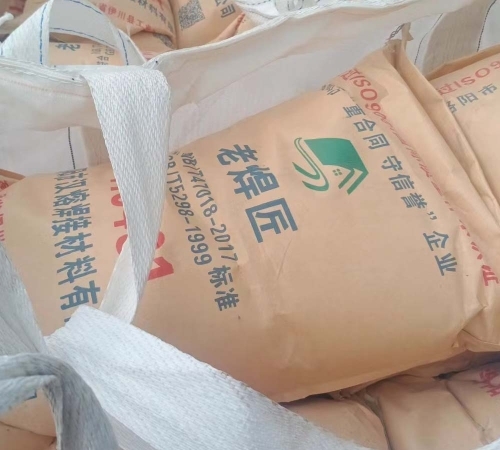
Our state-of-the-art manufacturing facility underscores our capability to support your large-scale requirements. The plant covers an area of 1000 square meters and has six production lines, which can supply an impressive 100 tons a day. This robust capacity ensures that Oldwelders can reliably meet demand for high-quality welding consumables, minimizing lead times and keeping your projects on schedule. For instance, many orders starting from a minimum of 1 ton can be fulfilled within 30 days, offering efficient supply chain solutions.
The superior performance of our welding fluxes, which are integral to many types of welding rod, stems from the exceptional quality of their raw materials. We utilize excellent dolomite, bauxite, cryolite, silica, fluorine ore, and other carefully selected ores. These are meticulously melted at a consistent 2000 °C, ensuring homogeneity and optimal flux properties that contribute to stable arcs, excellent slag removal, and superior weld metal characteristics.
Oldwelders serves a diverse global clientele, with strong presence in key markets such as Brazil, Thailand, Australia, and Malaysia. Our understanding of various international market needs allows us to provide tailored solutions and support to professionals worldwide. Whether your operations require specialized high grade energy welding machine or a bulk supply of general-purpose electrodes, Oldwelders is equipped to be your reliable partner.
By choosing Oldwelders, you are not just purchasing welding supplies; you are investing in a partnership backed by certified quality, significant production capacity, and a deep understanding of welding science. Our comprehensive product range, including various electrodes, welding wires, and welding fluxes, ensures that you can find the optimal solution for every AC/DC power source and joint position challenge.
The careful selection of the right welding rod for your specific power source and joint position is a cornerstone of professional welding. It directly impacts the quality, efficiency, and safety of your work. By understanding the characteristics of AC and DC welding, deciphering electrode classifications, and considering the demands of various joint positions, you can make informed decisions that elevate your welding projects. Oldwelders stands ready to support your endeavors with high-quality, reliable welding consumables and expertise, ensuring your success in every weld.