
Reducing Electrode Coating Defects at Dryer Exit
Mitigating Battery Electrode Coating Defects at the Dryer Exit
In the high-stakes world of battery manufacturing, the quality of every component directly impacts the performance, safety, and lifespan of the final product. A critical stage in this process is the application and drying of the electrode coating. While seemingly straightforward, the drying phase is a common bottleneck where subtle imperfections can escalate into significant defects, leading to costly reworks, scrap, and compromised battery cell performance. For process engineers and plant managers, understanding and addressing these issues at the dryer exit is paramount for maintaining product integrity and operational efficiency.
At Oldwelders, our expertise in high-precision material processing, exemplified by our rigorous standards in producing welding fluxes and other specialized welding materials, provides a unique perspective on the importance of controlled environments and material consistency. Just as we ensure the purity and performance of our raw materials—such as excellent dolomite, bauxite, cryolite, silica, and fluorine ore, meticulously melted at 2000 °C—the principles of precise control are equally vital in advanced manufacturing processes like battery electrode coating. Our commitment to quality is further underscored by our ISO 9001 certification, ensuring that every product and process meets stringent international standards.
Understanding Common Electrode Coating Defects at the Dryer Exit
The dryer exit is often the first point where the full extent of issues during the upstream coating and drying processes becomes visible. Identifying these defects early is crucial for effective troubleshooting. Here are some of the most frequently encountered electrode coating imperfections:
Cracking
Cracks are fissures or fractures that appear on the dried electrode surface. These can range from microscopic hairline cracks to more pronounced, visible lines. Cracking significantly reduces the mechanical integrity of the electrode and can lead to premature cell degradation or short circuits. They often result from uneven drying rates, excessive solvent evaporation, or internal stresses within the coating.
Delamination
Delamination occurs when the active material coating separates from the current collector (the substrate). This can manifest as bubbles, blisters, or complete peeling of the coating. It severely impairs the electrical contact between the active material and the current collector, leading to high internal resistance and reduced battery capacity. Common causes include poor adhesion, excessive drying speeds, or incompatible material properties between the coating and substrate.
Blistering
Blistering refers to the formation of small, raised bubbles on the electrode surface. These are typically caused by trapped solvent vapor or air pockets within the coating that expand during drying. Blisters create localized areas of inconsistent coating thickness and density, compromising electrochemical performance and mechanical stability.
Uneven Coating Thickness or Density
Variations in coating thickness or density across the electrode surface, or along its length, are critical defects. These lead to non-uniform current distribution during charging and discharging, reducing overall cell efficiency and accelerating localized degradation. This issue can stem from inconsistent slurry application, non-uniform airflow in the dryer, or improper calendering.
Contamination or Foreign Particles
The presence of foreign particles, dust, or other contaminants embedded within or on the electrode coating can create localized defects, pinholes, or weak spots. These contaminants can act as initiation sites for dendrite growth or cause internal short circuits, posing significant safety risks and performance degradation. Maintaining a clean manufacturing environment is essential to prevent such issues.
Root Causes of Dryer-Exit Electrode Coating Imperfections
Pinpointing the exact cause of electrode coating defects requires a systematic approach, analyzing various stages of the manufacturing process leading up to and including drying. Understanding these root causes is the first step toward effective mitigation.
Drying Temperature Profiles
The temperature profile within the dryer is a critical parameter. Too high a temperature can lead to rapid solvent evaporation on the surface, forming a crust that traps solvent beneath (case hardening), resulting in cracking or blistering. Conversely, temperatures that are too low can extend drying times unnecessarily, leading to solvent retention, which can cause delamination during subsequent processing steps. An optimized multi-zone temperature profile is often necessary to ensure gradual and complete solvent removal.
Airflow and Humidity Control
The velocity and humidity of the air within the dryer play a significant role. Inadequate or uneven airflow can lead to localized "hot spots" or "cold spots," resulting in non-uniform drying. High humidity can hinder solvent evaporation, prolonging drying times and potentially leading to solvent retention. Conversely, extremely low humidity coupled with high airflow can accelerate surface drying, increasing the risk of cracking and delamination.
Coating Slurry Rheology and Formulation
The properties of the electrode coating slurry itself are foundational to defect-free processing. Issues with slurry viscosity, solid content, particle dispersion, binder concentration, or solvent composition can all contribute to problems at the dryer exit. For example, a slurry with inadequate binder content may lead to poor adhesion and delamination, while a poorly dispersed slurry can result in uneven coating and localized defects.
Substrate Preparation and Surface Energy
The cleanliness and surface energy of the current collector (e.g., copper or aluminum foil) are crucial for proper coating adhesion. Contaminants like oils, dust, or oxides can create weak adhesion points, leading to delamination. Similarly, if the surface energy of the substrate is not properly matched with the coating slurry, uniform wetting and adhesion become challenging.
Dryer Design and Maintenance
The physical design and ongoing maintenance of the drying equipment are also critical. Worn or misaligned rollers, clogged air nozzles, malfunctioning heaters, or poor insulation can all contribute to uneven drying, temperature fluctuations, and ultimately, coating defects. Regular calibration and preventative maintenance are essential to ensure consistent performance.
Strategies for Optimizing the Drying Process
To consistently produce high-quality battery electrodes, optimizing the drying process is not just about reacting to defects but proactively implementing control measures. Oldwelders' commitment to operational excellence, demonstrated by our plant covering an area of 1000 square meters with six production lines capable of supplying 100 tons a day, underscores the importance of efficient and controlled manufacturing environments.
Precision Temperature Control in Multi-Zone Dryers
Implementing multi-zone dryers with independent, precise temperature control allows for highly customized drying profiles. This enables gradual solvent evaporation, preventing rapid surface drying and subsequent internal stress build-up. Advanced PID controllers and temperature sensors ensure that each zone maintains its target temperature, adapting to variations in material or ambient conditions.
Advanced Air Management and Humidity Control
Optimizing airflow patterns within the dryer, often through computational fluid dynamics (CFD) modeling, can ensure uniform solvent removal across the entire web width. Integrating humidity sensors and control systems helps manage the drying rate effectively, especially in initial drying zones where solvent concentration is highest. This prevents both too-fast and too-slow drying scenarios.
Slurry Formulation Adjustments and Quality Control
Rigorous quality control of incoming raw materials and precise slurry preparation are fundamental. This includes optimizing binder type and concentration, ensuring homogeneous particle dispersion, and selecting appropriate solvents and additives to improve rheological properties and adhesion. Regular rheological measurements of the slurry before coating can identify potential issues early.
In-line Monitoring and Feedback Control Systems
Modern drying lines benefit immensely from in-line monitoring technologies. Non-contact sensors can measure coating thickness, moisture content, and even detect early signs of defects like blistering or cracking in real-time. Integrating these sensors with feedback control systems allows for automatic adjustments to dryer parameters (temperature, airflow, line speed), enabling proactive defect prevention rather than reactive correction.
Regular Equipment Calibration and Preventative Maintenance
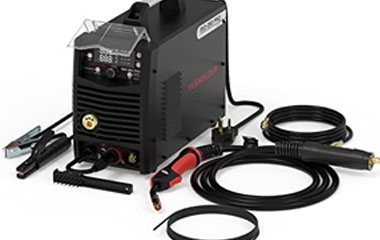
A robust maintenance schedule is non-negotiable. This includes routine checks and calibration of temperature sensors, air velocity meters, and tension control systems. Cleaning of air nozzles, inspection of rollers, and ensuring proper insulation are vital to prevent mechanical issues that can lead to inconsistent drying. Just as the precision of a arc welding machine relies on its well-maintained components, so too does a dryer's performance depend on meticulous care.
The Role of Material Quality in Electrode Coating Performance
While this discussion focuses on process optimization, it's crucial to acknowledge the foundational role of material quality. The inherent properties of the active materials, binders, and current collectors significantly influence how the electrode coating behaves during drying and subsequent battery operation. Inferior materials can exacerbate drying-related defects or introduce new challenges, regardless of process control.
At Oldwelders, our philosophy is deeply rooted in providing materials of exceptional quality. For instance, in our production of specialized welding fluxes, we meticulously select excellent dolomite, bauxite, cryolite, silica, and fluorine ore. These raw materials undergo a high-temperature melting process at 2000 °C to achieve optimal purity and consistency. This rigorous approach ensures that our flux products deliver reliable performance, much like how high-grade raw materials are essential for stable and efficient electrode coating processes. The consistency and purity of these foundational components directly impact the final product's integrity and performance parameters.
Our experience extends to understanding the demands of various industrial applications, including those requiring high-precision welding machine operations where material integrity is paramount. Whether it's the formulation of an optimal submerged arc welding flux hj431 or ensuring the robust performance of aws e6013 welding electrodes, the principles of material science and stringent quality control remain consistent. This deep understanding of material behavior and processing allows us to appreciate the complexities faced by manufacturers in other high-tech sectors, such as battery production.
Partnering for Excellence in Material Processing
Successfully mitigating battery electrode coating defects at the dryer exit requires a holistic approach, combining meticulous process control with an unwavering commitment to material quality. By understanding the common defects, identifying their root causes, and implementing advanced optimization strategies, manufacturers can significantly improve product yield and electrode performance.
Oldwelders stands as a testament to manufacturing excellence, driven by ISO 9001 certification and a robust infrastructure. Our plant, covering an area of 1000 square meters, houses six production lines, demonstrating our substantial capacity to supply up to 100 tons a day. We cater to diverse markets, including Brazil, Thailand, Australia, and Malaysia, ensuring that our high-quality materials reach global partners. Our efficient operations allow us to maintain a minimum order quantity of just 1 ton and typically deliver orders within 30 days, reflecting our commitment to both quality and responsiveness.
While our primary focus is on welding consumables and equipment, the underlying principles of precision, quality, and material science are universally applicable across advanced manufacturing industries. We believe that a deep understanding of material properties and process dynamics is key to overcoming complex manufacturing challenges. By applying these principles, we help our partners achieve consistent quality and operational efficiency in their respective fields.