
Evaluate Flux Production Line Quotes by Throughput
Evaluating Flux Production Line Quotes Based on Throughput Capacity Delivers Long-Term Value
For plant managers and procurement teams, the decision to invest in a new welding fluxes production system is pivotal. While initial purchase price often dominates discussions, a truly strategic approach demands a deeper dive into operational economics. Understanding the throughput capacity of a proposed system is paramount, as it directly correlates with productivity, cost-efficiency, and ultimately, your return on investment. Comparing Flux Production Line quotes solely on upfront cost can lead to hidden inefficiencies and higher operational expenses down the line. This guide will help you assess total operating economics by focusing on throughput as a critical evaluation metric.
The Core Importance of Throughput in Your Flux Production Line Investment
Throughput represents the rate at which your production line can process raw materials into finished products over a given period. For a Flux Production Line, this translates to the amount of high-quality welding flux produced per hour or day. A higher, more consistent throughput means greater output, lower per-unit cost, and enhanced competitiveness in the market. Consequently, a seemingly inexpensive system with low throughput can quickly become a costly bottleneck, undermining your entire production schedule and profitability.
When reviewing proposals for a new Flux Production Line, it is essential to request and meticulously analyze detailed throughput specifications. These should include not just theoretical maximums but also realistic operational throughput figures, factoring in typical uptime, maintenance schedules, and material handling efficiencies. Oldwelders, for instance, operates a plant covering an area of 1000 square meters, equipped with six production lines capable of supplying 100 tons of flux per day. This significant capacity demonstrates the potential for high throughput when a system is designed and optimized for continuous, efficient operation.
Beyond Price: Calculating True Cost of Ownership
The true cost of ownership extends far beyond the initial procurement price. It encompasses operational expenses such as energy consumption, labor costs, maintenance, and raw material utilization. A Flux Production Line with superior throughput often achieves better energy efficiency per ton of product and may require fewer labor hours for the same output, thus lowering overall operating costs. Conversely, a line with lower throughput might necessitate longer operating hours, increased energy consumption, and potentially more labor to meet demand, negating any initial cost savings.
Consider the impact of downtime. A reliable system with high throughput minimizes disruptions, whereas frequent breakdowns or slow processing speeds can lead to significant production losses. Understanding these factors is crucial for plant managers evaluating long-term profitability.
Key Factors Influencing Flux Production Line Efficiency and Output
Several critical elements contribute to the overall efficiency and throughput of a Flux Production Line. Evaluating these components within each quote will provide a clearer picture of a system's true capabilities.
Raw Material Handling and Preparation
The quality and efficiency of raw material handling directly impact throughput. Our flux products, for example, are produced from excellent dolomite, bauxite, cryolite, silica, fluorine ore, and other carefully selected ores. The processes for receiving, storing, and preparing these materials, including crushing, grinding, and blending, must be streamlined to ensure a continuous feed to the melting stage. Any delays or inefficiencies here will ripple down the entire line, reducing overall output.
Melting and Granulation Technology
The core of any flux production line is the melting process. Our raw materials are melted at an extremely high temperature of 2000 °C, ensuring optimal chemical reactions and homogeneity. The technology employed for melting and subsequent granulation plays a significant role in determining both the quality of the final product and the speed at which it can be produced. Advanced furnaces with precise temperature control and efficient granulation systems can significantly enhance throughput while maintaining consistent product quality.
Automation and Control Systems
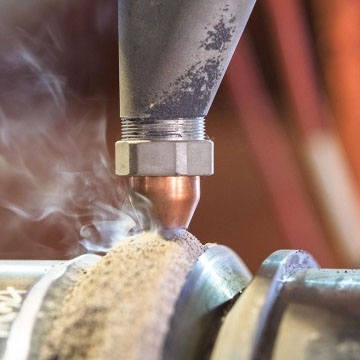
Modern Flux Production Line systems often incorporate advanced automation and control technologies. These systems can optimize processes, minimize human error, and ensure continuous operation. Automated material feeding, precise temperature regulation, and integrated quality control checks contribute to higher throughput and reduced waste. When comparing quotes, assess the level of automation offered and its potential impact on labor costs and operational consistency.
Quality Assurance and Certification
Consistent quality is non-negotiable in welding fluxes. A robust quality assurance system, integrated throughout the Flux Production Line, ensures that every batch meets stringent specifications. Oldwelders' commitment to quality is underscored by our ISO 9001 certification, which applies to our entire manufacturing process. This certification provides an independent verification that our processes are designed to consistently meet customer and regulatory requirements, directly supporting reliable, high-throughput production of quality welding materials.

Oldwelders' Commitment to Quality and High-Volume Flux Production
At Oldwelders, we understand that investing in a Flux Production Line is a long-term commitment. Our dedication to providing high-performance welding solutions is reflected in our manufacturing capabilities and quality standards. Our facility, covering 1000 square meters and housing six advanced production lines, is engineered for efficiency and scale, ensuring a daily supply capacity of 100 tons. This robust infrastructure is designed to support the demanding needs of our B2B clients globally.
Our operational efficiency is also demonstrated by practical aspects such as our minimum order quantity (MOQ) of 1 ton and a typical lead time of just 30 days. These factors are critical for businesses managing inventory and project timelines, highlighting our ability to deliver consistent quality and volume reliably. Our global presence extends to target markets such as Brazil, Thailand, Australia, and Malaysia, where our reputation for quality and reliable supply is well-established.
Strategic Considerations for Your Flux Production Line Procurement
When evaluating quotes, consider these strategic points to ensure you select the best Flux Production Line for your operations:
- Scalability: Does the proposed system allow for future expansion? Can its throughput be increased with minimal modifications?
- Maintenance and Support: What kind of after-sales service and spare parts availability does the supplier offer? Timely support is crucial for minimizing downtime.
- Energy Consumption: Request detailed energy usage figures per ton of product to accurately project operational costs.
- Footprint: How much space does the system require? This is especially important for facilities with limited floor area.
- Flexibility: Can the line be adapted to produce different types of flux with minimal changeover time, including specialized products like submerged arc welding flux hj431?
A comprehensive evaluation goes beyond the initial price tag. It involves understanding the engineering, technology, and operational advantages that contribute to a superior throughput and a lower total cost of ownership. By scrutinizing these aspects, you ensure that your investment in a new production line contributes positively to your bottom line for many years to come.
Conclusion: Maximizing ROI Through Informed Throughput Analysis
The decision to procure a new Flux Production Line is a significant one, impacting your company's production capabilities and financial performance for years. By prioritizing throughput analysis alongside initial cost, plant managers and procurement teams can make more informed, strategic decisions. A system designed for high, consistent output, backed by robust quality control and efficient operations, will always deliver greater long-term value.
Oldwelders is committed to providing not just equipment, but comprehensive solutions that maximize your operational efficiency and profitability. Our ISO 9001 certified processes, state-of-the-art facility, and proven capacity demonstrate our capability to meet the stringent demands of the global welding industry. When evaluating your next welding machine or related equipment, consider the full spectrum of our offerings, from welding machine to the raw materials that go into our welding fluxes, ensuring you partner with a supplier dedicated to your success.