
How to Choose a Flux Production Line for Wire Output
Selecting the Optimal Flux Production Line for Your Welding Wire Manufacturing Needs
For manufacturers of welding consumables, the core of producing high-quality welding wire lies in the integrity and consistency of its flux component. A well-chosen Flux Production Line is not just equipment; it is the foundation for superior wire performance, operational efficiency, and market competitiveness. This guide is designed to assist B2B buyers in navigating the critical decision-making process, ensuring their investment aligns perfectly with their output specifications and long-term strategic goals.
Oldwelders understands the complexity involved in sourcing specialized industrial machinery. With an welding materials expertise rooted in extensive experience and a commitment to quality, we provide insights into how to evaluate potential production lines, from raw material handling to final flux preparation.
Defining Your Welding Wire Output Specifications
Before considering any machinery, it is imperative to have a clear understanding of the specific characteristics your finished welding wire must possess. The properties of your welding wire – such as tensile strength, ductility, impact toughness, arc stability, and slag detachability – are directly influenced by the composition and quality of the flux. Therefore, the choice of your welding fluxes and the line that produces them is paramount.
Matching Flux Characteristics to Wire Performance
- Application-Specific Requirements: Are you producing wires for general fabrication, pipeline welding, shipbuilding, or specialized alloys? Each application demands a unique flux formulation.
- Wire Type Compatibility: Whether you are focusing on solid wire, flux-cored wire, or submerged arc welding wire, the flux preparation process will vary significantly. For instance, the flux density, particle size distribution, and binder content are critical for effective core filling in flux-cored wire production.
- Regulatory and Industry Standards: Ensure the final wire output will meet relevant international standards (e.g., AWS, ISO, EN) which often dictate flux chemistry and performance criteria.
Consider your desired production capacity. Our facility, covering an area of 1000 square meters, houses six advanced production lines capable of supplying up to 100 tons of product per day. This substantial capacity ensures that even large-scale manufacturers can rely on us for their flux requirements or the machinery to produce them efficiently.
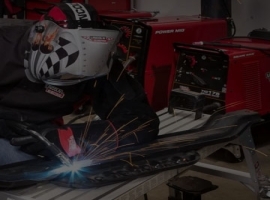
Understanding the Core Processes of a Modern Flux Production Line
A sophisticated flux production line is a meticulously engineered system, each stage contributing to the final product's quality and consistency. From raw material input to the finished flux, precision and control are non-negotiable.
Raw Material Preparation and Blending Excellence
The journey begins with the selection and preparation of raw materials. Oldwelders prioritizes excellence, utilizing superb dolomite, bauxite, cryolite, silica, and fluorine ore. These materials undergo a rigorous melting process at temperatures reaching 2000 °C, ensuring optimal purity and homogeneity before they enter the blending stage. Precise measurement and blending of these ingredients are crucial for achieving the desired chemical composition and physical properties of the flux. Modern systems employ automated dosing and mixing equipment to guarantee consistent batches, minimizing human error and variability.
Granulation and Shaping
After blending, the powdered flux mixture is granulated. This process converts fine powders into coarser, more uniform particles, which is vital for flowability, dust reduction, and consistent feeding into subsequent stages of wire manufacturing. Granulation can involve various techniques, such as pan granulation or extrusion, depending on the desired particle size, shape, and density. This stage is particularly critical for flux-cored wire production, where the physical properties of the flux granules directly impact the filling and drawing processes.
Drying, Baking, and Sieving for Optimal Performance
Once granulated, the flux undergoes a carefully controlled drying and baking process. This removes moisture and imparts specific physical and chemical properties, enhancing the flux's performance during welding. The temperatures and durations are precisely calibrated to activate certain components and ensure the structural integrity of the granules. Following baking, the flux is sieved to achieve a uniform particle size distribution, removing any oversized or undersized particles that could negatively impact wire manufacturing or welding performance. This meticulous quality control at each stage is what separates a standard flux from a premium one.
Evaluating Production Line Technology and Quality Assurance
When selecting a welding machine or a flux production system, the technological capabilities and embedded quality assurance mechanisms are paramount. These factors directly influence efficiency, product consistency, and compliance with industry standards.
Technical Specifications and Operational Efficiency
- Throughput and Automation: Assess the line's capacity to meet your production volume, considering automation levels for material handling, mixing, and processing. High levels of automation improve consistency and reduce labor costs.
- Energy Efficiency: Modern flux production lines incorporate energy-saving technologies in heating, cooling, and motor operations, significantly reducing operational expenses.
- Process Control Systems: Look for advanced PLC (Programmable Logic Controller) systems with real-time monitoring and data logging capabilities. These systems allow for precise control over temperature, humidity, material flow, and other critical parameters, ensuring consistent flux quality.
- Material Handling and Dust Control: Efficient material transport within the line, coupled with robust dust collection systems, contributes to a cleaner, safer working environment and minimizes material waste.
Adherence to Quality Standards and Certifications
Quality assurance is not an afterthought but an integral part of the manufacturing process. Oldwelders operates under the stringent guidelines of ISO 9001 certification, reflecting our commitment to consistent quality management and continuous improvement. When evaluating a supplier's production line, inquire about their internal quality control protocols, material traceability, and testing procedures for both raw materials and finished flux.
- In-Process Quality Checks: How are parameters like particle size, moisture content, and chemical composition monitored throughout the production cycle?
- Final Product Testing: What tests are performed on the finished flux to ensure it meets specifications for welding performance, shelf life, and safety?
- Documentation and Traceability: A reputable supplier will provide comprehensive documentation for each batch, allowing for full traceability from raw material to finished product.
For manufacturers looking to test new formulations or manage smaller production runs, our minimum order quantity of 1 ton offers a flexible entry point, allowing you to validate product quality and process efficiency without a prohibitive initial investment.
Partnering for Success: Logistics, Support, and Global Reach
The acquisition of a flux production line is a significant investment that extends beyond the machinery itself. The long-term success of this investment hinges on the support, logistics, and partnership established with your supplier.
Reliable Lead Times and Global Logistics
Understanding and managing lead times is crucial for production planning. Oldwelders strives for efficiency, with a general lead time of 30 days for orders, ensuring dependable delivery schedules. Furthermore, consider the supplier's experience in international logistics. Navigating customs, shipping, and import regulations requires expertise to avoid delays and unforeseen costs. Our established presence and export experience in target markets such as Brazil, Thailand, Australia, and Malaysia demonstrate our capability to serve a global clientele effectively.
Comprehensive After-Sales Support and Training
The best machinery is only as good as the support behind it. A reputable supplier should offer:
- Installation and Commissioning: Expert assistance to set up and optimize your new production line.
- Operator Training: Thorough training programs for your personnel to ensure safe and efficient operation.
- Technical Support: Readily available assistance for troubleshooting, maintenance, and process optimization.
- Spare Parts Availability: Easy access to genuine spare parts to minimize downtime and ensure longevity of the equipment.
Oldwelders' commitment to our customers extends far beyond the point of sale. We view our relationships as partnerships, providing ongoing support to ensure your flux production line operates at peak performance throughout its lifecycle.
The Oldwelders Advantage
Choosing the right partner for your flux production needs is a decision that impacts your entire manufacturing ecosystem. Oldwelders combines deep industry knowledge with a commitment to quality and customer service. Our state-of-the-art facility, adherence to ISO 9001 standards, and extensive experience in raw material processing at 2000 °C mean we provide not just equipment, but comprehensive solutions. Whether you are looking to purchase a complete automatic welding machine system that integrates seamlessly with your flux production, or simply require high-quality flux materials, we are equipped to support your objectives.
By carefully considering your output requirements, understanding the intricacies of the production process, demanding robust technology and quality assurance, and partnering with a globally experienced supplier like Oldwelders, you can make an informed decision that drives long-term success for your welding wire manufacturing operations. We invite you to connect with our experts to discuss your specific needs and discover how our solutions can empower your production capabilities.