
Preventing Porosity: Conditioning Reclaimed Submerged Arc Flux
Ensuring Weld Integrity: Best Practices for Conditioning Reclaimed Submerged Arc Flux
For industrial welding operations relying on Submerged Arc Welding (SAW), maintaining consistent weld quality is paramount. While the efficiency gains of flux recovery systems are undeniable, the reuse of welding fluxes, specifically Submerged Arc Flux, introduces potential challenges. One of the most persistent and costly issues encountered when using reclaimed flux is porosity – a defect that can significantly compromise the mechanical properties and structural integrity of a weld. This article delves into the critical importance of conditioning reclaimed Submerged Arc Flux to mitigate porosity and ensure superior weld quality, offering practical strategies for production teams.
Understanding Porosity in Submerged Arc Welding
Porosity in welding refers to the presence of gas pockets or voids within the solidified weld metal. These voids are typically formed when gases, trapped within the molten weld pool, do not escape before the metal solidifies. In the context of Submerged Arc Welding, porosity can manifest as surface pores, subsurface pores, or wormholes, each indicating an underlying issue in the welding process or material quality.
Common Causes of Porosity
- Moisture Contamination: This is arguably the most prevalent cause of porosity when using reclaimed flux. Moisture, in the form of absorbed humidity or condensation, can decompose at high welding temperatures, releasing hydrogen and oxygen. Hydrogen is particularly problematic as it has high solubility in molten steel but very low solubility in solid steel, leading to its expulsion as porosity upon solidification.
- Organic Contaminants: Grease, oil, paint, rust, or other organic materials introduced during the reclamation process or faulty storage can decompose during welding, producing gases that become trapped in the weld.
- Insufficient Gas Shielding: While SAW inherently provides excellent shielding via the flux blanket, issues with the flux itself (e.g., excessively fine particles) can sometimes lead to localized inadequate shielding.
- Poor Base Metal Preparation: Surface contaminants on the base metal, such as rust, scale, or coatings, can also contribute to gas generation and porosity.
- Inadequate Welding Parameters: Incorrect voltage, current, or travel speed can affect the weld pool dynamics, influencing gas entrapment and solidification rates.
When reclaimed Submerged Arc Flux is used without proper conditioning, the risk of moisture and organic contamination significantly increases. The flux, having been exposed to the ambient environment and potentially mixed with slag, fines, and other debris during recovery, requires specific treatment to restore its optimal properties.
The Essential Role of Submerged Arc Flux in Weld Quality
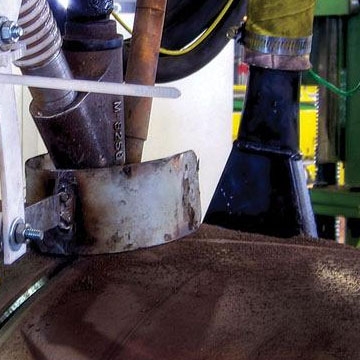
Submerged Arc Flux is not merely a consumable; it is a critical component that dictates the metallurgical properties, mechanical performance, and visual appearance of a SAW weld. This granular, fusible material performs several vital functions:
- Shielding: The flux blanket completely covers the arc and molten weld pool, protecting them from atmospheric contamination (oxygen and nitrogen), which would otherwise lead to porosity, embrittlement, and other defects.
- Deoxidation and Alloying: Fluxes contain deoxidizers that react with oxygen in the weld pool, preventing oxide inclusions. They can also introduce alloying elements into the weld metal, tailoring its chemical composition and mechanical properties to specific application requirements.
- Slag Formation: Upon melting, the flux forms a molten slag layer that floats on top of the weld pool. This slag helps shape the weld bead, controls its cooling rate, and facilitates the removal of impurities. After solidification, the slag provides a protective layer that is typically easy to remove.
- Arc Stability: The chemical composition of the flux influences arc stability, ensuring a smooth and consistent welding process.
Given these crucial roles, any degradation in the quality or consistency of the Submerged Arc Flux, particularly due to contamination or moisture in reclaimed material, directly translates to a compromise in weld integrity. Oldwelders understands this intricate relationship, which is why our range of welding materials, including various welding fluxes, is engineered for consistency and performance.
Best Practices for Conditioning Reclaimed Flux
Effective conditioning of reclaimed flux is a multi-step process designed to remove contaminants and restore the flux to a condition suitable for reuse. Implementing these practices is crucial for preventing porosity and achieving high-quality welds.
1. Screening and Sieving
The first step in conditioning reclaimed flux is to remove physical contaminants and fine particles. During the welding process and subsequent recovery, the flux can become mixed with slag particles, metal fines, and excessively fine flux particles. Excessive fines can negatively impact arc stability and lead to difficulty in slag removal, while larger contaminants can get trapped in the weld.
- Procedure: Use a vibratory screen or sieve system to separate the reclaimed flux. Typically, a multi-stage screening process is employed, with coarser screens to remove large debris and finer screens to eliminate excessive fines.
- Benefits: Removes physical impurities, improves flux flow characteristics, and helps maintain a consistent particle size distribution, which is vital for smooth arc operation and good weld bead shape.
2. Drying or Baking
Moisture contamination is the primary enemy of weld quality when using reclaimed flux. Proper drying or baking is essential to drive off absorbed moisture and prevent hydrogen-induced porosity.
- Importance: Even seemingly dry flux can contain significant amounts of absorbed moisture from ambient humidity. This moisture will decompose at welding temperatures, releasing hydrogen gas into the weld pool.
- Procedure: Reclaimed flux should be baked in an industrial oven specifically designed for flux conditioning. The typical temperature range for baking is between 250°C and 400°C (482°F to 752°F), with holding times ranging from 2 to 4 hours, depending on the flux type and initial moisture content. It is crucial to follow the flux manufacturer's recommendations for specific temperature and time parameters.
- Storage Post-Baking: Immediately after baking, the flux should be transferred to heated hoppers or sealed containers to prevent re-absorption of moisture from the atmosphere. Maintaining a dry environment is critical until the flux is fed into the welding system.
3. Blending with Virgin Flux
Even with thorough screening and drying, reclaimed flux may experience some degradation in its chemical properties or particle size distribution over multiple reuse cycles. Blending reclaimed flux with virgin, fresh flux can help restore optimal performance.
- Procedure: A common practice is to blend reclaimed flux with virgin flux at a specific ratio, often 50/50 or 70/30 (virgin/reclaimed). The ideal ratio depends on the specific flux type, the reclamation process efficiency, and the desired weld quality.
- Benefits: This practice ensures a consistent supply of high-quality flux, replenishes any depleted alloying elements, and helps maintain the desired particle size distribution, thereby minimizing the risk of porosity and other defects.
4. Proper Storage and Handling
The efforts invested in conditioning reclaimed flux can be undone by improper storage and handling. Flux should always be stored in a dry, temperature-controlled environment away from sources of contamination.
- Environment: Keep flux in sealed containers or heated storage bins to prevent moisture absorption. Ensure storage areas are clean and free from oil, grease, and other organic contaminants.
- Handling: Use clean, dedicated scoops and containers for handling flux. Avoid cross-contamination between different flux types or with other welding materials.
Oldwelders' Commitment to Quality Welding Fluxes
At Oldwelders, we understand that the quality of your submerged arc welding flux hj431 and other welding consumables directly impacts your operational efficiency and the integrity of your final products. Our commitment to excellence is deeply ingrained in our manufacturing processes, ensuring that our clients receive welding materials of the highest standard.
We operate an advanced manufacturing plant covering an area of 1000 square meters, equipped with six production lines. This robust infrastructure enables us to supply up to 100 tons of product per day, meeting the demands of large-scale industrial operations across the globe. Our raw materials for flux products are meticulously selected, including excellent dolomite, bauxite, cryolite, silica, and fluorine ore. These are melted at extremely high temperatures, precisely 2000 °C, to create homogeneous and high-performing fluxes designed for superior weld quality and minimal defects. This rigorous material selection and processing ensures that our fluxes provide stable arc performance, excellent slag detachability, and consistent metallurgical properties, helping to prevent issues like porosity from the outset.
Our dedication to quality is further underscored by our ISO 9001 certification, a testament to our adherence to international quality management standards. This certification assures our clients that Oldwelders consistently provides products and services that meet customer and regulatory requirements. We offer a flexible Minimum Order Quantity (MOQ) of just 1 ton and strive for efficient delivery with a lead time of approximately 30 days, catering to the needs of diverse businesses. Our reach extends to key target markets including Brazil, Thailand, Australia, and Malaysia, where our high-performance welding machine and welding consumable solutions are trusted by industry professionals.
Implementing Effective Flux Management for Superior Welds
Beyond the conditioning steps, a holistic approach to flux management is essential for long-term weld quality and cost efficiency. This involves continuous monitoring, process control, and regular evaluation.
1. Regular Testing and Analysis
Periodically test both virgin and reclaimed flux for moisture content, chemical composition, and particle size distribution. This helps in understanding the degradation effects of reclamation and informs decisions regarding blending ratios and conditioning parameters. For example, Oldwelders ensures that our aws e6013 welding electrodes and other consumables consistently meet specifications.
2. Process Control and Documentation
Establish clear procedures for flux handling, conditioning, and storage. Document all parameters, including drying temperatures, times, and blending ratios. This ensures consistency and provides a valuable reference for troubleshooting if porosity or other defects emerge.
3. Operator Training
Ensure that all welding operators and support staff are trained in the correct procedures for flux handling and conditioning. Awareness of the impact of moisture and contaminants on weld quality is crucial for preventing errors.
4. Cost-Benefit Analysis
While conditioning reclaimed flux requires an investment in equipment and labor, the benefits often far outweigh the costs. Reduced porosity means fewer weld repairs, less material waste, increased productivity, and a higher quality end product. This contributes to significant cost savings in the long run.
Conclusion
Preventing porosity when using reclaimed Submerged Arc Flux is a critical aspect of maintaining weld quality and operational efficiency in industrial welding. By implementing robust conditioning practices – including thorough screening, meticulous drying, strategic blending with virgin flux, and diligent storage – manufacturers can significantly reduce the risk of defects. Oldwelders is dedicated to supporting your operations with high-quality welding materials and the knowledge necessary to achieve superior welding outcomes. Our commitment to ISO 9001 standards and our substantial production capacity underscore our reliability as your partner in welding excellence.