
Pressure Vessel Welding: Is ASME Certification Required?
Does Pressure Vessel Welding Require ASME Certification?
For fabrication managers, engineers, and procurement specialists overseeing critical infrastructure, the integrity of a pressure vessel is non-negotiable. These components operate under extreme stress, and a single weld failure can lead to catastrophic consequences. This raises a crucial question at the heart of project planning and supplier validation: Is certification from the American Society of Mechanical Engineers (ASME) a mandatory requirement for pressure vessel welding? The short answer is, in almost all professional and regulated contexts, an unequivocal yes. Understanding why is essential for ensuring safety, compliance, and operational excellence.
While not a government agency, the ASME Boiler and Pressure Vessel Code (BPVC) has been widely adopted into law by jurisdictions across North America and is recognized as the benchmark for safety and quality globally. For any organization involved in the design, fabrication, repair, or inspection of these critical components, adhering to ASME standards is not merely a best practice—it is often a legal and contractual obligation. This guide explores the key facets of ASME certification, what it entails for welding procedures, and how selecting the right materials is fundamental to achieving compliance.
Understanding the Role of ASME in High-Stakes Fabrication
The American Society of Mechanical Engineers (ASME) is a professional organization that develops and maintains standards to advance engineering disciplines. Among its most influential contributions is the Boiler and Pressure Vessel Code (BPVC), a comprehensive set of rules governing the design, fabrication, and inspection of boilers and pressure vessels. The primary objective of the BPVC is to protect life and property by ensuring the structural integrity and reliability of these pressurized components.
The code is divided into several sections, each addressing a specific aspect of the vessel's lifecycle. For fabrication and welding, the most relevant sections include:
- Section II - Materials: This section details the specifications for permissible materials, including base metals and welding consumables. It ensures that every component used has known and verified properties suitable for the intended service conditions.
- Section V - Nondestructive Examination (NDE): This section outlines the requirements and methodologies for NDE techniques like radiography, ultrasonic testing, and magnetic particle testing, which are used to verify weld quality without destroying the component.
- Section VIII - Rules for Construction of Pressure Vessels: This is one of the most frequently used sections. It provides detailed rules for the design, fabrication, inspection, testing, and certification of pressure vessels. Division 1 covers most common applications, while Divisions 2 and 3 provide alternative rules for more demanding or specialized service.
- Section IX - Welding, Brazing, and Fusing Qualifications: This section is the cornerstone of welding compliance. It does not contain construction rules but instead provides the standards by which welders, welding procedures, and welding operators must be qualified. A weld cannot be considered ASME-compliant if it was not performed in accordance with a qualified procedure by a qualified welder.
Compliance with these sections is not a suggestion; it is a structured, documented process. Companies that fabricate or repair ASME-coded vessels must hold an ASME Certificate of Authorization and apply the appropriate certification mark (or "stamp") to their products, signifying that the work was performed in strict accordance with the BPVC.
When is ASME Certification Mandatory?
The requirement for ASME certification is driven by several factors, ranging from legal statutes to commercial demands. For fabrication managers and buyers, understanding these drivers is key to defining project specifications and selecting qualified vendors.
Legal and Jurisdictional Requirements
In the United States and Canada, nearly every state and province has legally mandated that boilers and pressure vessels operating within their jurisdiction must be built in accordance with the ASME BPVC. This is enforced by a chief inspector or regulatory body in each jurisdiction. Any new vessel being installed or a major repair being performed on an existing one must typically carry an ASME stamp to be legally operated. Failure to comply can result in fines, operational shutdowns, and legal liability in the event of an accident.
Client and Project Specifications
Even in regions where ASME codes are not legally mandated, they are often required by the end-user or project owner. Major companies in the oil and gas, chemical processing, power generation, and pharmaceutical industries specify ASME compliance in their procurement contracts. They do so to manage risk, ensure interoperability with existing equipment, and guarantee a high, verifiable standard of quality. For suppliers and fabricators, the ability to perform ASME-certified work is a prerequisite for bidding on and winning these high-value contracts. This standard is recognized and respected globally, including in key industrial markets such as Brazil, Thailand, Australia, and Malaysia, where Oldwelders has established a strong presence.
Insurance and Risk Management
Insurance providers for industrial facilities often require that all critical equipment, including pressure vessels, be ASME certified. An ASME stamp serves as proof that the equipment was built to a recognized safety standard, which can significantly lower insurance premiums and liability exposure. In the aftermath of an incident, the presence of an ASME stamp demonstrates that the owner exercised due diligence in ensuring the safety of the equipment, which can be a critical factor in any investigation or legal proceeding.
The Core Components of ASME Welding Compliance
Achieving a compliant weld on a pressure vessel is not just about a welder's skill; it is about a documented, repeatable, and verifiable process. ASME Section IX establishes the framework for this. The key elements include the Welding Procedure Specification (WPS), the Procedure Qualification Record (PQR), and the Welder Performance Qualification (WPQ).
Welding Procedure Specification (WPS)
A WPS is a formal, written document providing detailed instructions for a welder to produce a sound and acceptable weld. It is the recipe for the weld. A WPS must specify all the essential, nonessential, and (when required) supplementary essential variables for the specific welding process. These variables include:
- Welding Process: Such as Shielded Metal Arc Welding (SMAW), Gas Tungsten Arc Welding (GTAW), or Submerged Arc Welding (SAW).
- Base Metals: The specific materials being joined (e.g., SA-516 Grade 70), including their P-Number and Group Number classification.
- Filler Metals: The type of electrode or wire used (e.g., E7018), including its F-Number and A-Number classification. Exploring a range of welding materials is crucial to find the exact match for the base metal and application.
- Joint Design: The geometry of the joint, including groove angle and root opening.
- Positions: The positions in which the weld can be made (e.g., flat, horizontal, vertical).
- Preheat and Interpass Temperatures: The required minimum temperature of the base metal before and during welding.
- Post-Weld Heat Treatment (PWHT): Any required thermal treatments after welding to relieve stress and improve mechanical properties.
- Electrical Characteristics: The amperage, voltage, and polarity to be used.
Procedure Qualification Record (PQR)
A WPS is not valid until it is qualified. The PQR is the official record of the welding test that validates the WPS. To create a PQR, a test coupon is welded according to the draft WPS. This test weld is then subjected to rigorous NDE and mechanical testing (such as tensile tests and bend tests) as specified by Section IX. The results are documented in the PQR. If the test results are successful, the PQR serves as the evidence that the WPS, when followed, will produce a weld with the required mechanical properties. The PQR certifies the procedure, not the welder.
Welder Performance Qualification (WPQ)
Once a qualified WPS is in place, the company must verify that its welders have the skill to produce a sound weld using that procedure. The WPQ is the record of this test. A welder performs a test weld following a specific WPS, and that weld is evaluated, typically through visual inspection and bend tests or radiography. If the weld meets the acceptance criteria of Section IX, the welder is certified for that specific set of variables (process, position, material, etc.). This qualification must be maintained, typically by demonstrating successful use of the process every six months.
Selecting Consumables for Compliant Pressure Vessel Welding
The integrity of a certified weld depends heavily on the quality and consistency of the welding consumables used. ASME Section II, Part C, provides specifications for welding rods, electrodes, and filler metals. Using consumables that meet these specifications is mandatory for ASME code work. This is where partnering with a reliable, quality-focused supplier becomes critical.
At Oldwelders, our commitment to quality is embedded in our ISO 9001 certified processes. Our range of welding consumables is designed to meet the stringent requirements of code-level fabrication. For instance, our submerged arc welding flux hj431 is engineered for high-performance applications, delivering consistent mechanical properties and excellent slag detachability, which is essential for the multi-pass welds common in pressure vessel welding. The quality of our fluxes is assured by starting with excellent raw materials, including dolomite, bauxite, and cryolite, which are melted at 2000 °C to create a pure, homogenous product.
For fabricators undertaking large-scale projects, supply chain reliability is just as important as product quality. Our state-of-the-art plant, covering 1000 square meters with six production lines, has the capacity to supply 100 tons of welding flux per day. This ensures we can meet demanding project schedules without compromising on the quality and traceability required for ASME compliance. Whether you are using stick electrodes, solid wire, or flux-cored wire, selecting a product with clear certification and material test reports (MTRs) is essential for your documentation package.
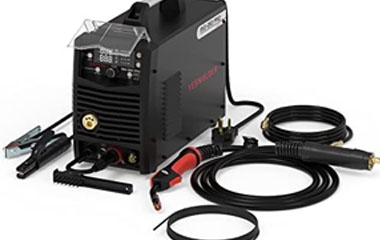
Furthermore, the choice of equipment can impact the consistency required for these critical welds. Modern power sources, such as an advanced arc welding machine, provide stable arcs and precise control over electrical parameters, helping welders stay within the narrow variable ranges specified in the WPS.
In conclusion, the practice of pressure vessel welding is intrinsically linked to ASME certification. For projects within regulated jurisdictions or those bound by stringent client contracts, compliance is not optional. It is a comprehensive system of qualified procedures, certified welders, and traceable materials designed to ensure the highest level of safety. For fabrication managers, this means prioritizing a deep understanding of the ASME code and partnering with suppliers who can provide not only certified consumables but also the documentation and quality assurance needed to support every weld.