
Pressure Vessel Welding: GTAW vs. SAW Comparison
Optimizing Pressure Vessel Welding: GTAW vs. SAW for Critical Joints
The integrity and longevity of pressure vessels are paramount across industries, from oil and gas to chemical processing and power generation. These critical components operate under immense stress, demanding the highest standards of fabrication and, specifically, welding. The choice of welding process significantly impacts the final product's performance, safety, and cost-effectiveness. Among the most prevalent and effective methods for high-quality pressure vessel fabrication are Gas Tungsten Arc Welding (GTAW) and Submerged Arc Welding (SAW). Understanding the strengths and ideal applications of each, particularly when categorized by joint type, is crucial for technical buyers and fabrication teams tasked with finalizing vessel design and production methods.
The Criticality of Pressure Vessel Fabrication
Pressure vessels are designed to hold gases or liquids at a pressure substantially different from the ambient pressure, making their structural integrity non-negotiable. A failure can lead to catastrophic consequences, including environmental damage, severe injuries, and significant financial losses. Consequently, the welding procedures employed in their construction must meet stringent international codes and standards, such as ASME Boiler and Pressure Vessel Code. Precision, reliability, and defect-free welds are not merely desirable; they are absolute requirements.
At Oldwelders, we understand the immense responsibility that comes with supplying materials for such critical applications. Our commitment to delivering products that meet the highest quality benchmarks is underscored by our welding machine and welding materials being produced under strict ISO 9001 quality management systems. This certification ensures that every product, from welding fluxes to specialized machines, adheres to rigorous quality control protocols, providing a foundation for reliable pressure vessel construction.
Gas Tungsten Arc Welding (GTAW) for Precision Pressure Vessels
Gas Tungsten Arc Welding (GTAW), often referred to as TIG welding, is an arc welding process that uses a non-consumable tungsten electrode to produce the weld. The weld area is protected from atmospheric contamination by an inert shielding gas (usually argon or helium), and a filler metal is typically added manually or automatically to the weld pool. This process is renowned for its exceptional quality and control.
Advantages of GTAW in Pressure Vessel Welding:
- Superior Weld Quality: GTAW produces extremely clean, high-purity welds with excellent aesthetic appeal, crucial for root passes and areas requiring minimal post-weld finishing.
- Precise Control: Welders have precise control over heat input, penetration, and the weld pool, making it ideal for thin materials, intricate geometries, and critical root passes where defect prevention is paramount.
- Versatility: It can weld a wide range of metals and alloys, including stainless steel, nickel alloys, and reactive metals often used in pressure vessel construction.
- No Spatter or Slag: The absence of spatter and slag means less post-weld cleaning, contributing to overall efficiency and quality.
Disadvantages of GTAW:
- Slower Deposition Rate: Compared to other processes like SAW, GTAW has a lower deposition rate, which can increase fabrication time for thick sections.
- Higher Skill Requirement: The manual dexterity and precision required for GTAW demand highly skilled welders.
Typical Applications of GTAW in Pressure Vessel Fabrication:
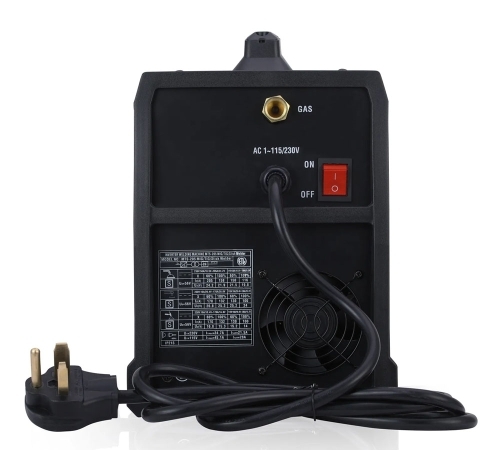
GTAW is predominantly chosen for root passes on almost all pressure vessel joints, regardless of thickness. Its ability to create a clean, sound bead without defects is critical for the internal surface of the vessel. It is also preferred for welding thin-walled components, small diameter nozzle welds, and other areas where access is limited or extreme precision is required. For instance, welding a complex nozzle attachment to a vessel shell often necessitates the intricate control offered by GTAW. Our range of mig-mag-tig welding machine options includes advanced GTAW systems designed to meet these exacting requirements.
Submerged Arc Welding (SAW) for High-Productivity Pressure Vessel Fabrication
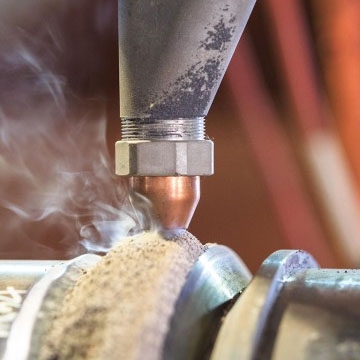
Submerged Arc Welding (SAW) is a high-deposition, highly efficient welding process that uses a continuously fed consumable electrode. The arc and the molten weld pool are "submerged" under a blanket of granular flux, which protects the weld from atmospheric contamination, adds alloying elements, and shapes the weld bead. SAW is particularly well-suited for automated and mechanized applications.
Advantages of SAW in Pressure Vessel Welding:
- High Deposition Rates: SAW offers significantly higher deposition rates compared to GTAW, making it ideal for filling large weld grooves in thick sections quickly.
- Deep Penetration: It provides excellent penetration, which is advantageous for full-penetration welds in thick plates, reducing the number of passes required.
- Good Mechanical Properties: Welds produced by SAW typically exhibit excellent mechanical properties, including high strength and toughness.
- Operator Comfort: The flux blanket reduces arc glare and fumes, creating a more comfortable working environment for operators.
Disadvantages of SAW:
- Limited Positional Welding: SAW is generally restricted to flat and horizontal positions, limiting its application on complex geometries or vertical/overhead welds.
- Flux Management: Requires careful management of the granular flux, including recovery and recycling systems, and can be sensitive to moisture.
- Not Suitable for Thin Materials: The high heat input and large weld pool can make it challenging to use SAW effectively on very thin materials.
Typical Applications of SAW in Pressure Vessel Fabrication:
SAW is the workhorse for many heavy fabrication tasks in pressure vessel construction. It is extensively used for longitudinal and circumferential seams on cylindrical and conical shells, especially for vessels with thick walls where high productivity is key. Its ability to produce high-quality, high-strength welds efficiently makes it invaluable for these long, straight runs. Oldwelders provides a comprehensive range of welding fluxes designed for SAW, including options like submerged arc welding flux HJ431. Our commitment to quality starts with the raw materials; our flux products are manufactured using excellent dolomite, bauxite, cryolite, silica, fluorine ore, and other ores, melted at a precise 2000 °C to ensure optimal performance and metallurgical properties.
Comparative Analysis: GTAW vs. SAW by Joint Type in Pressure Vessel Welding
The selection between GTAW and SAW often depends on the specific joint configuration, material thickness, access, and required quality and productivity. Often, these two processes are used in conjunction to leverage their individual strengths.
Root Pass Welding:
For the critical root pass, especially in thick-walled pressure vessels, GTAW is almost universally preferred. Its ability to achieve 100% penetration with a smooth, clean back bead, free from internal defects, is unmatched. The precise control over the weld pool minimizes the risk of burn-through or lack of fusion, which are unacceptable in pressure vessel applications. While specialized SAW techniques with specific joint designs can be used for mechanized root passes, GTAW remains the go-to for its reliability and quality assurance in this crucial stage.
Fill and Cap Passes (Thick Sections):
Once a sound root pass is established by GTAW, SAW becomes the optimal choice for filling the remainder of the weld groove and applying the cap passes, particularly in thick-walled vessels. The high deposition rate of SAW dramatically reduces welding time and costs for these subsequent passes. Its deep penetration capabilities ensure proper fusion with the root pass and sidewalls, building up the required thickness and strength efficiently. This combination of GTAW for the root and SAW for fill/cap passes is a widely adopted strategy in high-integrity pressure vessel fabrication.
Longitudinal Seams:
For long, straight longitudinal seams on cylindrical or conical sections, SAW is highly efficient. When paired with automatic welding machine setups, SAW can produce continuous, high-quality welds at impressive speeds, significantly boosting productivity. The process is stable and consistent, making it ideal for automated, repeatable tasks common in pressure vessel manufacturing.
Circumferential Seams:
Similar to longitudinal seams, circumferential welds on pressure vessels also benefit greatly from SAW. With the vessel mounted on turning rolls, SAW can be mechanized to create consistent, high-integrity circumferential welds. For smaller diameter vessels or where the joint configuration is more complex, GTAW may be used for the root pass, followed by SAW for the fill and cap passes, or even entirely by GTAW for very precise applications.
Nozzle Welds and Attachments:
Nozzle welds and other small attachments to the vessel shell present unique challenges due to their geometry and often limited access. Here, GTAW is typically the preferred method. Its precise control, ability to handle complex weld paths, and suitability for all positions make it invaluable for these intricate joints where fit-up can vary and precision is paramount to avoid stress concentrations in service.
Cladding and Overlay:
For corrosion-resistant cladding or wear-resistant overlays on the internal surfaces of pressure vessels, SAW is frequently employed. Its high deposition rate allows for efficient coverage of large areas with specialized overlay materials, providing enhanced protection against aggressive media or abrasion. The controlled environment under the flux blanket also helps in achieving desired metallurgical properties in the overlay.
| Feature/Joint Type | GTAW | SAW |
|---|---|---|
| Weld Quality | Excellent, precise, clean | Very good, high integrity |
| Deposition Rate | Low to Medium | High to Very High |
| Penetration | Controlled, good for root | Deep, excellent for thick sections |
| Positional Capability | All positions | Flat and Horizontal only |
| Skill Required | High | Medium (for automated) |
| Root Pass | Preferred (precision, control) | Limited (specific setups) |
| Fill/Cap Passes (Thick Sections) | Secondary (for smaller) | Preferred (speed, efficiency) |
| Longitudinal & Circumferential Seams | For specific needs | Preferred (automation, speed) |
| Nozzle Welds & Attachments | Preferred (precision, access) | Not suitable |
| Cladding/Overlay | Limited | Preferred (high deposition) |
Oldwelders: Your Partner in High-Quality Pressure Vessel Fabrication
Choosing the correct welding process and ensuring access to high-quality welding materials are fundamental to the success of any pressure vessel project. Oldwelders is dedicated to supporting your fabrication needs with a comprehensive range of solutions.
Our expansive plant, covering an area of 1000 square meters, houses six state-of-the-art production lines. This robust infrastructure enables us to supply up to 100 tons of product per day, ensuring consistent availability for large-scale projects. We maintain a flexible minimum order quantity (MOQ) of just 1 ton, catering to diverse project sizes, and our efficient production processes allow for lead times as short as 30 days. This operational capacity positions us as a reliable partner capable of meeting demanding production schedules.
Our commitment extends beyond manufacturing to active global engagement. We proudly serve a diverse range of target markets, including Brazil, Thailand, Australia, and Malaysia, understanding the unique demands and standards of each region. By partnering with Oldwelders, you gain access to not only superior welding products but also a wealth of knowledge and expertise in optimizing your fabrication processes for critical applications. From precise arc welding machine options suitable for GTAW to high-performance welding fluxes for SAW, we provide the tools necessary to achieve uncompromising quality and efficiency in pressure vessel fabrication.
Conclusion: Strategic Welding for Uncompromising Pressure Vessel Performance
The fabrication of pressure vessels demands a strategic approach to welding, where the selection of GTAW or SAW is not a one-size-fits-all decision but rather a calculated choice based on joint characteristics, material thickness, quality requirements, and production efficiency goals. While GTAW excels in precision, root pass integrity, and intricate welds, SAW dominates in high-deposition, thick-section, and automated applications.
Often, the most effective strategy involves a synergistic application of both processes, leveraging GTAW for critical root passes and intricate details, then transitioning to SAW for efficient fill and cap passes. This combined approach ensures both the highest quality and optimal productivity for pressure vessel construction. By understanding these distinctions and partnering with a reliable supplier like Oldwelders, fabrication teams can confidently choose the right tools and materials to achieve superior performance and safety in their pressure vessel projects, ensuring long-term operational integrity.