
Pipeline Welding: Mainline Stages, QA, & Solutions
Optimizing Pipeline Welding for Critical Infrastructure Projects
The development and maintenance of robust pipeline infrastructure are fundamental to global energy and resource distribution. From oil and gas transmission to water and chemical transport, the integrity of these systems hinges significantly on the quality of their welded joints. These critical connections must withstand immense pressure, corrosive environments, and dynamic stresses over decades of service. For project engineers and procurement teams, understanding the intricate stages and stringent quality assurance protocols involved is paramount for successful project execution and long-term operational reliability.
Oldwelders stands as a professional partner in this demanding field, supplying the high-quality welding machine, welding wire, welding rod, and welding fluxes essential for such projects. Our commitment to excellence ensures that every product contributes to the structural integrity and longevity of vital infrastructure.
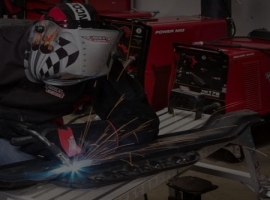
The Criticality of Robust Pipeline Welding in Infrastructure
Pipelines represent a significant investment and play a crucial role in national and international economies. Any failure in a pipeline system can lead to catastrophic environmental damage, economic losses, and significant safety hazards. The welding process, therefore, is not merely a construction step but a foundational element of the entire project's safety and reliability profile. Each joint must be engineered and executed to meet or exceed international standards, ensuring resistance to fatigue, fracture, and corrosion throughout its operational life.
The demanding conditions under which pipelines operate—including varying temperatures, pressures, and the nature of transported media—necessitate welding solutions that offer superior mechanical properties and consistent performance. This requires not only skilled welders but also the selection of appropriate materials and advanced welding techniques tailored to the specific project requirements and environmental challenges. Understanding these challenges is the first step in mitigating risks and ensuring project success.
Environmental and Operational Demands on Welded Joints
Pipelines traverse diverse terrains and climates, from arid deserts to frozen tundras, and often operate under extreme conditions. The welds must maintain their integrity through thermal expansion and contraction cycles, seismic activity, and external loading. Furthermore, the internal environment, which can include highly corrosive substances, places additional demands on the material selection and welding procedure specification (WPS). Achieving a defect-free weld with optimal microstructure and mechanical properties is a complex task that requires precise control over every variable.
The design life of a typical pipeline can span 30 to 50 years or more, meaning the initial welding quality must guarantee performance for this extended duration. This long-term perspective drives the need for rigorous quality control and the use of materials that demonstrate exceptional durability and resistance to degradation mechanisms like stress corrosion cracking and hydrogen embrittlement. Oldwelders provides a range of welding materials designed to meet these stringent requirements.
Mainline Joint Stages in Pipeline Welding
The construction of a mainline pipeline involves a series of carefully orchestrated welding stages, each critical to the overall integrity of the joint. These stages are typically performed sequentially by specialized crews, often working in a "spread" along the pipeline route. Adherence to strict procedures and quality checks at each stage is non-negotiable.
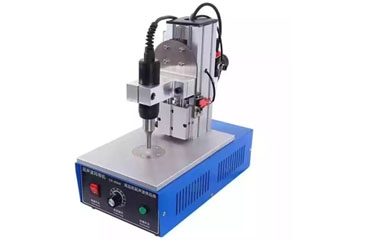
1. Pipe Alignment and Fit-Up
Before any welding can begin, two pipe sections must be precisely aligned. This involves using internal or external clamps to ensure the pipe ends are perfectly concentric and the gap between them (root gap) is consistent around the entire circumference. Proper fit-up is fundamental; any misalignment can lead to defects such as lack of fusion or inadequate penetration in subsequent weld passes, compromising joint strength. This stage sets the foundation for all subsequent operations.
2. Root Pass Welding
The root pass is the first and arguably most critical weld bead. It penetrates the full thickness of the pipe wall at the joint, establishing the initial connection between the two pipe sections. The quality of the root pass determines the structural integrity and often dictates the success of subsequent passes. Common welding processes for the root pass include Shielded Metal Arc Welding (SMAW) using specialized welding electrodes, Gas Metal Arc Welding (GMAW), or Flux-Cored Arc Welding (FCAW). Welders must achieve full penetration with minimal defects, ensuring a smooth, consistent bead that can withstand internal pressure.
3. Hot Pass Welding
Immediately following the root pass, the hot pass is applied. This pass serves several crucial functions. It refines the grain structure of the root pass, burns out any trapped impurities, and provides additional strength to prevent cracking. The heat from this pass helps to temper the root, reducing its hardness and improving its ductility. The hot pass essentially cleans and reinforces the initial connection, preparing the joint for the bulk of the weld metal deposition.
4. Fill and Cap Pass Welding
After the hot pass, multiple fill passes are deposited to build up the weld metal to the full thickness of the pipe wall. The number of fill passes depends on the pipe wall thickness and the specific welding procedure. These passes are designed to achieve the required mechanical properties and ensure the joint can bear the intended loads. The final pass, known as the cap pass, is applied to complete the weld. The cap pass is not only structural but also cosmetic, requiring a uniform appearance and smooth contour. It must be free of surface defects and blend seamlessly with the pipe surface, providing corrosion resistance and ease of inspection. Oldwelders provides a wide range of welding wires and rods suitable for efficient and high-quality fill and cap passes.
Ensuring Quality Assurance and Control for Pipeline Welding
Quality assurance (QA) and quality control (QC) are integral to every stage of pipeline construction, particularly for welding. These processes ensure that all work conforms to project specifications, industry codes, and regulatory requirements, minimizing risks and maximizing reliability. Oldwelders operates under stringent quality management systems, proudly upholding ISO 9001 certification, which underscores our commitment to delivering products that consistently meet customer and regulatory requirements.
Non-Destructive Testing (NDT) Methods
Non-destructive testing (NDT) is crucial for evaluating the internal and external integrity of welded joints without causing damage. Various NDT methods are employed to detect discontinuities and defects that could compromise the pipeline's performance:
- Radiographic Testing (RT): Uses X-rays or gamma rays to produce an image of the weld's internal structure on film or a digital detector. RT is highly effective at detecting volumetric defects like porosity, slag inclusions, and lack of penetration.
- Ultrasonic Testing (UT): Employs high-frequency sound waves to detect subsurface flaws. UT can accurately locate and size defects such as cracks, lack of fusion, and laminations. Advanced phased array ultrasonic testing (PAUT) offers enhanced capabilities for complex geometries.
- Magnetic Particle Testing (MPT): Used for detecting surface and near-surface discontinuities in ferromagnetic materials. Magnetic particles accumulate at defect sites, making them visible under appropriate lighting.
- Liquid Penetrant Testing (LPT): Applied to detect surface-breaking defects in non-porous materials. A penetrant liquid seeps into flaws, and a developer draws it out, making the defects visible.
- Visual Inspection (VT): The initial and most fundamental NDT method. Trained inspectors visually examine the weld surface for visible defects such as undercut, excessive reinforcement, cracks, and porosity. VT is performed at every stage of the welding process.
Welding Procedure Specification (WPS) and Welder Qualification (WPQ)
Every welding operation must be governed by a detailed Welding Procedure Specification (WPS). This document outlines all essential variables, including welding process, base materials, filler metals, joint design, preheat and interpass temperatures, travel speed, and post-weld heat treatment. Welders must then be qualified to perform welds according to these WPSs through Welding Performance Qualification (WPQ) tests. These certifications ensure that welders possess the necessary skills and knowledge to consistently produce high-quality welds.
Documentation and Traceability
Comprehensive documentation is essential for quality assurance in pipeline projects. This includes records of WPSs, welder qualifications, NDT reports, material certifications, and daily weld logs. Full traceability from raw materials to the final installed joint is often required. This meticulous record-keeping provides an auditable trail, allowing for verification of compliance and facilitating future maintenance or repair operations.
Strategic Selection of Welding Consumables and Equipment for Pipeline Applications
The choice of welding consumables and equipment significantly impacts the efficiency, quality, and cost-effectiveness of pipeline construction. Selecting the right tools and materials is a strategic decision that directly influences the mechanical properties, corrosion resistance, and overall longevity of the welded joints. Oldwelders specializes in providing robust solutions tailored for the demanding environment of pipeline construction.
Welding Machines
Modern pipeline projects utilize a diverse range of welding machines, from highly portable field units to automated systems designed for speed and consistency. Depending on the specific stage (root, hot, fill, cap pass) and the welding process, different machines are employed. For instance, arc welding machines are common for manual processes, while automatic welding machines are increasingly used for faster and more consistent deposition in fill and cap passes. The reliability and performance of these machines are crucial for maintaining project schedules and quality standards.
Welding Wires and Rods
The selection of welding wires (for GMAW, FCAW, SAW) and welding rods (for SMAW) is critical. These consumables must match the base material's mechanical properties and chemical composition to ensure a homogenous and strong joint. Factors such as tensile strength, yield strength, impact toughness, and corrosion resistance are carefully considered. For instance, specific alloys are chosen for sour service pipelines to resist hydrogen-induced cracking. Oldwelders offers a comprehensive range of welding electrodes and wires, including flux-cored wire, designed for various applications and material specifications.
Welding Fluxes
Welding fluxes play a vital role, especially in submerged arc welding (SAW), by shielding the molten weld pool from atmospheric contamination, stabilizing the arc, and influencing the weld metal's chemistry and mechanical properties. The quality of the flux directly impacts the integrity and performance of the weld. Our commitment to excellence in this area is evident in our production capabilities. The Oldwelders plant covers an area of 1000 square meters and features six production lines, capable of supplying 100 tons of flux products daily. The raw materials for our flux products, including excellent dolomite, bauxite, cryolite, silica, and fluorine ore, are meticulously selected and melted at precisely 2000 °C, ensuring superior quality and consistent performance for applications like submerged arc welding flux hj431.
Partnering with Oldwelders for Reliable Pipeline Welding Solutions
Choosing the right supplier for welding machines and consumables is a decision that impacts project timelines, budget, and ultimately, the operational success of the pipeline. Oldwelders is dedicated to being a trusted partner, offering not only high-quality products but also the reliability and expertise that complex infrastructure projects demand.
Global Reach and Production Capabilities
Our capabilities extend to serving demanding projects in various international markets, including Brazil, Thailand, Australia, and Malaysia. This global presence is supported by our robust manufacturing infrastructure. With six production lines and a daily capacity of 100 tons for flux products, we are equipped to meet large-scale demands efficiently. Our minimum order quantity (MOQ) of 1 ton for certain products ensures accessibility for projects of varying scales, while our efficient logistics aim for prompt delivery, typically within 30 days.
Commitment to Quality and Innovation
Our ISO 9001 certification is not just a badge; it represents our unwavering commitment to quality management across all operations, from raw material sourcing to final product delivery. We continuously invest in research and development to bring innovative welding solutions to the market, helping our clients achieve superior weld quality, enhance productivity, and reduce operational costs. Our expertise in producing high-grade welding fluxes, utilizing premium raw materials melted at 2000 °C, exemplifies our dedication to product excellence. This meticulous process ensures that our fluxes consistently contribute to robust, defect-free welds.
Comprehensive Support for Your Projects
Oldwelders understands that successful pipeline projects require more than just products; they require partnership. We offer comprehensive support, from assisting with product selection to providing technical guidance, ensuring that our clients have the resources they need to succeed. Whether your project involves mainline construction or critical repair work, our team of experts is ready to provide tailored solutions that align with your specific requirements and stringent quality standards.
In conclusion, the successful execution of pipeline projects hinges on meticulous planning, skilled execution, and the unwavering commitment to quality at every stage. By understanding the mainline joint stages and the critical role of quality assurance, project engineers and procurement teams can make informed decisions that ensure the long-term integrity and safety of these vital infrastructures. Oldwelders is proud to be a part of this effort, providing the high-performance welding machines, wires, rods, and fluxes that empower industries worldwide.